📊 Full opportunity report: Voice AI For Trades: Answer Calls, Schedule Jobs on IdeaNavigator AI — validation score, market gap, and execution plan.

Get the latest gadgets delivered free with Prime
- Fast, free delivery on millions of items
- Prime Video, Amazon Music and more included
- Member-only deals all year
TL;DR
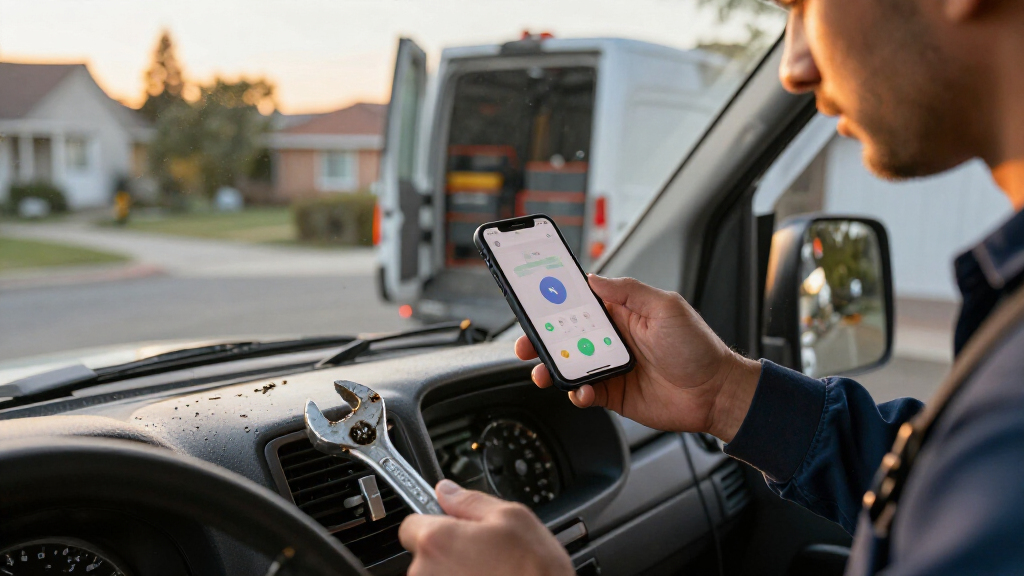
IdeaNavigator AI has outlined a proposed voice AI service for plumbing, HVAC and electrical businesses that miss calls while working. The plan calls for testing after-hours call forwarding with five shops for one month; no test results or confirmed product launch are provided.
IdeaNavigator AI has proposed testing voice AI as an after-hours call-answering and job-booking service for owner-operated plumbing, HVAC and electrical businesses. Its suggested pilot would forward calls for five shops over one month and count jobs booked that owners say they otherwise would have missed; no pilot results, participating businesses or launched product are identified.
The proposed service would answer incoming calls using a natural-sounding voice, collect the type of problem, service address and urgency, then schedule a job in the business calendar or software such as ServiceTitan or Jobber. It would also text the owner a call summary and route emergencies to a live person. Those functions are presented as a proposed minimum viable product, not as verified features of an available product.
IdeaNavigator AI describes the target customer as an owner-operator who may be unable to answer while working at a customer’s home or on a roof. The proposal says a missed call could mean a customer contacts another contractor. It does not provide call-volume data, a measured missed-call rate or evidence that the proposed system has recovered jobs.
The suggested business model combines a monthly fee per phone line with a charge for each booked job. For validation, the proposal says to compare jobs attributed to the system with the shop’s average ticket. It does not set prices, define how a recovered booking would be verified or report revenue, customer retention or booking performance.
Voice AI for Trades Answer Calls, Schedule Jobs
IdeaNavigator AI proposes an after-hours call-answering and job-booking service for plumbing, HVAC and electrical businesses. A pilot is suggested, but no trial results or launched product are reported.
Who it aims to help
The proposal targets owner-operators who may be busy at a job site when calls come in.
Capture service requests
Answer calls while the owner is working and collect the caller’s problem, address and urgency.
Book a job
Schedule a suitable appointment in the business calendar or software such as ServiceTitan or Jobber.
Alert the owner
Text a call summary and route emergencies to a live person, as proposed.
How the proposed service works
The concept focuses on after-hours calls and a short path from intake to booking.
Use a natural-sounding voice to handle an incoming call.
Ask about the issue, service address and urgency.
Schedule a job, notify the owner and send emergencies to a live person.
What the pilot should measure
The proposed trial would test whether calls become jobs the shops believe they would otherwise have missed.
Proposal versus evidence
- After-hours call forwarding for five shops over one month
- Monthly fee per phone line plus a charge per booked job
- Calendar or software booking and emergency escalation
- Trial date, participating shops or results
- Prices, booking performance or recovered-job evidence
- Verified product availability or feature performance
A Test of Missed-Call Recovery
For a small trade business, calls can arrive while the person who answers them is already carrying out paid work. A service that reliably captures the caller’s details and schedules suitable appointments could reduce the gap between an inquiry and a response. The practical question is whether it can book jobs the business would otherwise lose, rather than simply answer more calls.
The proposed pilot would measure that possibility on a small scale before a wider commercial rollout. The economics depend on both sides of the exchange: whether the system creates enough additional booked work to justify its fees, and whether it can handle calls without creating extra work through inaccurate intake, unsuitable appointments or unnecessary emergency escalations. No evidence is supplied yet to settle those questions.
Products Worth Considering

Kindle Paperwhite Signature Edition Bundle, 32GB, Jade, with Plant-Based Leather Cover and Wireless Charging Dock

Samsung Galaxy Tab S10 Lite, 10.9-Inch LCD Tablet, 6GB RAM, 128GB Storage, Expandable up to 2TB, Gray

Samsung Galaxy Tab A11+ 11-Inch Tablet, 6GB RAM, 128GB Storage, Expandable Storage, Gray
As an affiliate, we earn on qualifying purchases.
From Call Intake to Booking
The proposal focuses on a specific workflow in the home-services front office: answering calls, gathering basic job information, booking a slot and alerting the owner. It is narrower than a general-purpose voice assistant and is aimed at businesses where the owner may be the main person available to take calls.
IdeaNavigator AI says voice AI reached a reliability threshold for structured intake calls in 2025–2026 and argues that answering around the clock could cost less than a human answering service. The proposal does not cite independent reliability studies, cost comparisons or a named service provider for those claims, so they should be treated as the proposal’s rationale, not established performance findings.
Performance and Pilot Details
No pilot outcome is reported. The proposal does not name participating shops, say whether call forwarding has begun or give a date for a test. It also provides no measured answer accuracy, booking rate, response time, customer satisfaction data or comparison with human answering services.
Several operational details remain open: how the system would confirm availability, handle callers who provide incomplete information, distinguish urgent situations, protect customer data and connect with each shop’s calendar or software. The proposal calls for live escalation of emergencies but does not define how emergencies would be recognized or what happens if a human is unavailable. Its cost and reliability claims also lack supporting figures in the material provided.
Measure Bookings Before Expansion
The next step described is a one-month trial with after-hours calls forwarded from five shops. To assess the idea, the businesses would need to track calls answered, qualified requests, appointments booked, emergency transfers and bookings that owners believe they would otherwise have lost. Comparing those results with the service’s total fees and each shop’s average ticket could show whether the proposed pricing makes sense.
IdeaNavigator AI has not announced a trial date, named test participants or said when results might be published. Until those details and measured outcomes are available, the proposal remains a testable business concept rather than evidence that voice AI is already booking profitable jobs for trades companies.
Source: IdeaNavigator AI
Key Questions
Is a voice AI call-booking product already available?
The material describes a proposed minimum viable product and a suggested pilot. It does not identify a launched service or confirm that the listed features are available to customers.
Which businesses is the proposal aimed at?
It targets owner-operated plumbing, HVAC and electrical businesses whose owners may miss calls while working at job sites.
What would the AI do on a call?
The proposed system would collect the caller’s issue, address and urgency, book into a shop calendar or software such as ServiceTitan or Jobber, text the owner a summary and escalate emergencies to a live person.
Has the system been shown to recover missed jobs?
No results are reported. The suggested test would forward after-hours calls for five shops for one month and count jobs owners believe they otherwise would have missed.
How would the service charge businesses?
The proposal suggests a monthly fee for each phone line plus a charge for each booked job. It does not specify prices or report whether businesses have accepted that model.
Source: IdeaNavigator AI