To position your speakers for the best sound, form an equilateral triangle between each speaker and your listening spot, keeping them at ear level when seated. Avoid placing them directly against walls or in corners, and pull them a few feet away from surfaces to reduce reflections. Slightly angle the speakers toward you and make sure they are symmetrical around your listening position. For more tips, discover how tweaking these details can dramatically improve your audio experience.
Listen free for 30 days with Audible
Thousands of audiobooks and originals — cancel anytime.
As an affiliate, we earn on qualifying purchases.
Key Takeaways
- Form an equilateral triangle with speakers and your listening position for optimal stereo imaging.
- Keep speakers at ear level when seated to ensure direct sound delivery.
- Position speakers a few feet away from walls and corners to avoid bass boominess and reflections.
- Slightly angle speakers toward the listening spot to enhance sound direction and clarity.
- Use room treatments like rugs and curtains to absorb sound reflections and improve overall acoustics.
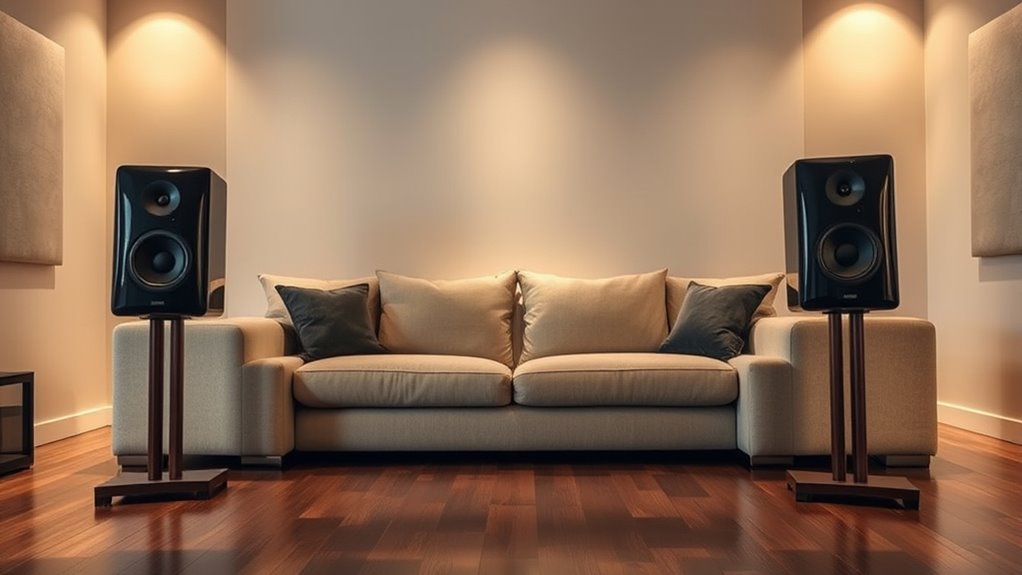
Have you ever wondered why your speakers don’t sound as good as they should? The answer often lies in how you’ve positioned them and the room’s acoustics. Your room’s layout and materials influence how sound waves travel and reflect, impacting clarity and depth. To get the best sound, start by paying attention to room acoustics because they set the stage for your speakers’ performance. Hard surfaces like glass or bare walls reflect sound, creating echoes and muddiness, while softer materials such as carpets, curtains, and furniture absorb some frequencies, helping to balance the sound. Recognizing these factors allows you to make smarter placement choices.
When it comes to speaker placement tips, consider positioning your speakers so they form an equilateral triangle with your listening spot. Keep them at ear level when you’re seated, which ensures sound hits you directly without unnecessary reflections or muffling. Avoid placing speakers directly against walls or corners, as this often causes bass boominess and uneven frequency response. Instead, try pulling them a few feet away from the walls to reduce reflections and improve clarity. If your room is small or has a lot of reflective surfaces, adding rugs, curtains, or wall panels can help tame harsh echoes and improve sound quality.
Angles also matter. Slightly angling your speakers toward your listening position directs sound waves more accurately, creating a more immersive experience. Experiment with speaker angles and distances until you find the sweet spot where sound feels balanced and natural. Don’t forget to consider symmetry; placing your speakers symmetrically relative to your listening area helps produce a more even stereo image. If possible, keep the speakers equidistant from your primary listening position, which minimizes phase differences and enhances stereo separation. Additionally, exploring modern audio technology such as speaker calibration tools can further optimize your setup for the best sound.
Lastly, be mindful of furniture placement. Large pieces can block sound paths or cause unwanted reflections, so arrange your furniture to allow a clear line of sight between your speakers and your ears. By paying attention to room acoustics and applying these speaker placement tips, you’ll notice a significant improvement in sound clarity and overall listening experience. It’s about creating an environment where sound can breathe and reach you in its best form. With a few adjustments, your speakers will perform at their peak, transforming your space into a true listening haven.
bookshelf speakers for optimal sound
As an affiliate, we earn on qualifying purchases.
As an affiliate, we earn on qualifying purchases.
Frequently Asked Questions
Do Speaker Placement Tips Differ Between Indoor and Outdoor Setups?
Yes, speaker placement tips differ between indoor and outdoor setups. Indoors, you should focus on speaker calibration and avoiding reflections by positioning speakers away from walls and corners. Outdoors, prioritize speaker isolation from ground vibrations and obstacles that can affect sound projection. Adjust placement based on environment to optimize sound quality, ensuring your speakers are well-calibrated and isolated for clear, immersive audio whether inside or outside.
How Does Room Shape Affect Optimal Speaker Positioning?
Room shape particularly influences ideal speaker placement because it affects acoustic reflections and room acoustics. You should place your speakers away from corners and walls to minimize unwanted reflections, which can muddy sound quality. In irregularly shaped rooms, experiment with positioning to find the spot where reflections are minimized, creating clearer sound. Remember, considering the room’s shape helps you achieve balanced sound and reduces acoustic issues that distort your listening experience.
Can Furniture Placement Impact Sound Quality From Speakers?
Furniture placement definitely impacts sound quality from your speakers. You need to be mindful of decorative elements and furniture materials, as they can absorb or reflect sound waves, throwing off your audio experience. Keep large pieces away from direct speaker paths, and avoid placing soft furnishings like plush rugs or heavy curtains right behind or in front of speakers. Think of it as hitting two birds with one stone—improving both room aesthetics and sound clarity.
What’s the Best Height to Position Bookshelf Speakers?
You should position your bookshelf speakers at ear level when seated for ideal sound. The ideal speaker height places the tweeters roughly at your ear height, ensuring clear highs and balanced sound. When arranging bookshelf placement, consider angling them slightly towards your listening spot. This setup enhances sound clarity and stereo imaging, making your listening experience more immersive and enjoyable. Always tune the height based on your seating position for best results.
How Should I Position Speakers in a Multi-Room Audio System?
You should position your multi-room speakers to guarantee even sound distribution, aiming for a balanced acoustic environment. Use speaker calibration to fine-tune levels and avoid dead spots. Incorporate acoustic treatments like rugs or wall panels to minimize echo and improve clarity. Place speakers at ideal distances from walls and furniture, and consider their height for consistent sound. Proper positioning combined with calibration and treatments creates a seamless, immersive listening experience throughout your space.
As an affiliate, we earn on qualifying purchases.
Conclusion
By carefully positioning your speakers, you guarantee a rich, immersive sound experience that rivals the finest concert halls. Remember, even in this digital age, a well-placed speaker is as crucial as a well-tuned Stradivarius. Don’t be afraid to experiment—think of it as your own personal Renaissance. With a little patience and an ear for detail, you’ll create a sonic environment that transports you, making every listening session feel like a private concert in your very own salon.
As an affiliate, we earn on qualifying purchases.
speaker stands for best positioning
As an affiliate, we earn on qualifying purchases.
As an affiliate, we earn on qualifying purchases.
NFL season / tailgating Picks
team gear
As an affiliate, we earn on qualifying purchases.