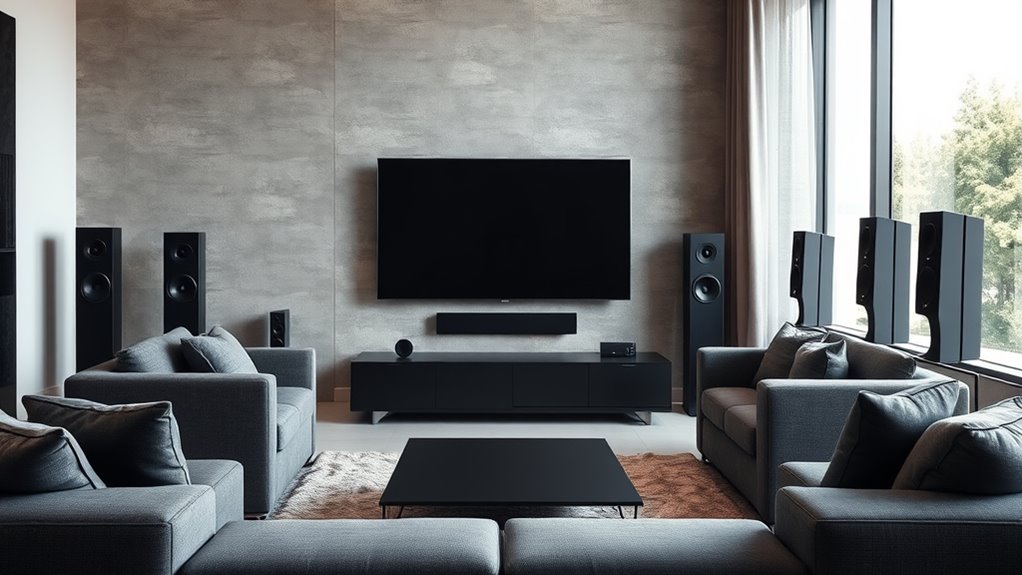

Choosing between a soundbar and surround sound depends on your room size, budget, and how immersive you want your audio. Soundbars are simple to set up, space-saving, and ideal for smaller rooms or quick upgrades. Surround sound offers a more immersive experience with multiple speakers, perfect for larger spaces but requires more effort and investment. To find out which fits your needs best, consider your room layout and audio preferences—more details await if you explore further.
Key Takeaways
- Choose a soundbar for simple setup, space-saving design, and smaller rooms; opt for surround sound for immersive, large-space experiences.
- Soundbars provide virtual surround effects ideal for casual listening; surround systems deliver precise, multi-directional audio for home theaters.
- Budget-conscious users benefit from soundbars’ affordability and ease of installation; surround sound offers higher fidelity but requires more investment.
- Consider room size and furniture placement—larger rooms and complex setups favor surround sound; smaller spaces suit soundbars.
- Prioritize features like wireless connectivity and smart controls in soundbars or advanced calibration options in surround systems based on your preferences.
Understanding the Basic Differences Between Soundbars and Surround Sound
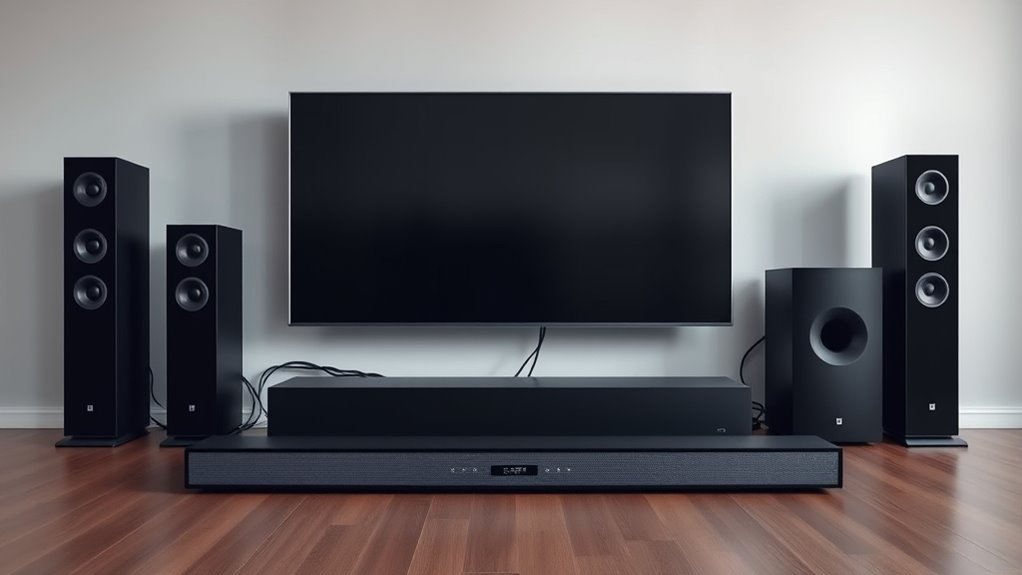
While both soundbars and surround sound systems aim to enhance your audio experience, they do so in different ways. Soundbars use advanced audio technology to deliver a broad soundstage from a single, sleek unit, simplifying setup and saving space. They rely on sound engineering to optimize clarity, bass, and dialogue, often incorporating virtual surround effects. Surround sound systems, on the other hand, involve multiple speakers placed around your room to create an immersive environment. This setup demands more complex sound engineering, with speakers dedicated to specific channels, providing a more precise and enveloping experience. While soundbars focus on convenience and design, surround sound offers a more detailed and spatial audio experience. Your choice depends on your room size, desired immersion, and technical preferences. Additionally, understanding the relationship between audio quality and speaker placement can help you make a more informed decision. Proper speaker placement and calibration are crucial for achieving optimal sound quality in either setup. Moreover, paying attention to speaker positioning can significantly impact overall audio performance, regardless of the system you select. Furthermore, considering room acoustics can help optimize sound reflection and absorption, enhancing your listening experience.
Evaluating Your Room Size and Layout
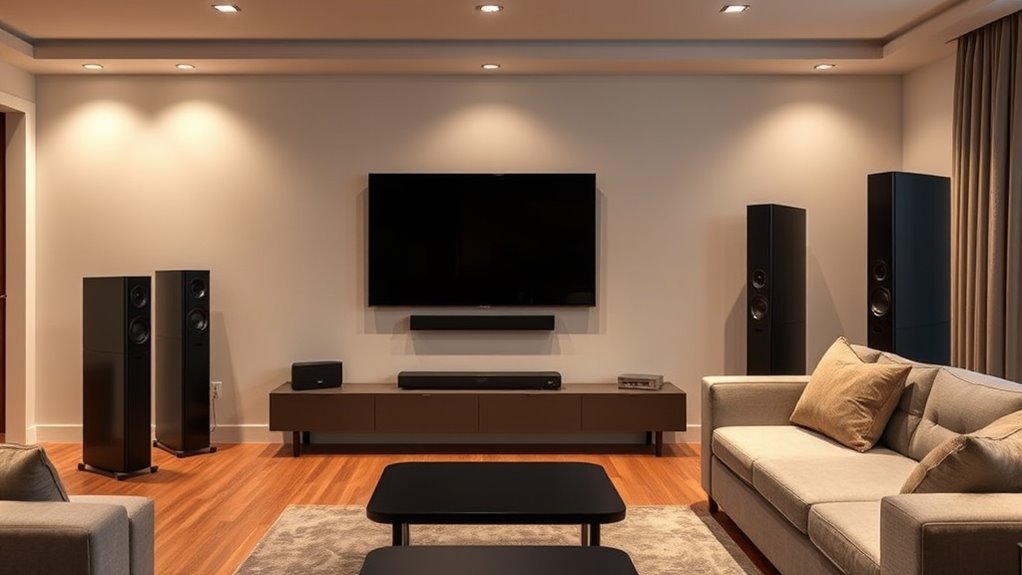
Your room size and layout play a significant role in determining the best audio setup for your space. To enhance sound quality, consider how room acoustics and furniture placement affect audio performance. Larger rooms may benefit from surround sound systems that fill the space, while smaller rooms often work better with a soundbar. Pay attention to how furniture influences sound reflection and absorption, which can impact clarity and bass response. Proper furniture placement can reduce echo and dead spots, enhancing your listening experience. Additionally, understanding sound reflection points can help optimize your speaker positioning for the best acoustics. Considering room acoustics and their impact on sound reflection can further improve your audio environment. Recognizing room dimensions and their influence on sound distribution can also help you choose the most suitable audio system. Properly assessing space characteristics can ensure your audio setup maximizes sound quality and comfort. Being aware of how room size variations influence speaker performance can also guide your equipment selection for optimal results.
Comparing Installation and Setup Processes
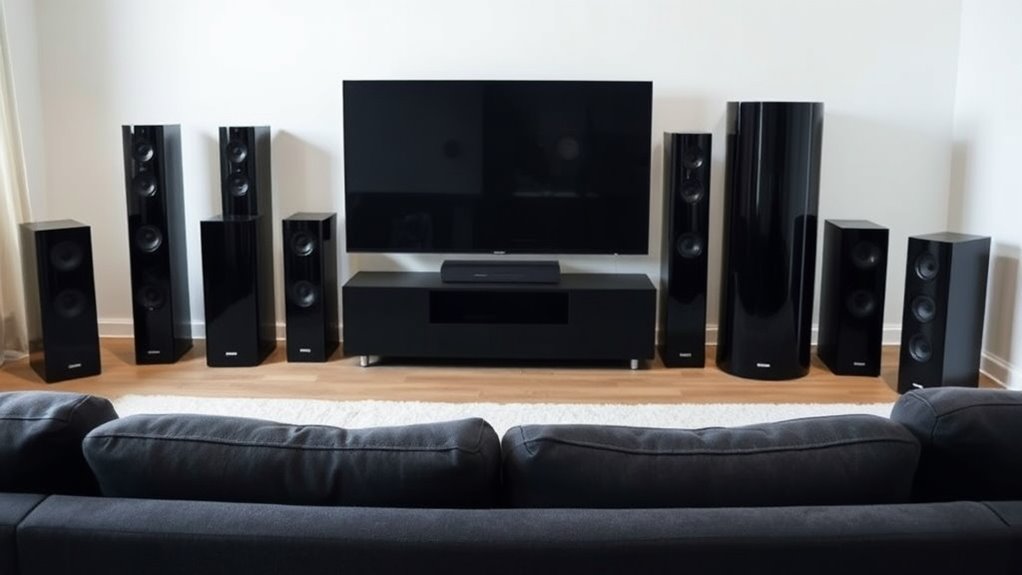
Installing a soundbar typically involves a straightforward process that can often be completed in minutes, making it an appealing option for those seeking quick setup. You’ll find various mounting options, including wall brackets or placing it directly on a stand or shelf. Mounting the soundbar is simple and usually requires just a few screws and a drill, with many models coming with mounting kits. Once in place, connecting the soundbar to your TV is quick, often via HDMI, optical, or Bluetooth. The remote control simplifies operation, allowing you to adjust volume, input, and sound settings easily. In contrast, surround sound systems usually involve more complex setup, including speaker placement and wiring. Overall, soundbars offer a faster, less complicated installation process, and some models incorporate easy-to-use wireless connectivity for a seamless setup experience. Additionally, the market demand for quick and simple audio solutions has driven manufacturers to streamline the installation process further, often leveraging Jet Boat technology to deliver better sound quality with minimal effort.
Assessing Sound Quality and Immersiveness
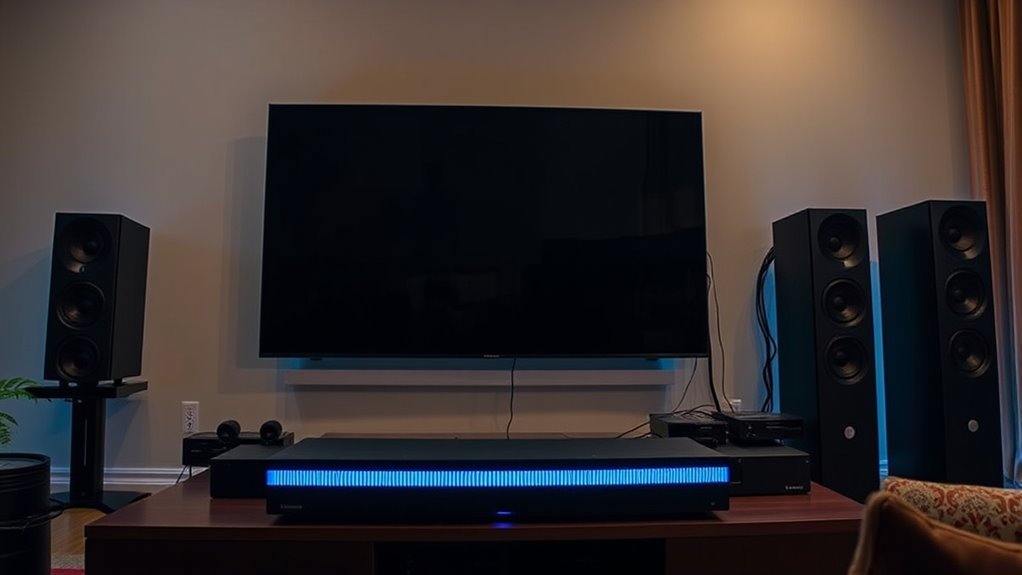
When you evaluate sound quality, pay close attention to audio clarity and depth, which affect how realistic and full your listening experience feels. Surround sound systems typically create a more immersive environment by surrounding you with audio from multiple directions. Consider how well each setup reproduces details and fills the space to determine which option enhances your overall listening experience. Additionally, understanding residency requirements can help you choose the best setup based on your location and legal considerations. As the integration of generative AI in media production advances, audio and visual quality are expected to improve, creating more realistic and engaging entertainment experiences. Staying informed about audio technology trends can also assist in selecting the most suitable sound system for your needs, ensuring you benefit from the latest innovations in audio enhancement and immersive audio experiences. Moreover, advancements in vibrational technology are contributing to more precise sound reproduction, further elevating the quality of surround sound systems.
Audio Clarity and Depth
How do soundbars and surround sound systems compare regarding audio clarity and depth? Sound clarity depends heavily on proper speaker placement and sound calibration. Surround systems typically offer richer depth because multiple speakers can be positioned for precise sound layering, creating a more immersive experience. In contrast, soundbars rely on advanced digital processing to simulate depth, which can sometimes fall short. To maximize clarity, make certain your surround speakers are correctly positioned and your system is well-calibrated. This setup helps differentiate subtle sounds and enhances overall depth. Factors influencing audio quality include the quality of individual speakers, room acoustics, and calibration settings, all vital in delivering crisp, immersive sound. Speaker placement influences sound layering and clarity. Additionally, sound calibration plays a crucial role in optimizing the audio experience by adjusting settings for your specific room and equipment. Proper system setup can be a key factor in fully realizing the potential of either audio solution. Moreover, understanding the Kia Tuning options available for vehicle audio systems can further enhance sound quality for in-car entertainment.
Surround Sound Immersion
Surround sound systems deliver a heightened sense of immersion by enveloping you in a three-dimensional audio environment. To truly experience this, you need strong bass response, which adds depth and impact to sound effects and music. Proper audio calibration is essential; it guarantees that each speaker is balanced and positioned correctly, maximizing spatial accuracy. When calibrated well, you’ll notice sounds coming from specific directions, enhancing the realism of movies and games. This level of immersiveness makes you feel like you’re part of the scene, whether it’s the whisper of leaves behind you or a distant explosion. Additionally, using high-quality sound recording equipment can significantly improve the clarity and fidelity of the audio captured, ensuring a more authentic listening experience. Ultimately, surround sound’s ability to create a fully enveloping soundscape depends on your equipment’s quality and your calibration efforts. This ensures you enjoy a richer, more engaging audio experience.
Considering Your Budget and Long-Term Investment

Choosing between a soundbar and a surround sound system largely depends on your budget and how much you’re willing to invest in the long run. Your budget considerations play a pivotal role in determining the right choice, as surround sound systems often require a higher initial investment. Think about the long-term value—will the system remain satisfying over time? A soundbar may offer better affordability and simpler maintenance, making it a smart option if you’re budget-conscious. Conversely, investing in a surround sound system could enhance your home theater experience considerably, but at a higher cost. Consider these factors:
Choose a soundbar for affordability; opt for surround sound for a richer home theater experience.
- Initial purchase price
- Installation costs
- Maintenance and upgrades
- Durability and build quality
- Resale or upgrade potential
Analyzing Aesthetic Appeal and Space Compatibility
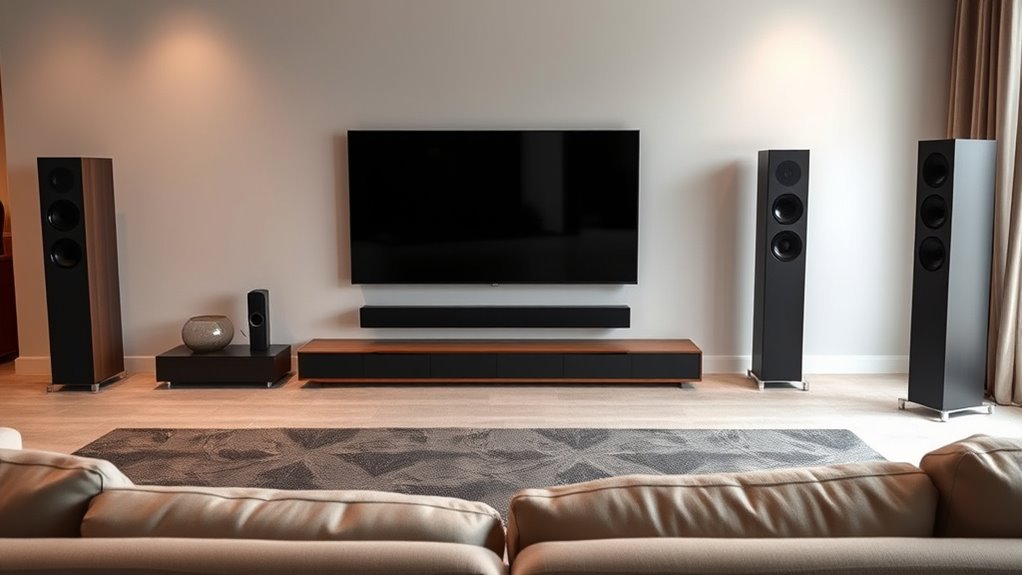
When evaluating your home entertainment setup, considering how well a system fits your space and matches your decor can considerably influence your choice. A sleek soundbar often enhances aesthetic harmony, blending seamlessly with your furniture and TV. Its slim profile maximizes space efficiency, especially in smaller rooms. Surround sound systems, however, may require more room for speakers and may disrupt your decor with multiple components.
| Feature | Soundbar | Surround Sound System |
|---|---|---|
| Aesthetic harmony | Elegant, minimalistic | Bulkier, more components |
| Space efficiency | High, fits under or beside TV | Lower, needs additional space |
| Compatibility with decor | Easy to match with modern styles | May clash with existing decor |
| Room size suitability | Best for smaller to medium rooms | Ideal for larger, dedicated spaces |
Exploring Compatibility With Existing Devices and Systems
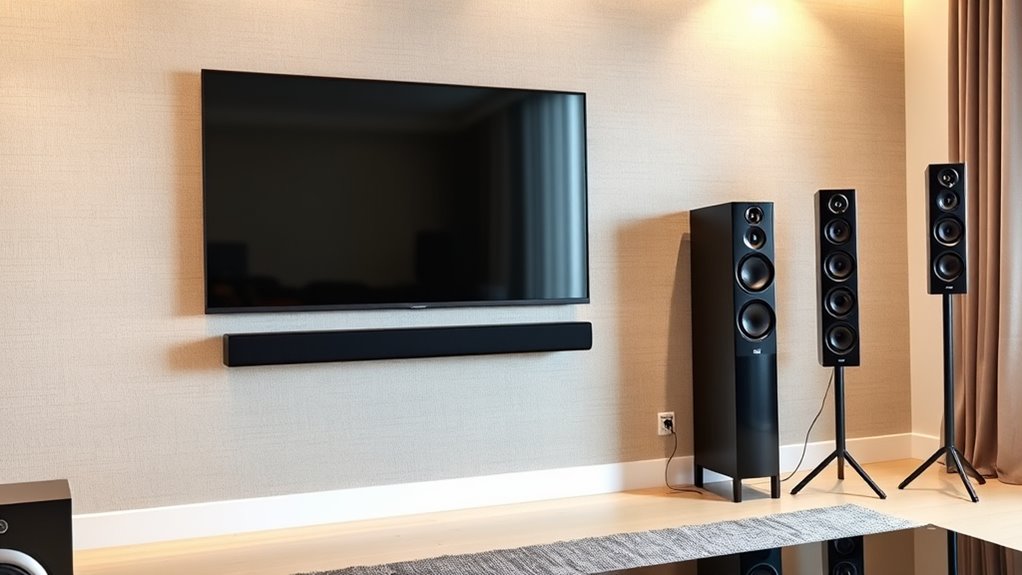
While both soundbars and surround sound systems can enhance your home theater experience, their compatibility with your existing devices varies markedly. You need to take into account device compatibility and how well each system integrates with your current setup. Soundbars typically connect easily via HDMI ARC, optical, or Bluetooth, making system integration straightforward. Surround sound systems may require multiple connections, such as AV receivers and speaker wires, complicating setup. Check if your TV supports the necessary inputs and if your devices can communicate seamlessly. Also, think about whether your existing devices support features like Dolby Atmos or DTS:X. Proper compatibility ensures smooth operation without needing extra adapters or upgrades, letting you enjoy your audio experience without frustration.
Ensure your devices are compatible for seamless sound system integration and optimal home theater experience.
- HDMI ARC/eARC support
- Bluetooth or Wi-Fi connectivity
- Compatibility with existing AV receivers
- Support for advanced audio formats
- Ease of integration with smart home systems
Examining Additional Features and Connectivity Options
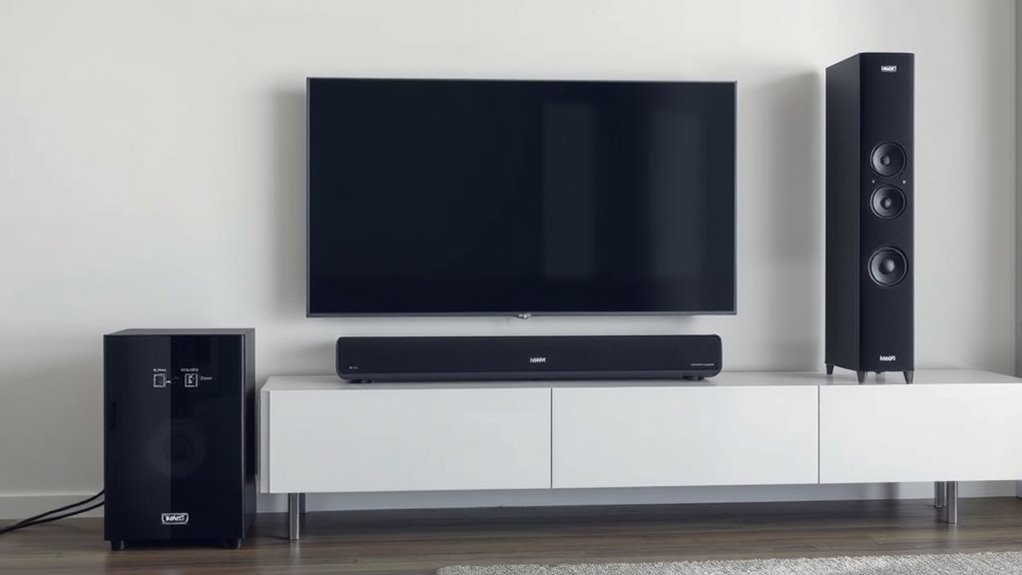
To maximize your audio setup, it’s important to contemplate the additional features and connectivity options available with each system. Many soundbars offer wireless connectivity, allowing you to stream music seamlessly via Bluetooth or Wi-Fi, reducing clutter and improving convenience. Smart features, like voice control and app integration, enhance user experience by providing easy operation and customization. Surround sound systems may also include advanced connectivity options, such as HDMI ARC or optical inputs, but often lack the wireless flexibility of soundbars. Visualize these options with the table below:
| Feature | Soundbar | Surround Sound |
|---|---|---|
| Wireless Connectivity | Yes, via Bluetooth/Wi-Fi | Limited, often wired |
| Smart Features | Voice control, app control | Usually absent or basic |
| Connectivity Options | HDMI, optical, Bluetooth | HDMI, optical, RCA |
Maintenance and Upkeep Requirements
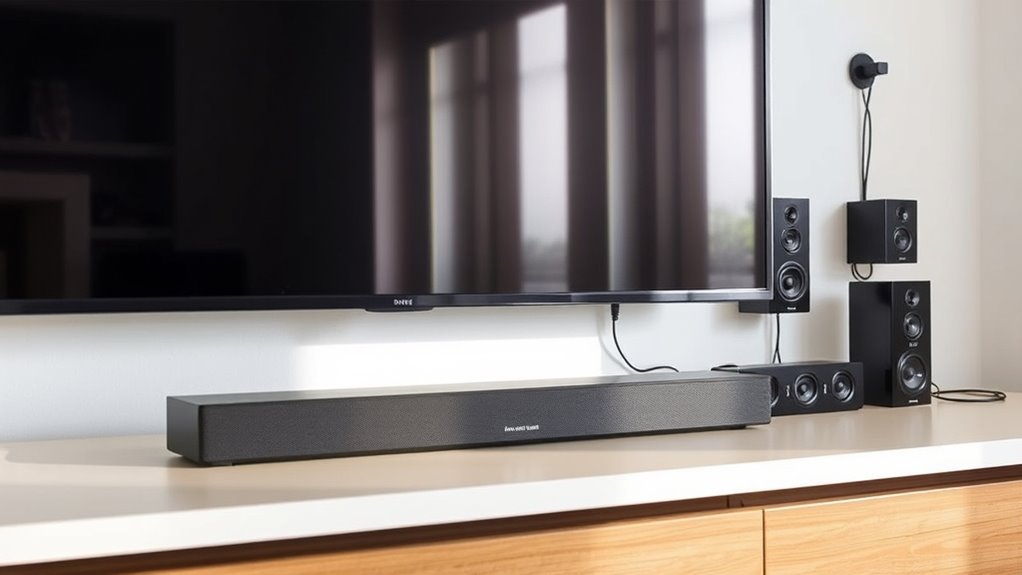
Keeping your sound system in good shape means paying attention to easy cleaning and regular checks. You should wipe down your equipment regularly and make certain all connections are secure. Staying on top of these simple tasks helps prevent issues and keeps your audio running smoothly.
Ease of Cleaning
Soundbars generally require less maintenance than surround sound systems because they have fewer components and simpler setups. You’ll find that dust accumulation is minimal, making cleaning easier and less frequent. Typically, wiping the surface with a soft, dry cloth every few weeks suffices. Regularly cleaning the vents and grille helps prevent dust buildup that can affect sound quality. Surround sound systems often need more attention due to multiple speakers and cables, which attract dust and dirt.
- Dust accumulation on surfaces and vents
- Cleaning frequency is lower for soundbars
- Use of microfiber cloths prevents scratches
- Avoid harsh chemicals to protect delicate parts
- Regular dusting maintains ideal performance
Regular System Checks
Regular system checks are essential to guarantee your audio setup performs at its best over time. You should routinely perform audio calibration to ensure sound quality remains clear and balanced. Regularly testing your hardware diagnostics helps identify potential issues early, preventing unexpected failures. Check connections, cables, and power sources to avoid signal loss or distortion. Keep firmware and software updates current, as they often include important performance improvements. Listening for irregularities in sound or dropouts can also indicate the need for maintenance. By staying proactive with these checks, you’ll extend your system’s lifespan and maintain exemplary audio performance. Consistent upkeep minimizes troubleshooting later, saving you time and frustration. Prioritize regular system checks to keep your audio experience smooth and enjoyable over the long term.
Making the Final Decision Based on Your Priorities
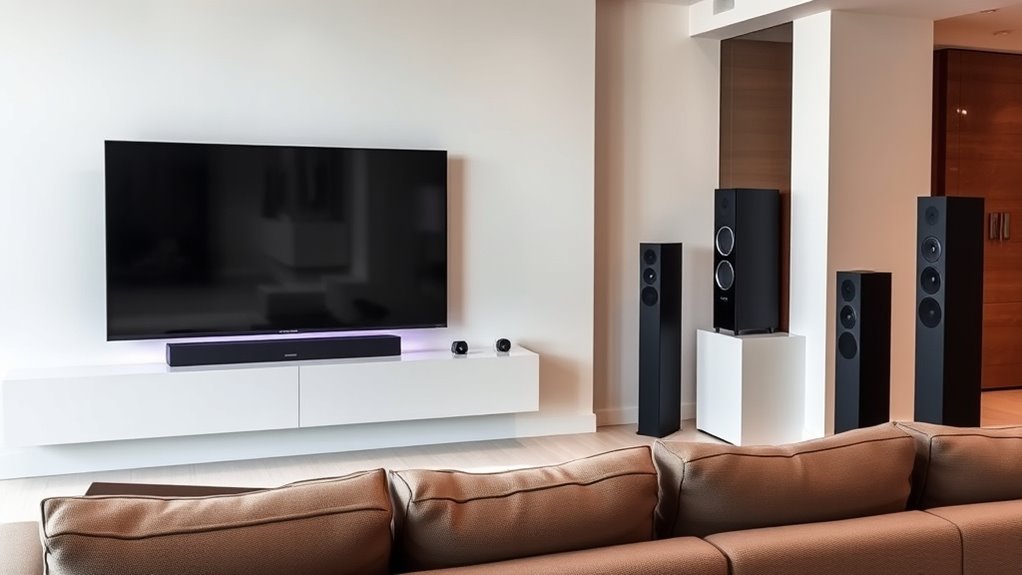
Ultimately, choosing between a soundbar and surround sound depends on what matters most to you. Consider your priorities, such as ease of use, sound quality, space, and customization. If quick setup and simplicity are key, a soundbar with intuitive sound calibration features and a user-friendly remote control might suit you best. On the other hand, if immersive audio and flexibility are more important, surround sound systems could be the better choice. Think about how often you’ll adjust settings or need to troubleshoot. Your decision should reflect your lifestyle and how you prioritize convenience versus audio experience.
- Ease of setup and use
- Sound calibration options
- Space constraints
- Budget considerations
- Customization and expandability
Frequently Asked Questions
Can I Upgrade My Current Audio System to a Soundbar or Surround Sound?
Yes, you can upgrade your current audio system to a soundbar or surround sound. First, check your audio system compatibility with new devices, ensuring your setup supports the connections needed. Consider installation considerations like space, wiring, and whether you prefer a simple setup with a soundbar or a more immersive surround sound system. This upgrade can enhance your audio experience, making movies and music more engaging.
How Does Room Acoustics Influence Soundbar or Surround Sound Performance?
Room acoustics and speaker placement considerably influence your sound experience. Poor acoustics can muddle sound, making clarity hard to hear, while good acoustics enhance audio richness. Proper speaker placement ensures sound spreads smoothly, avoiding dead spots or echoes. You can optimize your setup by adjusting speaker positions and improving room surfaces, like adding soft furnishings, to create a cozy, clear, and engaging sound environment that maximizes your soundbar or surround sound system.
Are Wireless Options Available for Both Soundbars and Surround Sound Systems?
Yes, wireless options are available for both soundbars and surround sound systems. You can enjoy wireless connectivity through Bluetooth or Wi-Fi, making setup easier and reducing clutter. Many systems come with remote controls that support wireless streaming and control, so you can adjust volume or change settings effortlessly. Wireless systems offer flexibility, allowing you to place speakers anywhere in the room without worrying about cables, enhancing your overall audio experience.
What Is the Typical Lifespan of a Soundbar Compared to Surround Sound Equipment?
You’ll find that soundbars generally last around 5 to 10 years, thanks to their durability comparison and simpler design. Surround sound systems, with more components and wiring, often require more maintenance and might not last as long—around 5 to 8 years. Proper care, like regular cleaning and avoiding power surges, can extend their lifespan. Overall, soundbars tend to be more durable and easier to maintain.
How Do Warranty and Customer Support Differ Between Soundbars and Surround Sound Systems?
You’ll find that warranty differences often favor soundbars, which usually come with shorter, more straightforward coverage, while surround sound systems may offer longer warranties due to their complexity. Customer support quality varies; manufacturers of soundbars tend to provide quicker, more accessible support, whereas surround sound support might be more detailed but slower. Consider these factors when choosing, as reliable warranty and support can save you time and money later.
Conclusion
Ultimately, choosing between a soundbar and surround sound boils down to your room, your budget, and your preferences. Consider your space, appraise your needs, and weigh the features that matter most. Decide whether you want simplicity or a true cinematic experience. By understanding your priorities, evaluating your setup, and exploring your options, you’ll make a confident choice that elevates your home entertainment. Your perfect sound solution is just a decision away.