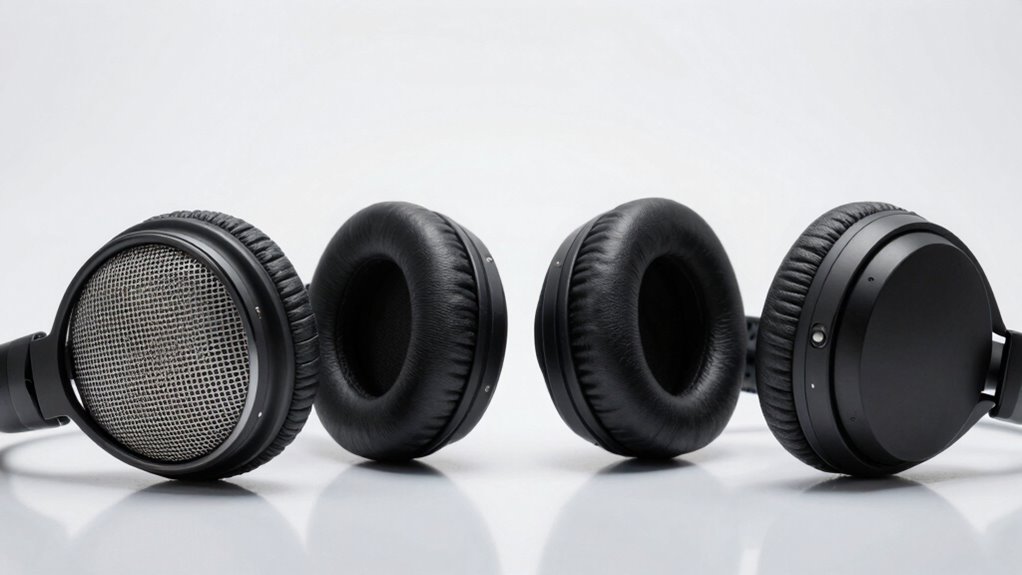

If you’re after natural, spacious sound, open-back headphones are your best choice, especially in quiet environments, as they offer a real sense of soundstage. However, if you need noise blocking for commuting or noisy spaces, closed-back headphones are more suitable, with their sealed design and often built-in noise cancellation. Your listening style and environment will guide your pick, but there’s more to discover to find the perfect fit for you.

Get the latest gadgets delivered free with Prime
- Fast, free delivery on millions of items
- Prime Video, Amazon Music and more included
- Member-only deals all year
Key Takeaways
- Open-back headphones suit natural, immersive listening for quiet environments and critical listening, but lack noise isolation.
- Closed-back headphones are ideal for active, noisy settings, providing better noise reduction and privacy.
- Sound quality preference varies: open-backs offer spacious, live-like sound; closed-backs emphasize isolation and bass.
- Comfort and durability depend on ear cup design; choose based on long-term wear needs and listening duration.
- Wireless and noise-canceling features enhance usability in mobility-focused or noisy situations.
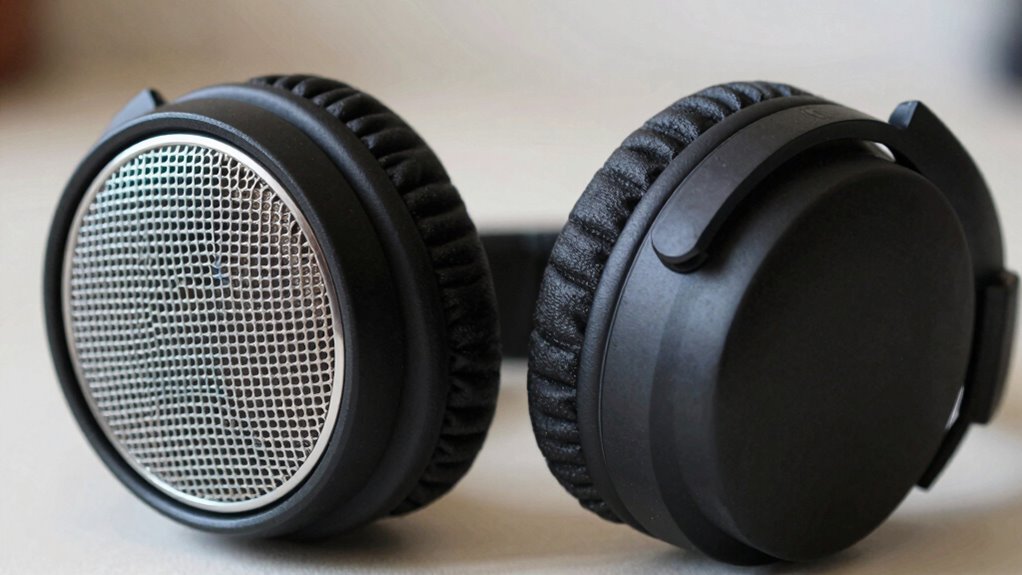
When choosing between open-back and closed-back headphones, understanding their fundamental differences can greatly impact your listening experience. If you value a natural, spacious sound, open-back headphones are often the better choice. They allow air and sound to flow freely through the ear cups, which creates a more immersive listening environment. This design is ideal if you’re in a quiet setting and want to experience music as close to live performance as possible. However, because open-back models don’t seal your ears completely, they don’t do much to block outside noise. If noise cancellation is a priority—say, you’re commuting or working in a noisy environment—these headphones might not be suitable. They’re less effective at isolating sound, and your surroundings can easily interfere with your listening experience.
On the other hand, closed-back headphones excel at blocking out external noise. Their sealed design traps sound inside, making them perfect for noisy settings or when privacy is important. You’ll find that these headphones often come with noise cancellation features, either passive or active, which further enhance the listening experience by reducing ambient sounds. This makes them a popular choice for travel, office use, or anytime you want to focus without distractions. Plus, with advancements in wireless connectivity, many closed-back models now offer seamless wireless connections, giving you the freedom to move around without being tethered by cords. Wireless connectivity also means you can enjoy high-quality audio without sacrificing convenience, especially if you’re using noise-canceling features that require a stable connection. Additionally, some models incorporate digital audio technology, enhancing sound quality even further. Furthermore, the contrast ratio of headphones can influence how vibrant and detailed the sound appears, especially in dynamic audio environments.
It’s also worth considering the sound leakage of the headphones, especially if you often listen at higher volumes in shared spaces. Your listening style influences which type suits you better. If you love to feel immersed in music, appreciate open soundstage, and mostly listen in quiet environments, open-back headphones are likely your preference. They provide a more natural sound, but remember that they tend to leak sound outward and don’t offer much noise isolation. Additionally, the ear cup design can affect comfort during long listening sessions, so it’s worth trying different styles to see what fits best. When selecting headphones, think about the durability and how well they will hold up over time, especially if you plan on frequent use. Conversely, if you need headphones that provide significant noise cancellation and block out distractions, closed-back models are more practical. They’re generally better for commuting, working out, or any situation where external noise interferes with your listening. Whether you prioritize wireless connectivity or noise cancellation features, both types have models tailored to different needs. Choosing the right pair depends on your environment, listening habits, and whether you prefer openness and clarity or isolation and focus.
open-back headphones for natural sound
As an affiliate, we earn on qualifying purchases.
As an affiliate, we earn on qualifying purchases.
Frequently Asked Questions
How Do Open-Back Headphones Affect Outdoor Listening Experiences?
Open-back headphones aren’t ideal for outdoor listening because environmental noise easily leaks in, disrupting your experience. Plus, they lack outdoor durability, making them less resistant to dust, moisture, or accidental drops. You might enjoy richer sound indoors, but outside, their openness can be a drawback. For outdoor use, closed-back headphones are better—they block environmental noise and are designed to withstand outdoor conditions, enhancing your listening experience.
Are Closed-Back Headphones Suitable for Professional Studio Work?
Yes, closed-back headphones are suitable for professional studio work because they deliver accurate studio sound and isolate you from external noise, helping you focus. Their design also enhances headphone durability, making them reliable for long studio sessions. You can trust them to reproduce clear, detailed audio, which is essential for mixing and mastering. Overall, they’re a practical choice for professionals who need consistent performance and durability.
Can Open-Back Headphones Cause Sound Leakage Into Nearby Environments?
Imagine you’re whispering secrets into a megaphone—those open-back headphones do the same with sound. Yes, they cause sound leakage into nearby environments, making privacy a joke. If you’re trying to keep your playlist or confidential calls private, open-backs aren’t your best friends. Instead, they broadcast your audio to everyone around, turning your intimate listening session into a neighborhood event. Privacy concerns? You bet.
Do Closed-Back Headphones Offer Better Noise Isolation Than Open-Back?
Yes, closed-back headphones generally offer better noise isolation than open-back models. They provide soundproofing advantages by sealing your ears more effectively, reducing external noise. Their noise cancellation features help you focus on your audio without interruptions. If you need to block out background sounds or maintain privacy, closed-back headphones are the better choice for soundproofing and noise cancellation.
How Do Headphone Materials Impact Comfort During Long Listening Sessions?
The manufacturing materials and ergonomic design greatly impact your comfort during long listening sessions. Soft padding made from memory foam and breathable fabrics reduce pressure points, preventing fatigue. Lightweight materials, like aluminum or high-quality plastics, lessen strain on your head and neck. An ergonomic design that fits your head shape guarantees a secure, comfortable fit, allowing you to enjoy extended listening without discomfort. Prioritize these factors when choosing headphones for prolonged use.
noise-canceling closed-back headphones
As an affiliate, we earn on qualifying purchases.
As an affiliate, we earn on qualifying purchases.
Conclusion
So, whether you’re craving the airy bliss of open-back headphones or the isolating fortress of closed-backs, remember—your choice is as personal as your playlist. Just don’t expect your neighbors to thank you for the open-back’s concert hall sound or your coworkers to applaud your closed-back’s silence. In the end, pick what makes your ears happy—because, let’s face it, your neighbors probably won’t. Happy listening!
wireless noise-canceling headphones
As an affiliate, we earn on qualifying purchases.
As an affiliate, we earn on qualifying purchases.
best headphones for critical listening
As an affiliate, we earn on qualifying purchases.
As an affiliate, we earn on qualifying purchases.
Halloween Picks
halloween
As an affiliate, we earn on qualifying purchases.