
TL;DR

Get the latest gadgets delivered free with Prime
- Fast, free delivery on millions of items
- Prime Video, Amazon Music and more included
- Member-only deals all year
Asteroid 2026 JH2, roughly the size of Chicago’s Cloud Gate, will pass within 57,000 miles of Earth on May 18, the closest approach among recent near-Earth objects. It is not considered a threat. The event offers observation opportunities.
Asteroid 2026 JH2 will pass within approximately 57,000 miles of Earth on May 18, the closest approach among tracked near-Earth objects this year, with no threat of impact confirmed.
Asteroid 2026 JH2 is estimated to be about 20 meters (66 feet) in diameter, roughly the size of Chicago’s Cloud Gate sculpture. It will approach Earth at a minimum distance of about 57,000 miles, which is significantly closer than the Moon’s average distance of approximately 238,855 miles. The asteroid is classified as an Apollo-type near-Earth object (NEO), characterized by an orbit with a semi-major axis larger than Earth’s and a perihelion of less than 1.017 astronomical units.
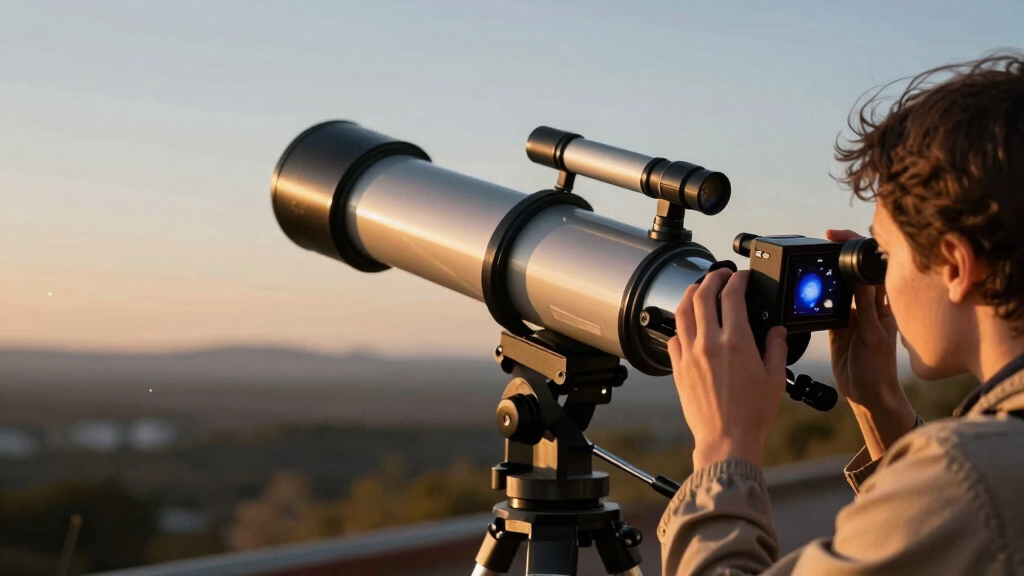
Scientists and observatories are tracking the asteroid’s trajectory, and current assessments indicate no risk of impact. The close approach has prompted interest from astronomers and space enthusiasts, who will be able to observe the asteroid via telescopes or during a live broadcast organized by Virtual Telescope. Despite the proximity, experts emphasize that such encounters are common and pose no immediate danger to Earth.
Why It Matters
This event is significant because it represents one of the closest approaches of a tracked near-Earth object in recent months. While the asteroid is not considered a threat, its passage offers valuable opportunities for observation and study, helping scientists refine tracking techniques for future objects that could pose risks.
Understanding the behavior and trajectory of objects like 2026 JH2 enhances planetary defense efforts. It also serves as a reminder of the importance of monitoring NEOs, even those that do not currently threaten Earth, to improve preparedness for potential future impacts.
telescopes for asteroid observation
As an affiliate, we earn on qualifying purchases.
As an affiliate, we earn on qualifying purchases.
Background
Near-Earth objects are continuously monitored by space agencies and observatories worldwide. The year 2026 has seen several close approaches, with 2026 JH2 being the most notable due to its proximity. Historically, many small asteroids pass near Earth without incident; for example, in 2025, asteroid 2025 TF came within about 260 miles of the surface. The classification of 2026 JH2 as an Apollo-type asteroid is based on its orbital parameters, which are well established through ongoing observations.
“While 2026 JH2’s proximity is notable, there is no current indication of impact risk. Such close approaches are common and provide excellent opportunities for observation and data collection.”
— Dr. Emily Carter, astronomer at NASA’s Near-Earth Object Program
“We will host a live broadcast of the asteroid’s flyby, allowing viewers worldwide to observe this rare event in real-time.”
— Virtual Telescope organization spokesperson
astronomy binoculars for space viewing
As an affiliate, we earn on qualifying purchases.
As an affiliate, we earn on qualifying purchases.
What Remains Unclear
While current data confirms the asteroid’s trajectory and distance, minor uncertainties remain regarding its exact orbit and future position, which are being refined through ongoing observations.
live telescope streaming devices
As an affiliate, we earn on qualifying purchases.
As an affiliate, we earn on qualifying purchases.
What’s Next
Following the May 18 flyby, astronomers will analyze the data collected to update models of the asteroid’s orbit. No further close approaches are expected in the immediate future, but monitoring will continue to track potential future risks.
As an affiliate, we earn on qualifying purchases.
Key Questions
Is asteroid 2026 JH2 dangerous to Earth?
Based on current measurements, there is no risk of impact from asteroid 2026 JH2. It will pass at a safe distance of about 57,000 miles.
Can I observe the asteroid during its flyby?
Yes, amateur astronomers with telescopes can observe the asteroid, and a live broadcast will be available from Virtual Telescope on May 18.
Why is this asteroid passing so close to Earth?
Its orbit brings it near Earth periodically; this particular approach is one of the closest recent encounters for tracked objects.
How often do asteroids pass this close to Earth?
Close approaches of small asteroids like 2026 JH2 occur regularly, with many passing within a few hundred thousand miles annually, but most pose no threat.
What measures are in place to detect potentially hazardous asteroids?
Space agencies worldwide, including NASA’s Near-Earth Object Program, continuously monitor and track NEOs to assess impact risks and develop mitigation strategies.
Fall Picks
fall essentials
As an affiliate, we earn on qualifying purchases.