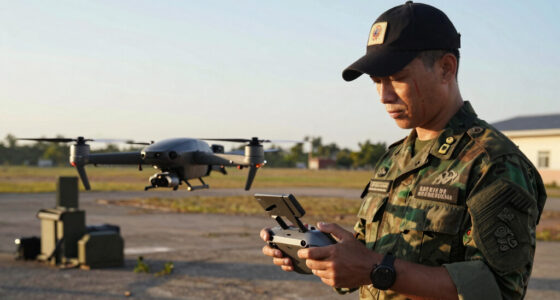

🔍 Read the full analysis: AI Is Rewriting The Timeline For Cyberattacks on ThorstenMeyerAI.com

Get the latest gadgets delivered free with Prime
- Fast, free delivery on millions of items
- Prime Video, Amazon Music and more included
- Member-only deals all year
TL;DR
A U.S. multi-agency advisory and Microsoft threat reporting describe attackers using AI-generated scripts and an agentic framework in real-world cyber activity. The reports show faster attempts, but also say most targeting in one campaign failed; a forecast of a coming surge in vulnerabilities remains an expert opinion, not a measured trend.
U.S. agencies and Microsoft have reported AI-assisted cyber operations involving scripts aimed at industrial controllers and an agentic framework used in attacks on cloud tenants, bringing fresh evidence that automation is changing the speed of some attack steps. The reports describe real activity, but do not show that AI makes attacks reliably successful: Microsoft said most of the targeting in one campaign failed.
A joint advisory published Aug. 18 by the NSA, CISA, FBI, Department of Energy and Environmental Protection Agency said actors were using AI-generated exploitation scripts against internet-reachable Siemens S7 programmable logic controllers, or PLCs. These industrial computers can control equipment in sectors including manufacturing, energy, water, chemicals, and food and agriculture. The agencies described the activity as active, and assessed that it was likely preparation for possible operational effects. That assessment does not establish that attackers caused physical disruption.
Microsoft Threat Intelligence reported Oct. 21 that Storm-0940, which Microsoft describes as aligned with the Chinese state, used the open-source ARTEX multi-agent penetration-testing framework in activity connected to a ConnectWise Cloud Backup compromise. Microsoft said the actor used credentials associated with the app to attempt logins against more than 2,250 tenants. Between Oct. 10 and 14, Microsoft recorded more than 151,000 failed logons in a password-spraying campaign, peaking at 2,900 failures per minute; Microsoft said none of those attempts succeeded. In several attacks, the time from initial targeting to privileged cloud access was under three hours.
Microsoft cautioned that most targeting was unsuccessful and that an affected app or successful sign-in does not necessarily mean data was accessed. ConnectWise said existing backup archives showed no indication of compromise and that it suspended Cloud Backup, SaaS Security and Cloud Management while investigating. Separately, OpenAI said AI had identified critical PHP vulnerabilities before attackers did; the flaws were patched Oct. 21. OpenAI forecast that similar AI-found vulnerabilities would “increase sharply in the coming months”, a prediction rather than a confirmed future trend.
Infographic 01 · The record so far
AI is in the attacker’s toolchain. On the record.
Six documented events in twelve weeks. Each label says what the source itself states about AI. Figures are the vendors’ and agencies’ own.
- 30 Jul 2026Unit 42: AI on attackDeepSeek inside the Hermes Agent framework picks and switches targets on its own. Limited impact: across autonomous and manual attempts, data theft from 3 NetScaler systems confirmed. Single-vendor report.
- 18 Aug 2026NSA, CISA, FBI, DOE, EPA: AI on attackAI-generated exploitation scripts, disguised as monitoring tools, against Siemens S7 PLCs in US critical infrastructure. “Not a theoretical risk.”
- 10–14 OctStorm-0940 password spray: AI on attack151,000+ failed logons across eight organizations. No successful sign-in. Lockouts made up nearly 98% of responses.
- 16–21 OctConnectWise Cloud Backup: AI on attackStolen app credentials, then machine-speed sign-ins to customer tenants. Microsoft attributes it to the China-state aligned Storm-0940.
- 21 Oct 2026OpenAI, Patch the Planet: AI on defenceAI found the critical PHP flaws before attackers did. OpenAI expects similar findings to “increase sharply in the coming months.”
- 21–22 OctQuest Diagnostics: no AI link reportedUnauthorized access to a lab ordering and results system; certain patient records accessed. No cause or attacker named.
Most AI-driven attempts in these reports failed. What changed is the cost of trying.Assessment: Thorsten Meyer
Sources: Unit 42 (30 Jul 2026); NSA, CISA, FBI, DOE, EPA advisory (18 Aug 2026); Microsoft Threat Intelligence (21 Oct 2026); ConnectWise Trust Center (from 16 Oct 2026); OpenAI, Patch the Planet (21 Oct 2026); Quest Diagnostics Form 8-K (22 Oct 2026).
Powered by Thorsten Meyer AI
Automation Compresses Attack Timelines
The significance is less that AI has created a new kind of attacker than that it can speed up familiar tasks. Reconnaissance, credential attempts, exploit adaptation and use of trusted software can be carried out with less continuous human involvement. Microsoft says ARTEX can operate across stages from reconnaissance to data exfiltration with little human interaction; that is a description of the framework’s capability, not proof that every stage succeeded in this campaign.
Shorter timelines can leave defenders less time to detect suspicious access, confirm its scope and respond before an intruder reaches privileged accounts. The risk is especially relevant where organizations depend on cloud applications or remotely accessible industrial systems. At the same time, high volumes of failed logons and the agencies’ recommended controls underline that ordinary weaknesses still matter: exposed equipment, weak account protections and gaps in monitoring can give automated activity room to operate.
AI also affects the defensive workload. If automated analysis identifies more software flaws, organizations may face more fixes to assess and deploy. OpenAI’s forecast points to that possibility, but the source material gives no measured estimate of how many additional vulnerabilities will be found or how quickly organizations can patch them.
hardware security key FIDO2 passkey USB-C
As an affiliate, we earn on qualifying purchases.
As an affiliate, we earn on qualifying purchases.
Three Reports, Different Evidence
The reports cover separate activity and should not be treated as one coordinated campaign. The industrial-control advisory, dated Aug. 18, describes actors using scripts built with the open-source snap7 library and disguised as legitimate monitoring tools. The agencies say internet scanning services were used to find exposed PLCs, including Siemens S7 models from the S7-200 through the S7-1500. Their warning says the use of AI-generated scripts reduces the technical expertise and time required; the advisory does not quantify how much faster the operations became.
Microsoft’s Oct. 21 report concerns a different chain of events. ConnectWise disclosed a Cloud Backup compromise on Oct. 16. Microsoft then attributed related activity to Storm-0940 and described ARTEX use and attempts against tenants that had granted trust to the app. The scale of the attempted logons is not the same as a count of successful intrusions: Microsoft explicitly said the 151,000-plus password-spray attempts failed.
A third example comes from Palo Alto Networks’ Unit 42 report, published July 30. It describes a Chinese-speaking actor using the DeepSeek model with the Hermes Agent framework and steering it through Telegram. Unit 42 said the agent searched GitHub after an initial exploit attempt failed and reported that it performed hundreds of hours of manual targeting analysis in minutes. That account is a vendor threat report, separate from the government advisory and Microsoft’s findings.
““The majority of the targeting wasn’t successful.””
— Microsoft Threat Intelligence
business password manager team plan
As an affiliate, we earn on qualifying purchases.
As an affiliate, we earn on qualifying purchases.
Success and Scale Remain Unclear
The available reporting does not establish that AI was the decisive factor in successful access, or that it caused damage to industrial operations. The agencies describe activity against PLCs and assess that actors may be preparing for operational effects; they do not report confirmed physical consequences in the material provided here. The advisory also does not give a full count of affected installations or the number of successful compromises.
In the ConnectWise-related activity, Microsoft’s account distinguishes attempted logons from successful ones and warns that a sign-in does not by itself prove data access. ConnectWise said its backup archives showed no indication of compromise, while suspending services during its investigation. The final scope and any confirmed data exposure are not established in the supplied reports. It is also unclear how often AI agents are being used in attacks overall: these cases demonstrate use, but do not provide a representative measure of prevalence.
A security leader quoted in the source material predicted a “vulnerability tsunami” within months and said organizations might have roughly 18 months to hold on. That is an individual expert’s opinion, not a measured forecast or consensus finding. It should not be treated as a confirmed timeline.
small business firewall appliance VPN
As an affiliate, we earn on qualifying purchases.
As an affiliate, we earn on qualifying purchases.
Patch, Review and Monitor
For industrial operators, the joint advisory recommends taking stock of every PLC, keeping firmware updated, and preventing controllers from being directly reachable from the internet. It also recommends separating IT and operational technology networks, using multifactor authentication for remote OT access, and monitoring S7 traffic for writes outside approved change windows. These are defensive steps grounded in the advisory, rather than evidence that every listed control has been adopted.
Organizations using third-party cloud applications should review the access and permissions granted to those apps, check relevant sign-in and audit records, and follow vendor updates about the ConnectWise investigation. Security teams can also set clear patch deadlines, maintain an inventory of internet-facing and internal assets, use phishing-resistant sign-in where available, and practise incident response. The source material does not identify a single new technology as a substitute for these controls.
The immediate milestones are further findings from the ConnectWise investigation, any updated guidance from the U.S. agencies, and additional reporting that can clarify the scale and outcomes of AI-assisted activity. OpenAI’s forecast may be tested over coming months as security teams observe whether AI-supported vulnerability discovery produces more confirmed flaws and patching demands. Until then, the documented cases support concern about speed and scale, not a claim that attacks are inevitably successful.
industrial network security monitoring PLC OT
As an affiliate, we earn on qualifying purchases.
As an affiliate, we earn on qualifying purchases.
Key Questions
Have AI-assisted cyberattacks been confirmed?
Yes. A U.S. multi-agency advisory describes AI-generated scripts targeting Siemens S7 controllers, and Microsoft reports that Storm-0940 used the ARTEX agentic framework in activity connected to a cloud backup compromise. The reports do not establish that every attempt succeeded.
No such conclusion is supported by Microsoft’s report. Microsoft said the actor attempted to sign in to more than 2,250 tenants. It also said most targeting was unsuccessful and that a successful sign-in does not necessarily mean data was accessed.
Were industrial systems physically disrupted?
The advisory describes actors targeting internet-reachable PLCs and assesses that they may be preparing for operational effects. The source material does not report confirmed physical disruption.
What should organizations do now?
Follow the controls cited by the agencies: inventory and patch PLCs, keep them off the public internet, separate IT and OT networks, require multifactor authentication for remote OT access, and monitor for unusual controller writes. For cloud services, review third-party app access and investigate relevant account activity.
Is a surge in AI-discovered vulnerabilities confirmed?
No. OpenAI said it expects AI-found critical vulnerabilities to increase sharply in coming months, but that is a forecast. The supplied material does not establish the future number of findings or a measured increase.
Source: ThorstenMeyerAI.com
Halloween Picks
halloween
As an affiliate, we earn on qualifying purchases.