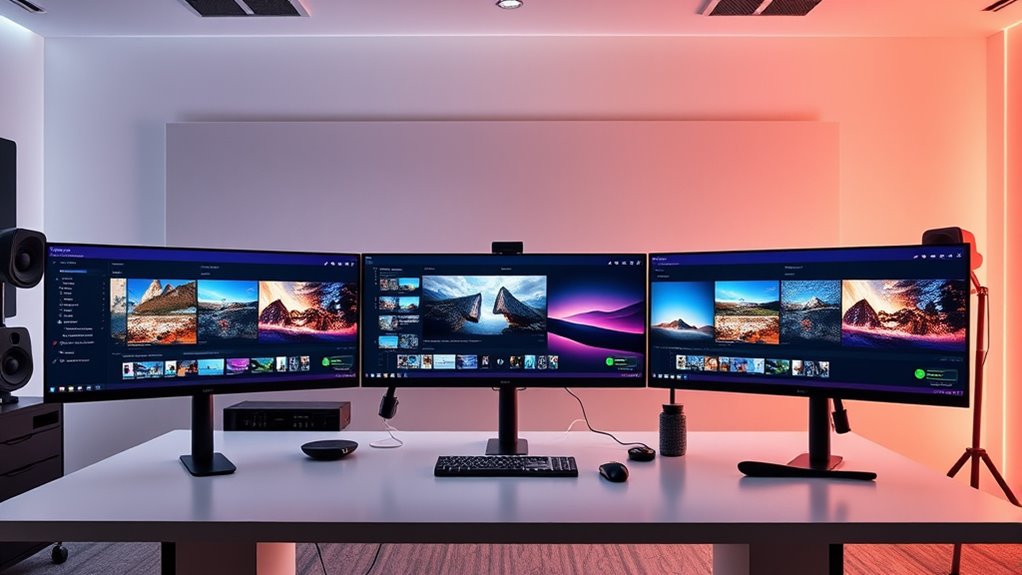

I’m excited to share the top ultrawide monitors for 2025 that can substantially boost your video editing and multitasking capabilities. From the ultra-sharp INNOCN 40C1U with 5K resolution to the vibrant ASUS ProArt and immersive Samsung Odyssey G5, these models offer high resolutions, excellent color accuracy, and versatile features like HDR and USB-C. Whether you need precision or multitasking space, these options are designed for creatives and professionals alike—keep exploring to find out more.
Key Takeaways
- High-resolution displays (5K, 3440×1440) and large screens (34-40 inches) provide ample space for detailed editing and multitasking.
- Factory-calibrated color accuracy with wide gamuts (sRGB, Adobe RGB, DCI-P3) ensures precise color reproduction for professional workflows.
- High refresh rates (up to 165Hz) and HDR support enhance video quality and smooth performance during editing and creative tasks.
- Multiple connectivity options, including USB-C and HDMI, simplify device integration and support ergonomic setups with adjustable stands.
- Curved screens and smart features improve immersion, comfort, and versatility for video editing, multitasking, and entertainment in 2025.

INNOCN 40 Inch 5K 5120 x 2160p Ultrawide Monitor for Laptop, 21:9, 100Hz, IPS, HDMI, DP, FreeSync, HDR400, USB-C, DeltaE<2, Built-in Speakers, Height Adjustable, Black - 40C1U
【Super Clarity 5K Ultrawide Monitor】This new-gen rare 40 inch ultrawide 5K 5120 x 2160p 100Hz computer monitor adopt...
As an affiliate, we earn on qualifying purchases.
INNOCN 40 Inch 5K Ultrawide Monitor (40C1U)

If you’re a creative professional or video editor looking to boost your productivity, the INNOCN 40 Inch 5K Ultrawide Monitor (40C1U) is an excellent choice. Its 40-inch ultrawide display with 5K resolution and 21:9 aspect ratio provides ample workspace for multitasking and detailed editing. The IPS panel offers vibrant, accurate colors with 135% sRGB and 106% DCI-P3, making color grading precise. Factory pre-calibrated with delta-E < 2, it guarantees color accuracy right out of the box. The sleek, frameless design, multiple connectivity options, and adjustable stand make it both stylish and functional, enhancing your workflow effortlessly.
Best For: creative professionals, video editors, and designers seeking a high-resolution ultrawide monitor for enhanced multitasking and color-accurate editing.
Pros:
- 40-inch 5K ultrawide display with a 21:9 aspect ratio for expansive workspace
- Vibrant and accurate colors with 135% sRGB and 106% DCI-P3, factory pre-calibrated for color precision
- Multiple connectivity options including HDMI 2.1, DisplayPort 1.4, and USB-C with power delivery
Cons:
- Weight of 19.3 lbs without stand may require sturdy mounting solutions
- Slightly higher price point due to advanced features and large display size
- Limited built-in speakers (4W total) might not suffice for high-quality audio needs

ASUS ProArt Display 34” Ultrawide Curved Professional HDR Monitor (PA34VCNV) - IPS, 21:9 3440 x 1440, 3800R Curve, 100% sRGB/Rec709, ΔE<2, Calman Verified, USB-C Docking PD 96W, RJ45, 3 Year Warranty
34.1-inch 21:9 3800R IPS curved display with frameless design
As an affiliate, we earn on qualifying purchases.
ASUS ProArt 34” Ultrawide Curved HDR Monitor (PA34VCNV)
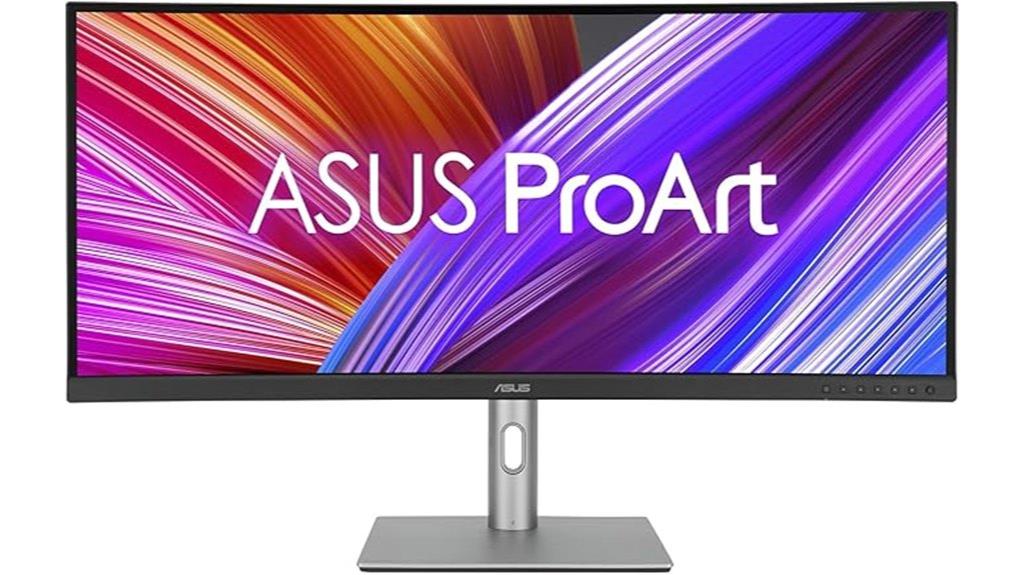
The ASUS ProArt 34” Ultrawide Curved HDR Monitor (PA34VCNV) is an excellent choice for creative professionals who need precise color accuracy and ample screen real estate for video editing and multitasking. Its 34.1-inch curved IPS display with a 3440 x 1440 resolution offers immersive viewing and sharp detail. Factory calibrated to meet international standards like sRGB and Rec. 709, it guarantees true color fidelity with Delta E < 2. Accuracy is verified with Calman, making it ideal for color-critical work. Extensive ergonomic adjustments, multiple connectivity options—including USB-C with 96W Power Delivery—and HDR support further boost productivity and workflow efficiency. Plus, it comes with a 3-year warranty and a free Adobe Creative Cloud subscription.
Best For: creative professionals and designers who require high color accuracy, extensive screen space, and versatile connectivity for video editing, graphic design, and multitasking.
Pros:
- Factory calibrated with Calman verification ensuring high color accuracy (Delta E < 2)
- Ultrawide 34.1-inch curved IPS display provides immersive viewing and ample workspace
- Extensive ergonomic adjustments and multiple connectivity options, including USB-C with 96W Power Delivery
Cons:
- Higher price point due to professional-grade features and calibration
- Large size may require substantial desk space and ergonomic setup considerations
- Limited to specific color standards; may not support some specialized color workflows outside sRGB and Rec. 709

SANSUI 34-Inch Curved Gaming Monitor UWQHD 3440 x 1440P Up to 200Hz 165Hz Curved 1500R - PIP/PBP, OD 1ms, HDR, 300nits, sRGB 130%, DCI-P3 97%,AI Crosshair,HDMI2.1x2,DP1.4(Cable Included)
34 inch Curved 1500R UWQHD(3440 x 1440) @ 200Hz Fast VA Ultrawide Gaming Monitor with AI built-in.
As an affiliate, we earn on qualifying purchases.
SANSUI 34-Inch Curved Gaming Monitor (UWQHD 3440×1440, 165Hz, HDR, FreeSync)
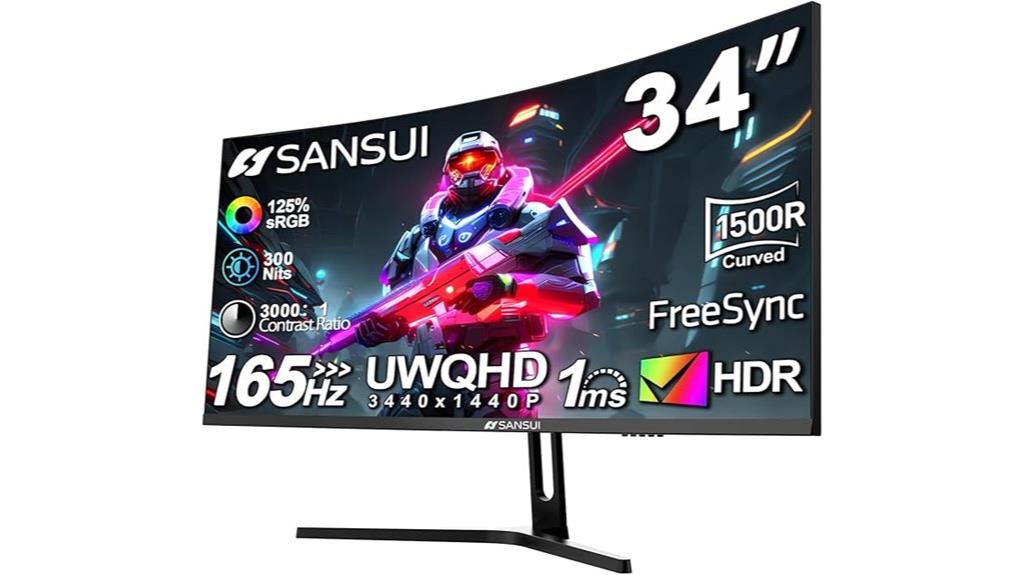
For video editors and multitaskers seeking immersive visuals and seamless performance, the SANSUI 34-Inch Curved Gaming Monitor stands out with its ultrawide 3440×1440 resolution and 165Hz refresh rate. The 1500R curvature creates an engaging viewing experience, making multitasking more natural. Its wide color coverage (125% sRGB, 95% DCI-P3) guarantees vibrant, accurate colors. With a quick 1ms response time and FreeSync support, it delivers smooth, tear-free gameplay and editing. Multiple connectivity options, including dual DisplayPort and HDMI, plus ergonomic tilt adjustments, make it versatile and comfortable for long work sessions. This monitor truly balances performance and immersion for creative professionals.
Best For: creative professionals, video editors, and multitasking users seeking immersive visuals and smooth performance in a curved ultrawide monitor.
Pros:
- Ultra-wide 3440×1440 resolution and 1500R curvature for immersive viewing experience
- Fast 1ms response time with 165Hz refresh rate and FreeSync support for smooth gameplay and editing
- Vibrant color coverage with 125% sRGB and 95% DCI-P3 for accurate, vivid colors
Cons:
- Limited HDMI support at 100Hz compared to DisplayPort’s 165Hz
- Stand tilt adjustment range (-5° to +15°) may not suit all ergonomic preferences
- No built-in speakers; relies on external audio solutions

Samsung 34' Odyssey G5 Ultra-Wide Gaming Monitor with 1000R Curved Screen, 165Hz, 1ms, FreeSync Premium, Large Display, Eye Comfort, Multiple Ports, WQHD, LC34G55TWWNXZA, Black
OPTIMAL CURVE, TRUE IMMERSION: The all-encompassing 1000R display fills every part of your peripheral vision and draws you...
As an affiliate, we earn on qualifying purchases.
SAMSUNG 34″ Odyssey G5 Ultra-Wide Gaming Monitor
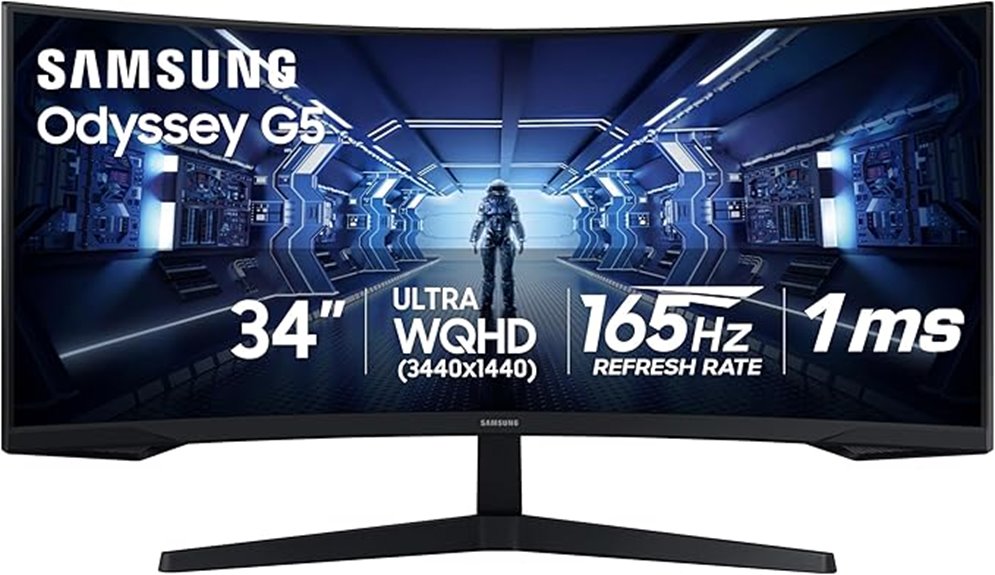
The Samsung 34″ Odyssey G5 excels as an ultrawide monitor ideal for gamers and multimedia enthusiasts who prioritize immersive visuals. Its 1000R curved display fills your peripheral vision, creating a truly immersive experience. The WQHD resolution offers sharp, detailed images, resembling a dual-monitor setup. HDR10 support brings vibrant colors and better contrast, making scenes pop. With a 165Hz refresh rate and 1ms response time, gameplay stays smooth and responsive. AMD FreeSync Premium minimizes tearing and stuttering. Designed for comfort, its curved VA panel reduces eye strain during long sessions, delivering both performance and visual excellence.
Best For: gamers and multimedia enthusiasts seeking an immersive, high-performance ultrawide monitor for smooth, vibrant visuals.
Pros:
- 34-inch ultra-wide curved display with 1000R radius enhances immersion.
- High 165Hz refresh rate and 1ms response time ensure smooth, responsive gameplay.
- HDR10 support and VA panel deliver vibrant colors and accurate contrast.
Cons:
- Large size may require ample desk space and setup considerations.
- Curved design might not be preferred by users favoring flat screens.
- Limited to specific connectivity options, which may require adapters for some devices.
LG 34-inch QHD Curved Smart Monitor with Streaming and Built-in Speakers
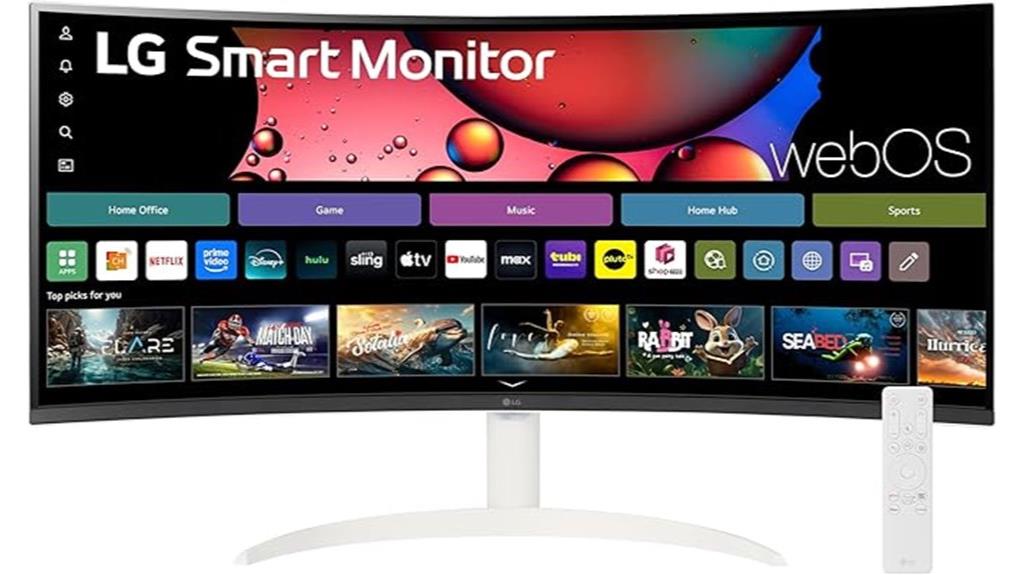
If you’re looking to boost your productivity and enjoy seamless multitasking, the LG 34-inch QHD Curved Smart Monitor stands out with its expansive 21:9 aspect ratio and immersive curved design. The 3440×1440 resolution and 1800R curvature deliver vibrant visuals with 99% sRGB coverage and HDR10 support, making color accuracy ideal for creative work. Its three-side virtually frameless look offers a sleek appearance, while multiple ports—including HDMI and USB—allow easy device connectivity. Built-in webOS23 provides instant access to streaming services, cloud apps, and smart features like Apple AirPlay 2 and HomeKit. The 100Hz refresh rate ensures smooth visuals for gaming and fast-paced tasks.
Best For: professionals, content creators, and gamers seeking an expansive, high-quality curved monitor with smart features for multitasking, entertainment, and productivity.
Pros:
- Immersive 34-inch curved QHD display with vibrant color accuracy and HDR10 support
- Wide connectivity options including HDMI and USB ports for versatile device integration
- Built-in smart features such as webOS23, streaming apps, and wireless compatibility with Apple devices
Cons:
- The large size may require significant desk space and setup considerations
- Limited to 100Hz refresh rate, which may not satisfy high-end competitive gamers seeking higher refresh rates
- Absence of a built-in camera or microphone for video conferencing
Factors to Consider When Choosing Ultrawide Monitors for Video Editing and Multitasking
When selecting an ultrawide monitor for video editing and multitasking, I focus on several key factors. The display resolution and color accuracy are essential for precise editing, while screen size and aspect ratio impact how much workspace I get. Additionally, I consider connectivity options and ergonomic adjustments to guarantee comfort and versatility during long work sessions.
Display Resolution Clarity
Ever wondered how much a higher display resolution can improve your video editing and multitasking experience? The answer is a lot. Higher resolutions like 5120 x 2160 deliver sharper, more detailed images, which are essential for precise editing. With more pixels, you get an expansive workspace that minimizes the need to switch between multiple screens. Clear resolution also makes it easier to see color gradients, fine lines, and subtle details, helping you catch imperfections early. This clarity directly impacts your ability to make accurate adjustments. Monitors with factory calibration and high pixel density ensure consistent, reliable visuals across the whole screen. Ultimately, investing in a monitor with excellent resolution clarity boosts your productivity and confidence in your edits, making your workflow smoother and more efficient.
Color Accuracy Standards
Choosing an ultrawide monitor for video editing hinges on understanding color accuracy standards, which directly affect the quality of your work. A key factor is delta-E values; a delta-E less than 2 means high color fidelity, ensuring your colors are precise. Wide color gamuts like 99% sRGB, 100% Adobe RGB, or DCI-P3 are essential for vibrant, true-to-life visuals. Factory calibration and tools like Calman calibration help verify that monitors meet these standards straight out of the box. Additionally, adherence to international color standards guarantees consistent color reproduction across devices and media. Many high-quality ultrawide monitors also support HDR10, which boosts color depth and contrast, giving your video content richer, more dynamic visuals. These standards ensure your editing process remains accurate and reliable.
Screen Size & Aspect
Larger ultrawide monitors, typically ranging from 34 to 40 inches, offer substantial workspace that makes detailed video editing and multitasking much more manageable. Their expansive screens allow you to view multiple timelines, windows, or tools side-by-side, boosting workflow efficiency. The aspect ratio, usually 21:9, enhances immersion and enables more natural viewing of wide footage or multiple panels. High-resolution options like 5K or QHD ensure sharp visuals, which are essential for color grading and precise edits. However, the physical size and aspect ratio also affect your ergonomic setup, requiring enough desk space and proper viewing distance to stay comfortable during extended work sessions. Choosing the right size and aspect ratio balances workspace needs with your workspace constraints.
Connectivity Options Needed
When selecting an ultrawide monitor for video editing and multitasking, it is vital to pay close attention to its connectivity options. Look for multiple input ports like HDMI, DisplayPort, and USB-C to connect various devices simultaneously. USB-C with power delivery is especially useful if you want to connect and charge laptops or portable devices without extra cables. Daisy-chaining via DisplayPort allows expanding your workspace with minimal clutter, which is a huge plus. Also, check the number and types of USB ports—USB-A and USB-C—for peripherals like external drives, keyboards, and mice. Finally, confirm the monitor is compatible with your existing devices and workflows, supporting the necessary standards for seamless, hassle-free connectivity. This guarantees your setup remains efficient and future-proof.
Adjustable Ergonomics
Since extended video editing and multitasking can cause fatigue, it’s essential to take into account a monitor’s ergonomic adjustability. Features like height, tilt, swivel, and pivot let you customize your setup for maximum comfort. An adjustable stand helps reduce neck and eye strain by allowing you to set the monitor at the ideal viewing angle and height. For even more flexibility, VESA mounting compatibility enables attaching the monitor to ergonomic arms or mounts, further enhancing workspace ergonomics. Monitors with these adjustments support better posture, lowering the risk of musculoskeletal issues during long sessions. Plus, easy adjustments make switching between tasks seamless, helping you stay comfortable and focused. Prioritizing ergonomic features ensures a healthier, more efficient workflow in demanding editing and multitasking environments.
Panel Technology Type
Choosing the right panel technology is essential for getting the most out of an ultrawide monitor, especially for video editing and multitasking. IPS panels are my top choice because they offer superior color accuracy, wide viewing angles, and consistent image quality—crucial for detailed editing and precise color matching. TN panels, while faster in response times, fall short in color reproduction and viewing angles, making them less ideal for professional work. VA panels provide high contrast and deep blacks, which are great for dark environments, but may lack some color vibrancy compared to IPS. Overall, I recommend IPS panels for their balanced color fidelity, stability across angles, and reliability in professional workflows, ensuring your video editing and multitasking experience is both accurate and comfortable.
Refresh Rate Importance
A higher refresh rate, such as 100Hz or 165Hz, makes a noticeable difference in how smooth motion appears on your monitor, which is especially useful for video editing and multitasking involving fast-moving content. It reduces motion blur and lag, guaranteeing real-time edits stay sharp and clear. For multitasking, higher refresh rates help minimize eye strain by providing fluid visual updates during long sessions. When working with high-frame-rate videos, a monitor with a matching or higher refresh rate ensures smooth playback and accurate previews. While color accuracy is more critical for color grading, a higher refresh rate still improves overall responsiveness, making interactions feel more intuitive. Fundamentally, a good refresh rate enhances both visual clarity and user comfort during demanding editing and multitasking tasks.
Price and Warranty
Price and warranty are essential factors when selecting an ultrawide monitor for video editing and multitasking, as they directly impact your long-term investment and peace of mind. Higher-priced models often include extended warranties and premium support, offering better coverage for repairs and defects. Many manufacturers provide warranties ranging from 1 to 3 years, with some models adding coverage for pixel defects or panel issues—crucial for professionals relying on consistent performance. Investing in a monitor with a solid warranty can save you money on potential repairs during intensive editing sessions. Conversely, budget options may have shorter warranties or limited support, which could lead to higher costs if issues arise. Extended warranty plans are usually available separately, providing extra reassurance for professional workflows.
Frequently Asked Questions
How Do Ultrawide Monitors Impact Color Accuracy for Professional Editing?
Ultrawide monitors can impact color accuracy, but it really depends on the model. I’ve found that high-end ultrawides with professional-grade panels offer excellent color fidelity, covering wide gamuts like AdobeRGB and DCI-P3. However, cheaper options might struggle with consistent color across the screen. For editing, I recommend choosing a monitor with factory calibration and good color uniformity to guarantee your work looks accurate everywhere.
Can Ultrawide Monitors Be Easily Calibrated for Precise Color Grading?
Calibrating an ultrawide monitor for precise color grading is like tuning a fine instrument—definitely doable with the right tools. I find that most high-end models support hardware calibration through their menus or compatible calibration devices. It’s a straightforward process, but you’ll need a good colorimeter and software. Once calibrated, the color accuracy is spot-on, making it perfect for professional editing.
What Are the Best Connectivity Options for Ultrawide Monitors in Editing Setups?
The best connectivity options for ultrawide monitors in editing setups include Thunderbolt 3 or 4, HDMI 2.1, and DisplayPort 1.4 or higher. I prefer HDMI or DisplayPort because they provide high bandwidth for smooth, high-resolution displays. USB-C is also great for transferring data and powering devices, reducing clutter. Make sure your graphics card supports these ports to get the most out of your ultrawide monitor.
How Do Ultrawide Monitors Compare to Dual-Monitor Setups for Multitasking?
Imagine multitasking as a symphony—ultrawide monitors are the conductor’s baton, seamlessly blending all instruments into one harmonious flow. I find ultrawides eliminate the clutter of multiple screens, offering a panoramic view that boosts productivity and reduces distractions. They feel more integrated, like a single canvas, versus dual monitors that can sometimes create gaps or misalignments. For me, ultrawides elevate multitasking to a smooth, cohesive performance.
Are Ultrawide Monitors Suitable for Portable Editing Workstations?
Ultrawide monitors aren’t really suitable for portable editing workstations because they tend to be bulky and heavy, making them hard to carry around. I prefer smaller, lightweight laptops or portable monitors for editing on the go. However, if you need a large, immersive screen for detailed work, an ultrawide can be great at a fixed station, but for portability, compact gear wins.
Conclusion
Just like Da Vinci’s masterful compositions, the right ultrawide monitor can elevate your workflow to art. Whether you’re editing videos or juggling multiple tasks, these screens are your modern-day canvas—expansive, sharp, and immersive. Choose wisely, and you’ll transform your workspace into a creative atelier where ideas flow seamlessly, much like a painter’s brush strokes on a grand canvas. Embrace the power of these monitors, and let your productivity soar.