
Smartwatches track essential health metrics like SpO2, VO2 Max, heart rate, and sleep patterns to give you real-time insights into your wellness. SpO2 measures your blood oxygen levels, helping identify breathing issues, while VO2 Max estimates your aerobic capacity and fitness level. These metrics support better training, sleep improvements, and overall health awareness. Keep exploring to discover how these features can help you optimize your health journey even further.
Key Takeaways
- SpO2 measures blood oxygen saturation, indicating respiratory health and potential issues like sleep apnea.
- VO2 Max estimates aerobic capacity, helping assess cardiovascular fitness and endurance levels.
- Smartwatches monitor SpO2 and VO2 Max through sensors that analyze heart rate and blood flow during activities.
- Regular tracking of these metrics provides insights into overall wellness and guides personalized health improvements.
- Understanding these advanced metrics enhances proactive health management and supports better fitness and sleep decisions.
Smartwatches have become vital tools for monitoring your health, offering real-time metrics that help you stay informed about your well-being. Whether you’re aiming to improve your fitness or get better insights into your sleep patterns, these devices provide valuable data that can guide your daily choices. With features like fitness tracking and sleep analysis, you can easily keep tabs on your activity levels and rest quality, making it simpler to identify areas for improvement and set achievable goals.
Smartwatches are essential tools for tracking health, fitness, and sleep to support your well-being.
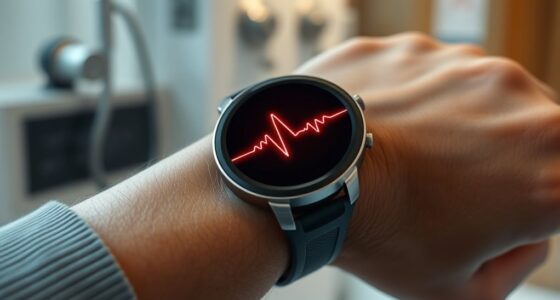
When it comes to fitness tracking, your smartwatch records steps taken, calories burned, and activity duration, giving you a clear picture of your physical activity throughout the day. This helps you stay motivated and guarantees you’re meeting your daily movement targets. Many smartwatches also include heart rate monitors that provide continuous readings during workouts and rest, allowing you to optimize your training intensity and monitor your cardiovascular health. By tracking these metrics over time, you can see how your fitness improves and adjust your routines accordingly.
Sleep analysis is another fundamental feature that offers insights into your sleep quality and duration. Your smartwatch detects movement and heart rate variations during the night to assess sleep stages, including light, deep, and REM sleep. With this information, you can identify patterns or disruptions that might be affecting your rest. Better sleep analysis helps you understand whether you’re getting enough restorative sleep and if your sleep habits need adjustment. Some devices even provide personalized tips to enhance your sleep hygiene, supporting overall health and well-being.
Beyond these basics, smartwatches measure advanced health metrics like SpO2 levels, which indicate your blood oxygen saturation. Monitoring your SpO2 can reveal issues like sleep apnea or breathing problems. Similarly, VO2 Max estimates your aerobic capacity, showing how efficiently your body uses oxygen during physical activity. Tracking these metrics over time can help you gauge your cardiovascular fitness and endurance, offering a deeper understanding of your health status. Additionally, thermal behavior insights from some devices can help optimize your activity and recovery, especially during high-intensity workouts.
Incorporating these metrics into your daily routine empowers you to make informed decisions. For example, if your sleep analysis shows frequent disturbances, you might prioritize better sleep hygiene. If your VO2 Max is low, you can focus on cardio workouts to improve endurance. Regularly reviewing your smartwatch data allows you to identify trends, celebrate progress, and stay motivated to maintain a healthier lifestyle. Ultimately, these features turn your smartwatch into a holistic health companion, helping you stay proactive about your overall wellness.
Top picks for "smartwatch health metric"
Open Amazon search results for this keyword.
As an affiliate, we earn on qualifying purchases.
Frequently Asked Questions
How Accurate Are Smartwatch Spo2 Readings Compared to Medical Devices?
Your smartwatch SpO2 readings are generally less accurate than medical devices, mainly due to factors like medical device calibration and user error impacts. While smartwatches provide convenient, real-time data, they can be affected by motion, skin tone, or improper fit. For the most reliable readings, especially for health concerns, rely on medical-grade devices calibrated specifically for accuracy, and verify proper placement and consistent use.
Can Smartwatch VO2 Max Improve With Training Over Time?
Yes, your smartwatch VO2 max can improve with training over time. As you consistently engage in cardio workouts and push your limits, you’ll notice training improvements that lead to VO2 max progression. The more you train, the better your body becomes at utilizing oxygen efficiently. Keep tracking your metrics, stay committed to your fitness routine, and you’ll see your VO2 max increase, reflecting enhanced endurance and cardiovascular health.
Do All Smartwatches Measure Hydration Levels Through Health Metrics?
Not all smartwatches measure hydration levels through health metrics. Some models include hydration sensors that track fluid intake and offer fluid tracking features, helping you stay properly hydrated. However, many popular smartwatches focus primarily on metrics like heart rate and activity levels. If hydration tracking matters to you, look for devices that specify fluid tracking capabilities or include hydration sensors to get accurate insights.
How Do Environmental Factors Affect Smartwatch Health Metric Accuracy?
Coincidentally, environmental interference can impact your smartwatch’s health metric accuracy, especially in extreme conditions. High humidity, temperature fluctuations, or bright sunlight may disrupt sensor calibration, leading to less reliable data. To get the most accurate readings, guarantee your device is properly calibrated and avoid exposing it to harsh environmental factors. Regular maintenance and mindful usage help your smartwatch deliver precise insights, even amidst environmental challenges.
Are There Privacy Concerns With Health Data Collected by Smartwatches?
Yes, there are privacy concerns with health data collected by smartwatches. You should be aware of data security risks, as sensitive health information could be vulnerable if not properly protected. Always check if the device manufacturer prioritizes user consent and transparent data practices. By understanding how your data is used and stored, you can better safeguard your privacy and make informed decisions about sharing your health metrics.
Conclusion
So, with all these fancy metrics like SpO2 and VO2 max, your smartwatch’s basically turned into your new overbearing fitness coach. It’s like having a tiny, judgmental doctor on your wrist, constantly reminding you how out of shape you are—without the hassle of actual appointments. Just remember, while these numbers can motivate, they won’t do the push-ups for you. So go ahead, ignore the stats and maybe, just maybe, take a walk.