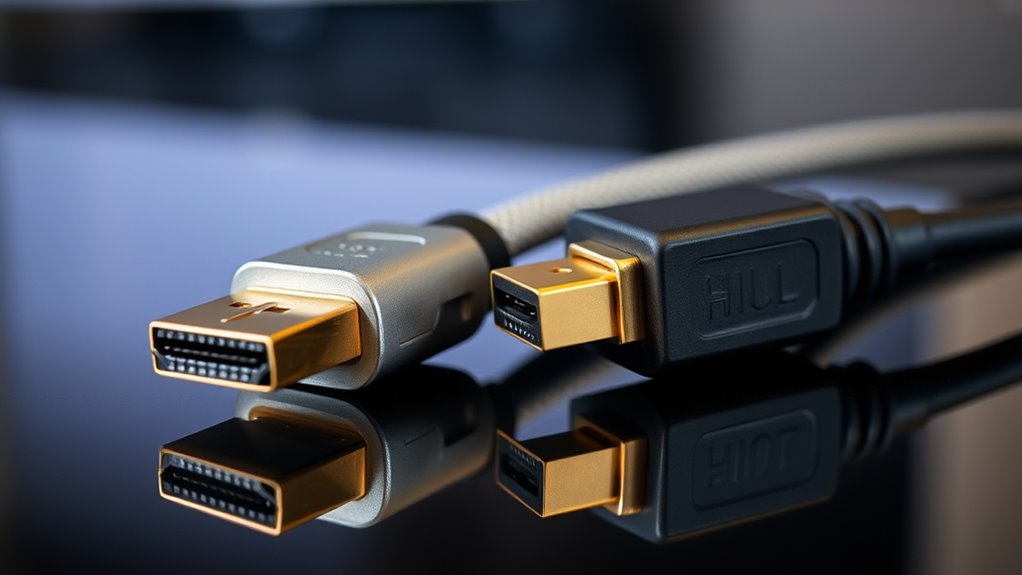

Expensive HDMI cables can make a difference when it comes to signal stability, durability, and compatibility, especially in complex or long-distance setups. Higher-quality cables with better shielding reduce interference, ensuring clearer picture and sound. They also last longer and resist wear better over time. However, for most standard uses, mid-range cables often suffice. To choose the right one, consider your setup, resolution needs, and features. If you’re curious about more details, there’s plenty more to explore.
Key Takeaways
- Higher-priced HDMI cables often feature better shielding and materials, reducing interference and ensuring clearer signals.
- The performance difference is noticeable mainly in complex setups, long runs, or high-resolution, professional, or gaming applications.
- Not all expensive cables are superior; look for certifications like HDMI Premium or High-Speed HDMI for reliable quality.
- For everyday use and standard resolutions, mid-range cables typically provide sufficient performance at a lower cost.
- Choose a cable based on your needs—long-distance, high-res content, or durability—rather than price alone.
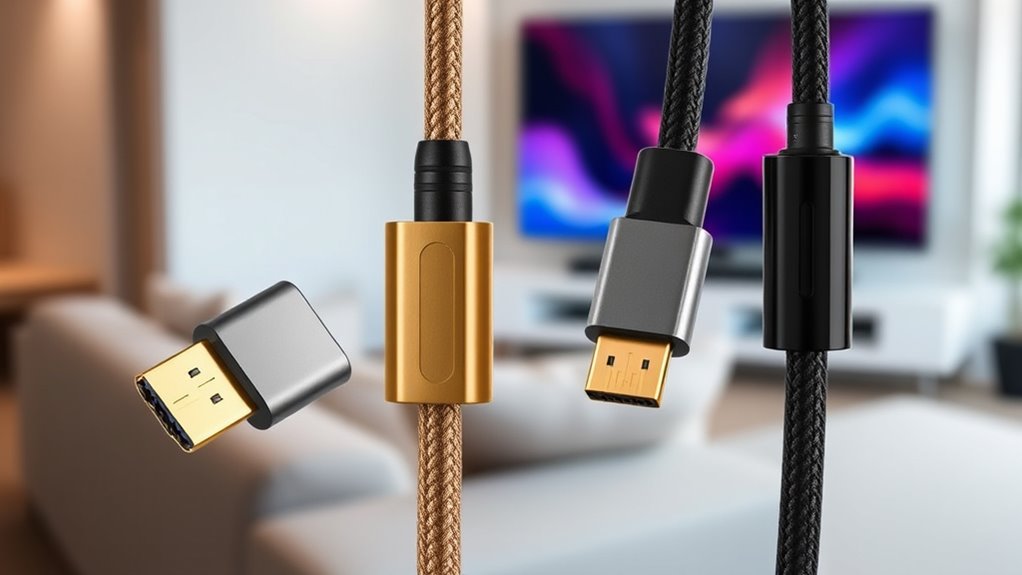
When it comes to connecting your devices, you might wonder if splurging on expensive HDMI cables is worth it. The truth is, the price doesn’t always equate to better performance, but certain factors can make high-end cables a smarter choice. One key aspect to contemplate is signal interference. Cheaper cables often lack proper shielding, making them more susceptible to interference from nearby electronic devices, Wi-Fi signals, or even fluorescent lighting. This interference can lead to degraded picture quality, intermittent signal drops, or audio glitches. Investing in an HDMI cable with good shielding and quality construction can help guarantee a stable, clear connection, especially if your setup involves long cable runs or complex environments with multiple electronic devices. Moreover, signal integrity can be significantly affected by the quality of the cable’s internal wiring and shielding, which directly impacts overall image and sound quality.
Cable durability is another important factor. Low-cost cables tend to use cheaper materials that may fray, crack, or lose their integrity over time. This can result in a fragile cable that’s prone to breaking or losing connection, forcing you to replace it sooner than you’d like. On the other hand, more expensive HDMI cables often feature reinforced jackets, high-quality connectors, and sturdier internal wiring, making them more resistant to wear and tear. If you’re setting up a home theater system or using your HDMI cables frequently, durability becomes vital. A durable cable not only lasts longer but also maintains consistent performance, giving you peace of mind that your investment will hold up over time.
That said, it’s necessary to match the cable’s features with your actual needs. For most everyday uses, a mid-range HDMI cable with adequate shielding and quality construction will suffice. If you’re streaming 4K content, look for cables that support HDMI 2.0 or higher, which ensures the bandwidth needed for high-resolution video and surround sound. For gaming or professional applications, where signal integrity is critical, opting for higher-quality cables with better shielding and build quality can make a noticeable difference. Remember, not all expensive cables are inherently better; check for certifications like HDMI Premium or High-Speed HDMI to guarantee you’re getting a reliable product.
As an affiliate, we earn on qualifying purchases.
Frequently Asked Questions
Are There Specific Brands Known for High-Quality HDMI Cables?
Some brands are known for high-quality HDMI cables, like AudioQuest, Belkin, and Monoprice. You can rely on their strong brand reputation and positive product reviews to guarantee you’re getting a reliable cable. These brands often use better materials and build quality, which can improve your viewing experience. When choosing, look for reputable brands and read reviews to find a cable that meets your needs without overspending.
Can Cheap HDMI Cables Damage My Devices?
Imagine plugging in a cheap cable, hoping it’ll work perfectly, but worry about device safety. In most cases, cheap HDMI cables won’t damage your devices. However, poor-quality cables might cause signal issues or short circuits, risking minor damage or malfunctions. To protect your equipment, always buy cables from reputable brands, verify they’re certified, and avoid extremely cheap options that seem too good to be true.
How Long Can HDMI Cables Reliably Transmit High-Definition Signals?
HDMI cables can reliably transmit high-definition signals up to about 25 feet without significant signal degradation. Beyond this length, you might experience signal loss or reduced quality due to cable length limitations. To extend your cable’s range, consider active or fiber optic HDMI cables, which help prevent signal degradation over longer distances. Keep in mind, shorter cables generally guarantee the best signal quality and minimal issues.
Do HDMI Cables Affect Audio Quality as Well as Video?
Yes, HDMI cables can affect both audio clarity and sound fidelity. Higher-quality cables often provide better shielding and fewer signal disruptions, resulting in clearer, more accurate sound. Expensive cables may offer enhanced performance, especially over longer distances, but for most setups, standard cables deliver sufficient audio quality. Make certain your cable supports the needed audio formats and features to optimize both sound and video experiences.
Are There Differences in HDMI Cable Compatibility With Older Devices?
Yes, there are differences in HDMI cable compatibility with older devices. You need to check the cable’s connectors and verify they match your device’s port, whether it’s HDMI 1.4, 2.0, or earlier. Signal standards matter because they determine the quality and features supported. An older device might not support newer standards, so choosing a cable that’s compatible with its specifications prevents issues like poor picture or no connection at all.
As an affiliate, we earn on qualifying purchases.
Conclusion
While affordable HDMI cables can deliver clear images and sound, investing in pricier cables might seem like buying a designer suit—noticeable, but not always necessary. Imagine a simple, sturdy bridge versus one with ornate arches; both get you across, but one looks more impressive. Ultimately, the right HDMI cable depends on your needs, not just the price. Focus on quality and compatibility, and you’ll enjoy great performance without overspending.
Durable HDMI Cable for Home Theater
As an affiliate, we earn on qualifying purchases.
As an affiliate, we earn on qualifying purchases.
HDMI Cable for Long Distance 4K Streaming
As an affiliate, we earn on qualifying purchases.
As an affiliate, we earn on qualifying purchases.