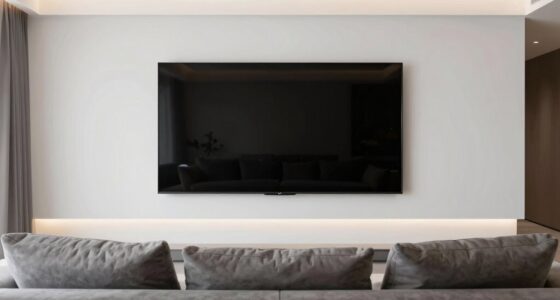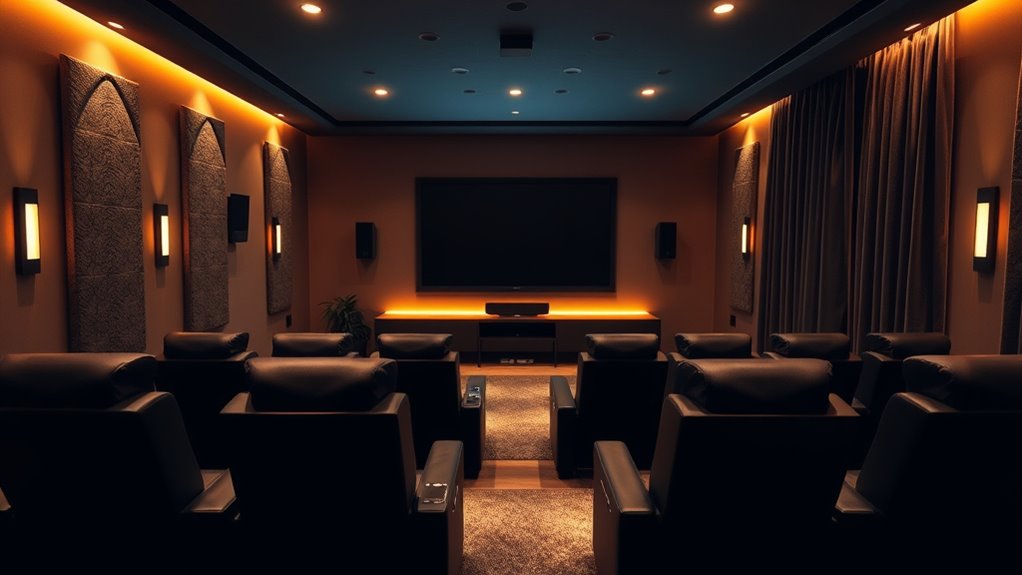

To boost your home theater sound, start with simple room acoustics improvements. Add acoustic panels or foam tiles on walls to reduce echo and flutter, and place bass traps in corners to absorb low frequencies. Use soft furnishings like rugs and upholstered furniture to dampen sound reflections. Seal gaps around doors and windows with weatherstripping to minimize external noise. These easy steps can make a big difference—continue to explore more tips for ideal sound quality.

Get the latest gadgets delivered free — and shop member deals
- Fast, free delivery on millions of items
- Access to Prime Big Deal Days deals on October 6–7
- Prime Video, Amazon Music and more included
Key Takeaways
- Add acoustic panels or foam tiles to walls to reduce echo and improve sound clarity.
- Place bass traps in corners to absorb low-frequency sound buildup and enhance bass response.
- Use soft furnishings like rugs, curtains, and upholstered furniture to absorb excess sound reflections.
- Position speakers and furniture strategically to promote balanced sound distribution.
- Seal gaps around doors and windows with weatherstripping to prevent external noise from interfering.
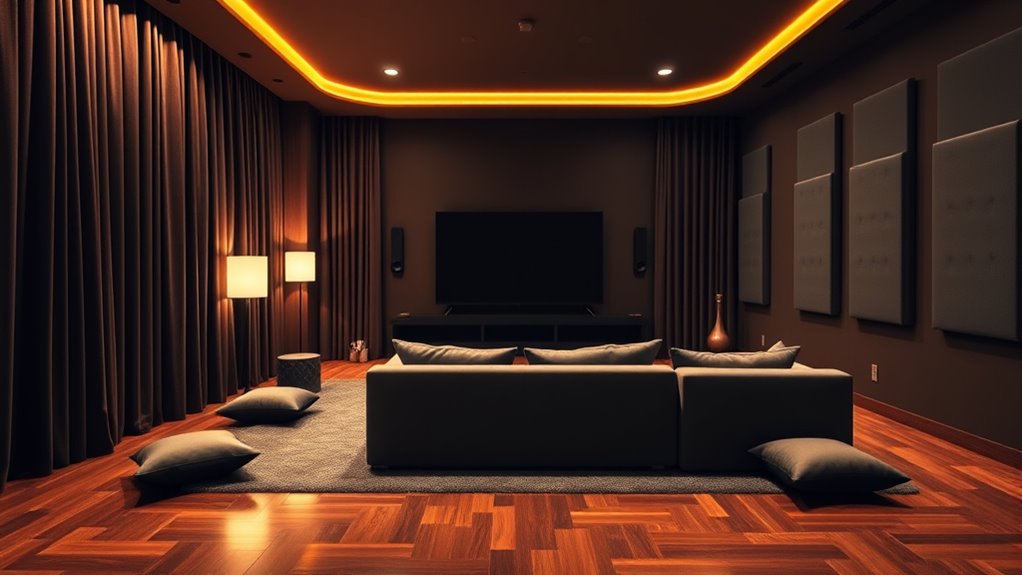
Good room acoustics are essential for clear communication and an enjoyable listening experience, but many spaces suffer from echo, muffled sound, or uneven audio quality. The good news is that you can improve your home theater’s sound environment with some straightforward adjustments. One of the most effective ways to do this is by exploring soundproofing techniques and acoustic treatment options. These methods can dramatically reduce unwanted noise, control sound reflections, and create a balanced listening space.
Soundproofing techniques focus on preventing external noise from entering your room and stopping sound from escaping. This is especially useful if your home theater shares walls with noisy areas or if you want to keep sound contained. Common soundproofing options include adding mass to walls using soundproof drywall or mass loaded vinyl, sealing gaps around doors and windows with weatherstripping, and installing door sweeps. These measures help block out external disturbances and prevent sound leakage, making your listening experience more immersive. Additionally, using heavy curtains or window plugs can absorb external noise and prevent it from interfering with your audio.
Once you’ve minimized external noise, it’s time to address internal sound issues through acoustic treatment options. These solutions help manage how sound waves behave inside the room. For example, adding bass traps in corners can absorb low-frequency sound waves that tend to build up and cause boomy bass or muddled audio. Acoustic panels or foam tiles placed strategically on walls can reduce echo and flutter, ensuring sound reflects evenly throughout the space. Diffusers are also valuable; they scatter sound waves in various directions, preventing harsh reflections and creating a more natural sound. Don’t forget to think about the placement of your speakers and furniture—soft furnishings like rugs and upholstered furniture can help absorb excess sound and improve clarity. Additionally, incorporating high-quality speakers can significantly enhance your overall sound experience by providing more accurate and detailed audio reproduction.
Frequently Asked Questions
How Do I Identify the Worst Sound Reflections in My Room?
To identify the worst sound reflections in your room, start with sound reflection identification by clapping your hands or using a test tone and moving around the space. Listen for room echo detection—notice where echoes are loudest and lingering. These spots often indicate where sound reflects harshly. Mark these areas so you can address them with acoustic treatments like panels or rugs, improving your home theater sound quality.
Can Furniture Placement Improve Room Acoustics Effectively?
Absolutely, furniture arrangement can make a noticeable difference in your room’s acoustics. By thoughtfully positioning your furniture, you help diffuse sound reflections and reduce echo, creating a more balanced soundscape. Focus on strategic seating placement to optimize sound clarity and minimize unwanted reflections. Experiment with different arrangements, and you’ll find that even small adjustments in seating positioning and furniture layout can greatly enhance your home theater experience.
What Are the Best DIY Acoustic Treatment Options?
You can improve your room acoustics with DIY bass traps and acoustic foam panels. Building bass traps with dense materials like mineral wool or fiberglass helps absorb low frequencies, while acoustic foam panels reduce echoes and reverberations. Position these panels strategically on walls and corners to maximize effectiveness. This affordable, easy DIY approach considerably enhances your home theater sound, giving you clearer audio and a more immersive experience.
How Often Should I Update My Home Theater Sound Setup?
Imagine your home theater as a living symphony—constantly evolving. You should update your sound setup every 3-5 years, or when you notice audio calibration issues or sound quality drops. Keep an ear out for clearer dialogue or richer bass, and consider speaker upgrades to enhance your experience. Regularly revisiting your system ensures your sound remains as immersive and enthralling as the day you first set it up.
Are There Specific Materials That Enhance Sound Quality Best?
Yes, certain materials can markedly enhance sound quality. Sound absorbing materials like acoustic panels are especially effective at reducing echoes and controlling sound reflections. You should place acoustic panels strategically on walls to dampen unwanted noise and improve clarity. Additionally, thick curtains and carpets help absorb sound, creating a more balanced environment. Using these materials together will give your home theater sound a noticeable boost, making your listening experience more immersive.
Conclusion
By tweaking your room’s acoustics, you transform your space into a cinematic sanctuary, where every whisper and explosion feels alive. Imagine the sound waves dancing smoothly around you, bouncing gently off plush walls and soft furnishings, creating a rich, immersive experience. With just a few simple adjustments, you’ll craft a soundscape that pulls you deeper into your favorite movies. Now, sit back, relax, and let your upgraded home theater envelop you in perfect harmony.
Halloween Picks
halloween
As an affiliate, we earn on qualifying purchases.