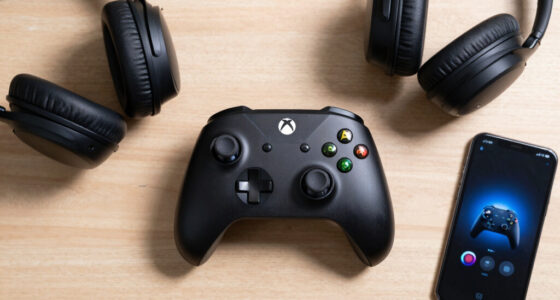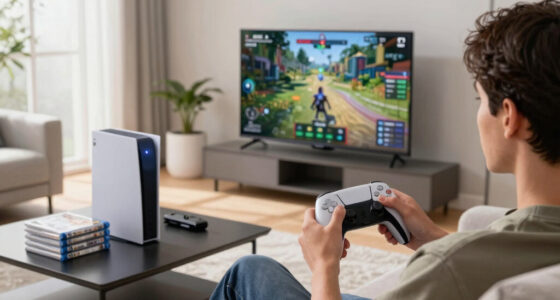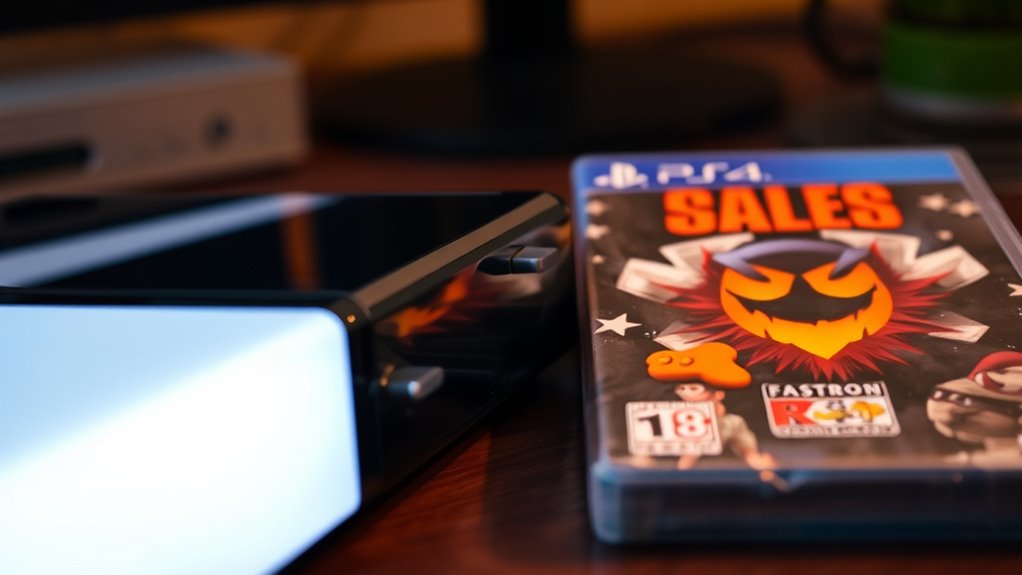

Choosing between digital and physical games depends on what matters most to you. If you value convenience, quick downloads, and space-saving, digital is a great pick. But if you prefer owning tangible copies, collecting special editions, or avoiding reliance on online access, physical copies suit you better. Both options have merits, so your choice reflects your gaming priorities. Keep exploring, and you’ll discover more ways to make the best choice for your gaming style.
Key Takeaways
- Digital games offer instant access, quick downloads, and space-saving convenience, ideal for fast-paced or limited-space gamers.
- Physical copies provide tangible ownership, collectible editions, and independence from internet or digital license restrictions.
- Digital storefronts enable frequent discounts and easy updates, while physical games can be lent, sold, or traded.
- Dependence on internet connectivity and potential digital rights issues make digital games less reliable without proper infrastructure.
- Choose digital for convenience and space efficiency; opt for physical if ownership, collectibles, and permanence matter most.
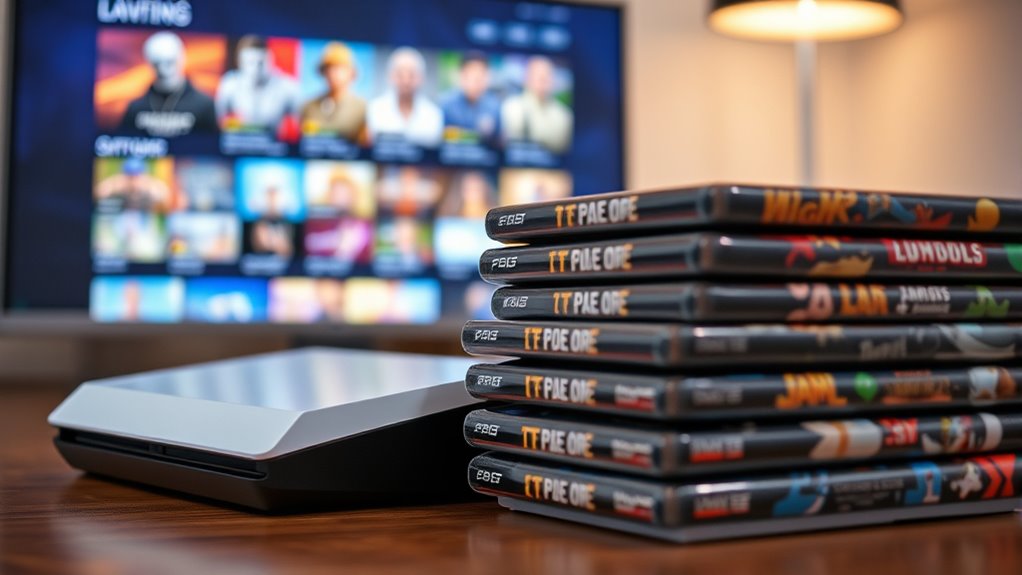
Have you ever wondered whether digital or physical games are the better choice for your gaming setup? It’s a common dilemma among gamers today, as both options come with their own advantages and drawbacks. When you consider digital storefronts, you gain instant access to a vast library of games that you can purchase and download directly to your console. This convenience means you don’t have to leave your house or wait for a physical copy to arrive in the mail. Plus, digital storefronts often feature sales and discounts that make buying games more affordable. You’re able to browse, purchase, and start playing within minutes, which is perfect if you’re eager to jump into a new game without delay. On the other hand, maintaining a physical collection has its own charm. For many players, owning physical copies feels more tangible and satisfying. You get to display your collection on shelves, and there’s a sense of ownership that digital files can’t replicate. Physical games also serve as collectibles; some editions come with unique artwork, manuals, or bonus items that add value beyond the game itself. Additionally, with a physical collection, you’re not solely dependent on online servers or digital storefronts; you have the game in hand, which means you’re not at risk of losing access if a store closes or a digital license expires.
Choosing between digital and physical boils down to how you prefer to experience gaming. If convenience and instant access are your priorities, digital storefronts are hard to beat. They eliminate the need for physical storage and make it easy to switch between multiple games quickly. Plus, digital downloads often include automatic updates, so you’re always playing the latest version without lifting a finger. Conversely, if you’re someone who values owning your games outright, physical copies offer a sense of permanence and flexibility. You can lend or sell them, and they don’t rely on digital rights management or internet connectivity to play. Additionally, owning a physical collection can add a nostalgic or aesthetic touch to your gaming space, giving you a visual reminder of your favorite titles.
Ultimately, your choice hinges on your gaming habits and preferences. Do you prioritize convenience, space-saving, and quick access? Digital storefronts might be your best bet. Or do you prefer the tactile experience, collectible value, and independence from online servers? Then building a physical collection is likely the way to go. Both options have their merits, and many gamers find a blend of both suits their needs best. The key is to pick what aligns with your style and makes your gaming experience more enjoyable.

10mm Clear Game Cases – Compatible with Nintendo Switch – 1-Cartridge Capacity – VGBR10SWCL (10 Cases)
10mm clear cases
As an affiliate, we earn on qualifying purchases.
As an affiliate, we earn on qualifying purchases.
Frequently Asked Questions
Can I Trade or Sell Digital Games Easily?
You can’t easily trade or sell digital games like physical ones because of digital transfer restrictions and licensing agreements. Unlike physical copies, which you can resell or trade in for game resale value, digital games are tied to your account and can’t be transferred or resold. This means you miss out on the flexibility of trading or selling, making physical copies more appealing if resale value is important to you.
How Do Digital and Physical Versions Affect Game Preservation?
Ironically, digital games seem to promise better game longevity with regular updates and cloud backups, yet they rely heavily on piracy protection to keep them accessible. Physical copies, in contrast, stand as tangible artifacts, potentially lasting longer if well-preserved. Digital versions risk becoming inaccessible if servers shut down or licensing expires, threatening game preservation. So, your choice impacts how well future generations will enjoy or even access these games.
Are There Regional Restrictions for Digital Downloads?
You might face regional restrictions on digital downloads, meaning some games are only available in certain countries due to licensing or legal issues. These restrictions can prevent you from purchasing or downloading content from other regions. Additionally, some platforms impose download limits, which could restrict how much content you can access in a given period. Always check your console’s policies and regional rules before buying digital games to avoid surprises.
What Are the Environmental Impacts of Digital Vs Physical Games?
Think of digital games as a breeze that minimizes waste, but they still leave a carbon footprint from data centers and servers. Physical games, like leaves falling, create recycling challenges and material waste. You influence the environment by choosing digital, reducing packaging and transportation emissions, but you still contribute indirectly. Ultimately, your choice impacts the planet’s health, urging you to contemplate both the convenience and environmental implications of your gaming habits.
Do Digital Games Have Better Discounts Than Physical Copies?
Yes, digital games often have better discounts than physical copies. You’ll find frequent digital discounts during sales events, making games more affordable online. Physical copies, on the other hand, usually offer physical savings through retail deals or used game prices. If you’re looking for the best deals, digital discounts give you more opportunities to save, especially during special sales like Black Friday or holiday promotions.
![$25 PlayStation Store Gift Card [Digital Code]](https://m.media-amazon.com/images/I/41cEZpeUA1L._SL500_.jpg)
$25 PlayStation Store Gift Card [Digital Code]
Redeem for anything on PlayStationStore: games, add-ons, PlayStationPlus and more.
As an affiliate, we earn on qualifying purchases.
As an affiliate, we earn on qualifying purchases.
Conclusion
Ultimately, choosing between digital and physical games is like picking your adventure’s path. Digital games are your warp-speed portal, instantly taking you anywhere with a click. Physical copies are your treasured books, holding stories in your hands and on your shelves. Think about what feels right—convenience or collector’s charm—and let your gaming journey unfold like a vivid tapestry, vibrant and uniquely yours. Whichever you choose, your game world awaits—ready to come alive at your fingertips.

Retro Game Stick with 40,000+ Classic Games, 23 Emulators, Plug & Play 4K HDMI Output,Dual 2.4G Wireless Controllers,64GB TF Card, Multiplayer Arcade Console for TV, Family & Kids Gift, 2026 Editions
𝟒𝟎,𝟎𝟎𝟎+ 𝐏𝐫𝐞𝐥𝐨𝐚𝐝𝐞𝐝 𝐆𝐚𝐦𝐞𝐬 & 𝟐𝟑 𝐄𝐦𝐮𝐥𝐚𝐭𝐨𝐫𝐬:Relive childhood nostalgia with a massive library of 40,000+ classic titles across 23…
As an affiliate, we earn on qualifying purchases.
As an affiliate, we earn on qualifying purchases.

VPSMAT DVD Storage Cabinet Shelf, 4 Tier Media Storage Tower for CDs & Video Games, Freestanding Organizer Shelf for Living Room Home Office, Holds 160+ DVDs(Black)
4-Tier DVD Storage Shelf: Measures 35" H x 23.6" W x 6.6" D. This 3-tier media tower accommodates…
As an affiliate, we earn on qualifying purchases.
As an affiliate, we earn on qualifying purchases.