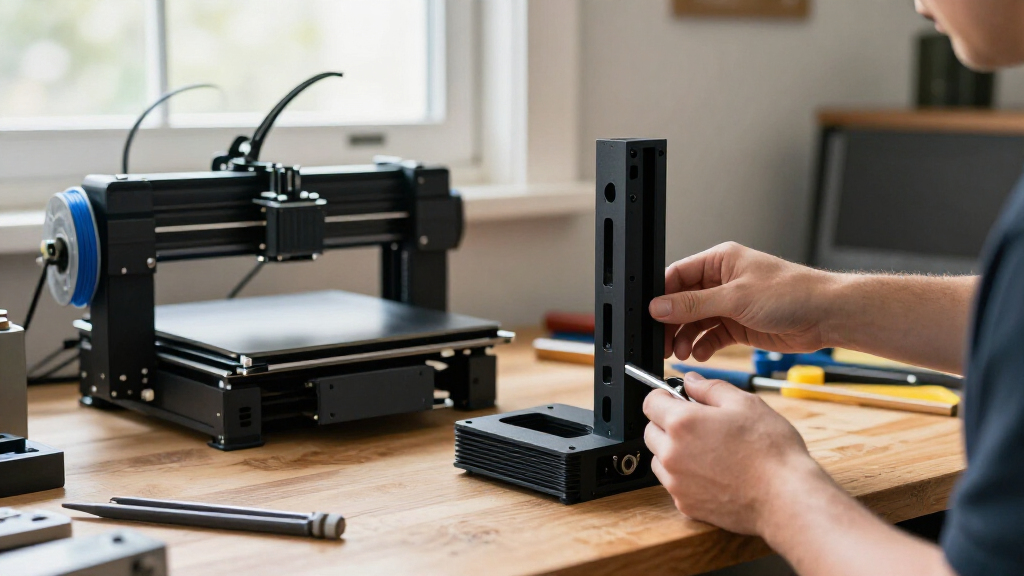

🔍 Read the full analysis: AI For 3D-Printed Parts: Help With Design, Help With Printing? on ThorstenMeyerAI.com

Get the latest gadgets delivered free with Prime
- Fast, free delivery on millions of items
- Prime Video, Amazon Music and more included
- Member-only deals all year
TL;DR
A November 29, 2026, report traces where AI currently fits into 3D printing, from design software to camera-based monitoring during a print. It describes promising examples but says text-to-CAD is not yet reliable enough to trust without checks, and printed parts that carry loads still need engineering review and testing.
A November 29 report from ThorstenMeyerAI.com says AI is already helping engineers optimize 3D-part designs and helping researchers monitor some prints, but it cannot yet reliably turn a text prompt into a part that is safe to use. The distinction matters for manufacturers and home users alike: software-generated designs still need human review, and parts that carry weight or protect people need physical tests.
The clearest design example in the report comes from NASA’s Goddard Space Flight Center. Research engineer Ryan McClelland uses generative-design software to propose structures based on requirements entered by an engineer, including loads, connection points and areas that must remain clear. The software applies topology optimization, repeatedly analyzing how forces move through a proposed part and removing material that contributes little to carrying those forces.
For a bracket intended for NASA’s EXCITE balloon telescope, McClelland’s paper compares the process with a conventional design by two experienced engineers. The report says the conventional design took two days of effort by two engineers. Encoding requirements for the software took about 30 minutes of one engineer’s time, followed by roughly an hour of computing. Those figures describe the reported example; they do not establish that every part can be designed faster or that the resulting part is automatically fit for use.
AI can also monitor printing. The report describes a University of Cambridge research system that used a camera to recognize and correct common nozzle-related errors during material-extrusion printing. That is a form of in-process assistance, not a substitute for checking the completed object. The report says text-to-CAD remains research: software producing runnable code does not prove that its model has correct dimensions, meets engineering requirements or can be safely manufactured.
From idea to printed part: where AI looks over your shoulder
The orange marker shows where AI helps today. The last word still belongs to a real test.
Design: you set the loads, bolts and keep-out zones. The software proposes the shape.
Check: simulation predicts how the part bends. Only a real test shows how strong it is.
Print: a camera next to the nozzle spots common errors and corrects them during the print.
Every step: AI guesses from patterns. For parts that carry weight, people still test.
From Design Gains to Tested Parts
Generative design could reduce the time engineers spend developing certain components, while camera-based monitoring could help identify printing problems before a job is finished. These uses address different stages: one proposes a shape, and the other watches a machine make it. Neither, by itself, establishes that a finished part will perform as intended.
The risk is practical. A design tool only works from the requirements it receives. If an engineer leaves out a load, a fastener, or space needed for assembly, an optimized shape can still be wrong. The report says NASA’s AI-designed parts go through stress analysis and testing, and warns that algorithms can sometimes make structures too thin. For parts used in flight, safety or other load-bearing roles, human engineering judgment and tests remain part of the process.
For home printing, the nearer-term use described is a printer camera that flags trouble while a job runs. That may help users notice a failure, but it should be treated as an additional check, not a guarantee. A camera’s warning cannot confirm the strength or suitability of the final part.
Products Worth Considering

Logitech MX Master 4 Ergonomic Wireless Mouse with Haptic Feedback, Graphite

Bose QuietComfort Headphones (2nd Gen), Wireless Noise-Cancelling Over-Ear Headphones, Black

Amazon Kindle Paperwhite (2024, 12th Gen) – 7 Glare-Free Display, 16GB, Black
As an affiliate, we earn on qualifying purchases.
Where AI Fits in the Print Workflow
A printed part typically moves from a precise digital model to engineering checks, then to a slicer and a printer. The model is created in CAD software; simulation can estimate how it responds to forces. A slicer divides the model into layers and produces machine instructions, often called G-code. The printer follows those instructions to build the object layer by layer.
The report’s examples cover two points in that chain. NASA’s generative-design work helps shape a part around specified constraints. The Cambridge research system watches a nozzle printer, a common form of material-extrusion manufacturing, for errors during production. The report also notes that printing often involves iterations because unexpected failures can occur. These examples should not be read as evidence that AI can independently manage the full process from a casual description to a validated finished component.
The article also raises legal limits as part of its broader discussion: it says purely AI-made output does not receive U.S. copyright and that only humans can be named as inventors. Those points concern authorship and inventorship, not whether a printed part is technically sound. The report does not provide a legal analysis of how those rules apply to particular designs.
“Code that runs is not the same as a part that is right.”
— ThorstenMeyerAI.com, describing the limits of text-to-CAD
What the Examples Do Not Prove
The report does not establish how broadly the cited NASA workflow or Cambridge monitoring system is being used in commercial production, or how well either performs across different materials, printers and part types. It also gives no general failure-rate reduction or industry-wide time savings. The NASA bracket comparison is one documented example, not a universal benchmark.
It remains unclear when text-to-CAD tools will be reliable enough for engineers to use without extensive correction, and what validation would be appropriate for different applications. The report supplies no detailed performance data for the Cambridge system, such as its accuracy across varied printing conditions. More broadly, the system described watches for common nozzle errors; that does not show it can identify every defect or assess a part’s strength after printing.
Human Checks Remain the Next Step
The next practical step remains the same one emphasized in the report: engineers must check whether the design captures every important requirement, and manufacturers must test parts according to their intended use. NASA’s cited approach combines software-generated designs with stress analysis and physical testing rather than treating the software’s output as approval.
For home users, the report advises watching the first layers and treating camera-based monitoring as a second set of eyes. Wider adoption of AI design and print-monitoring tools will depend on evidence about how they perform in real workflows. The report does not give a timeline for text-to-CAD becoming dependable for safety-critical work; until that is established, a generated model should not be mistaken for a validated part.
Key Questions
Can AI design a 3D-printed part today?
Yes. Generative-design software can propose shapes from constraints such as loads, connection points and areas that must stay clear. The report’s NASA example still involves an engineer defining requirements and checking the result.
Can AI turn a text prompt into a part I can trust?
The report says not yet. Text-to-CAD is described as research, and a model or code that runs does not prove that the design has correct dimensions or is safe for its intended use.
Can AI spot problems while a 3D printer is running?
A University of Cambridge research system described in the report used a camera to detect and correct common nozzle errors during material-extrusion printing. The report does not establish that it detects every kind of fault or is widely deployed.
Do AI-designed printed parts still need testing?
Yes. The report says NASA’s AI-designed components undergo stress analysis and testing, and notes that algorithms can produce structures that are too thin. Parts that carry weight or affect safety need checks suited to their use.
Source: ThorstenMeyerAI.com