
The best new Apple products depend on what you want to improve: for most buyers, the 13-inch MacBook Air with M5 is the strongest all-around choice, pairing a capable laptop with useful everyday features. The iPad Air 13-inch is a flexible pick for a larger-screen tablet, while AirPods Pro 3 stand out for listeners who want active noise cancellation in a compact form. The main tradeoff is deciding whether to pay for premium performance, choose a more affordable device, or add an accessory that solves one specific problem. I compare all 13 options by their role, strengths, and limitations so you can match a new Apple device to your actual needs. Read on for the full breakdown and buying advice.

Get the latest gadgets delivered free with Prime
- Fast, free delivery on millions of items
- Prime Video, Amazon Music and more included
- Member-only deals all year
Complete the kit



Key Takeaways
- The MacBook Air 13-inch with M5 is the most versatile lead pick: it serves everyday laptop buyers better than a tablet or accessory, though it is more machine than some basic users need.
- Screen size changes the iPad decision more than the product name: the 13-inch Air favors workspace and media, while the 11-inch Air is easier to carry; the Pro models target buyers who need more performance or a premium display.
- There is a clearer split among the headphones: AirPods Pro 3 prioritize in-ear noise control, AirPods 5 offer a simpler open-fit option, and AirPods Max 2 suit buyers who prefer over-ear headphones.
- The MacBook Neo is the entry-level laptop direction, not a smaller Air: its A18 Pro chip and 8GB memory suit lighter routines, while the M5 Air is the safer fit for heavier or longer-term workloads.
- Some of the most useful picks solve narrow needs: AirTag 2 helps track belongings, Apple TV 4K upgrades a viewing setup, and Apple Watch Ultra 4 is aimed at buyers who need a rugged, outdoor-focused watch.
| Apple AirTag (2nd Generation), 4-Pack |  | Best for Finding Everyday Essentials | Pack size: 4 | Dimensions: 1.26 x 1.26 x 0.31 inches | Weight: 1.44 ounces | VIEW LATEST PRICE | See Our Full Breakdown |
| Apple HomeView Smart Home Display, Space Gray |  | Best for a Shared Apple Home | Display: 7-inch Liquid Retina | Audio: Spatial Audio | User recognition: Up to six people | VIEW LATEST PRICE | See Our Full Breakdown |
| Apple MacBook Air 13-inch Laptop with M5 Chip, 16GB Memory, 512GB SSD, 12MP Center Stage Camera, Touch ID, Wi-Fi 7, Silver |  | Best Overall for Everyday Mac Users | Chip: Apple M5 | Memory: 16GB unified memory | Storage: 512GB SSD | VIEW LATEST PRICE | See Our Full Breakdown |
| Apple AirPods Pro 3 Wireless Earbuds with Active Noise Cancellation |  | Best for Workouts and Hearing Features | Model: MFHP4LL/A | Dimensions: 1.1 x 0.8 x 1.2 inches | Weight: 0.32 ounces (9.07 g) | VIEW LATEST PRICE | See Our Full Breakdown |
| Apple iPad Pro 13-inch (M4), 512GB, Wi-Fi, Space Black | 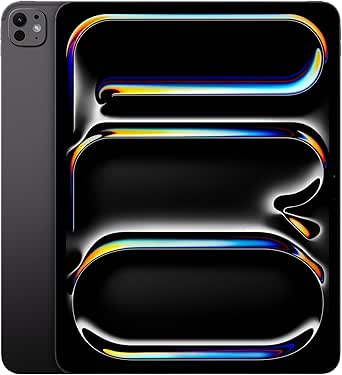 | Best Premium Creative Tablet | Display: 13-inch Ultra Retina XDR | Processor: Apple M4 | Storage: 512GB | VIEW LATEST PRICE | See Our Full Breakdown |
| Apple iPad Air 13-inch (M4), 128GB, Wi-Fi 7, Blue |  | Best for Big-Screen Productivity | Display: 13-inch Liquid Retina with P3 wide color and True Tone | Chip: Apple M4 | Storage: 128GB | VIEW LATEST PRICE | See Our Full Breakdown |
| Apple AirPods Max 2 Wireless Over-Ear Headphones, Starlight |  | Best for Immersive Over-Ear Listening | Form factor: Over-ear wireless headphones | Chip: Apple H2 | Audio features: Active Noise Cancellation, Adaptive Audio, Transparency mode, personalized Spatial Audio with dynamic head tracking | VIEW LATEST PRICE | See Our Full Breakdown |
| Apple TV 4K (4th Generation) |  | Best for Apple-Centered Home Theater | Chip: Apple A19 | Video formats: Dolby Vision and HDR10+ | Audio: Dolby Atmos and Enhance Dialogue | VIEW LATEST PRICE | See Our Full Breakdown |
| Apple MacBook Neo 13-inch Laptop with A18 Pro Chip, 8GB Memory, 512GB SSD, Liquid Retina Display, and Touch ID – Citrus |  | Best for Everyday Mac Tasks | Display: 13-inch Liquid Retina, supports 1 billion colors | Processor: Apple A18 Pro | Memory: 8GB unified memory | VIEW LATEST PRICE | See Our Full Breakdown |
| Apple iPad Pro 11-inch (M5), 256GB, Wi-Fi 7, Space Black |  | Best Premium Compact iPad | Display: 11-inch Ultra Retina XDR with ProMotion, P3 wide color, and True Tone | Processor: Apple M5 with Neural Accelerators | Storage: 256GB | VIEW LATEST PRICE | See Our Full Breakdown |
| Apple iPad Air 11-inch (M4), 128GB, Wi-Fi 7, Space Gray |  | Best for Portable Power | Display: 11-inch Liquid Retina | Chip: Apple M4 | Storage: 128GB | VIEW LATEST PRICE | See Our Full Breakdown |
| Apple AirPods 5 Wireless Earbuds with Active Noise Cancellation |  | Best Open-Ear Noise Control | Design: Open-ear wireless earbuds | Noise features: Active Noise Cancellation, Adaptive Audio, Conversation Awareness | Spatial audio: Personalized Spatial Audio with dynamic head tracking | VIEW LATEST PRICE | See Our Full Breakdown |
| Apple Watch Ultra 4 GPS + Cellular, 49mm |  | Best for Rugged Outdoor Adventures | Case size: 49 mm | Connectivity: GPS + Cellular | Case material: Titanium | VIEW LATEST PRICE | See Our Full Breakdown |
| new Apple product | Display |
|---|---|
| Apple AirTag | — |
| Apple HomeView Smart Home Disp | 7-inch Liquid Retina |
| Apple MacBook Air 13-inch Lapt | 13.6-inch Liquid Retina |
| Apple AirPods Pro 3 Wireless E | — |
| Apple iPad Pro 13-inch | 13-inch Ultra Retina XDR |
| Apple iPad Air 13-inch | 13-inch Liquid Retina with P3 wide color and True Tone |
| Apple AirPods Max 2 Wireless O | — |
| Apple TV 4K | — |
| Apple MacBook Neo 13-inch Lapt | 13-inch Liquid Retina, supports 1 billion colors |
| Apple iPad Pro 11-inch | 11-inch Ultra Retina XDR with ProMotion, P3 wide color, and True Tone |
| Apple iPad Air 11-inch | 11-inch Liquid Retina |
| Apple AirPods 5 Wireless Earbu | — |
| Apple Watch Ultra 4 GPS + Cell | — |
More Details on Our Top Picks
Apple AirTag (2nd Generation), 4-Pack
The AirTag 4-Pack is the most practical pick here for Apple households that regularly misplace keys, bags, or luggage. Its upgraded Ultra Wideband and Bluetooth systems support finding items from farther away, while a speaker that is 50% louder than the previous generation makes nearby searches easier to hear. Compared with the MacBook Air, this is a small, focused accessory rather than a device for work or entertainment; its value comes from making other belongings easier to locate. A replaceable battery designed to last more than a year also avoids treating the tag as disposable. The main limitation is compatibility: some Precision Finding features need newer Apple devices and software, and availability varies by region. It also works best for people already using Apple’s Find My network.
Pros:- Four tags cover several everyday items at once
- Upgraded Ultra Wideband and Bluetooth support finding items from farther away
- Louder speaker makes nearby tags easier to locate by sound
- Replaceable battery is designed to last more than a year
Cons:- Some finding features require newer compatible Apple devices and software
- Feature availability varies by country or region
Best for: iPhone households that want to keep track of keys, bags, or shared family luggage with Find My
Not ideal for: People without compatible Apple devices, or buyers who need tracking features available consistently in every country
- Pack size:4
- Dimensions:1.26 x 1.26 x 0.31 inches
- Weight:1.44 ounces
- Battery life:More than 1 year
- Battery:Replaceable standard battery
- Speaker:50% louder than previous-generation AirTag
- Materials:Enclosure contains 85% recycled plastic
- Compatibility:Find My requires iOS 14, iPadOS, or macOS Catalina or later; some features require newer compatible devices and software
Our verdict“Choose the AirTag 4-Pack if you use Find My and want a simple way to locate several frequently misplaced items.”
Apple HomeView Smart Home Display, Space Gray
The Apple HomeView is built for a household that wants a shared control point, not a personal computer or tablet replacement. Its 7-inch Liquid Retina display puts Home app controls, messages, FaceTime, and entertainment in one visible spot, while Spatial Audio speakers add more presence than a basic smart-home panel. Recognition for up to six people makes its personalized approach a clear contrast with the individual-first MacBook Air: family members can get tailored experiences from the same display. It also brings Intercom into the mix for communication around the home. The tradeoff is that its purpose depends on using Apple’s home ecosystem, and Siri AI is initially available in English. Usage limits may also affect some features, so buyers seeking a flexible, portable screen should look instead to an iPad.
Pros:- Personalized experiences support up to six people
- 7-inch Liquid Retina screen and Spatial Audio speakers suit shared-room use
- Combines FaceTime, messaging, entertainment, and Intercom
- Controls accessories through the Apple Home app
Cons:- Siri AI is initially available in English
- Usage limits may apply
- A fixed smart-home display is less flexible than an iPad
Best for: Apple households with several people who want a shared screen for smart-home controls, calls, and Intercom
Not ideal for: Buyers who need a portable tablet, broad language availability for Siri AI, or a screen that works outside the Apple Home setup
- Display:7-inch Liquid Retina
- Audio:Spatial Audio
- User recognition:Up to six people
- Smart home compatibility:Apple Home app
- Connectivity features:FaceTime, messaging, and Intercom
- Color:Space Gray
- Dimensions:5.13 x 6.82 x 5.73 inches
- Weight:2.1 pounds
Our verdict“Pick HomeView for a shared Apple smart home where family members will use its controls and communication features daily.”
Apple MacBook Air 13-inch Laptop with M5 Chip, 16GB Memory, 512GB SSD, 12MP Center Stage Camera, Touch ID, Wi-Fi 7, Silver
The 13-inch MacBook Air with M5 earns my broadest recommendation because it balances portability, performance, and everyday conveniences without the bulk of a specialist workstation. Its 16GB unified memory and M5 chip suit multitasking and creative tasks, while up to 18 hours of battery life makes it a stronger travel companion than the 13-inch iPad Pro for buyers who need a full macOS workflow. The 12MP Center Stage camera helps keep video calls composed, and support for two external displays gives a compact setup room to grow. The compromise is connectivity and capacity: there are only two Thunderbolt 4 ports, and 512GB may feel limiting for large media libraries. Buyers focused on a touch-first creative canvas may prefer the iPad Pro, but most laptop users get a more direct fit here.
Pros:- M5 chip and 16GB unified memory support everyday work and multitasking
- Up to 18 hours of battery life suits long days away from an outlet
- Lightweight 2.71-pound design is easier to carry than a larger laptop
- 12MP Center Stage camera and support for two external displays add flexibility
Cons:- 512GB SSD may be restrictive for large local media or project libraries
- Two Thunderbolt 4 ports can require a hub for multiple peripherals
Best for: Students, mobile professionals, and home users who want a lightweight Mac for multitasking, video calls, and everyday creative work
Not ideal for: People who need extensive built-in storage, many connected peripherals, or a large workstation-class display
- Chip:Apple M5
- Memory:16GB unified memory
- Storage:512GB SSD
- Display:13.6-inch Liquid Retina
- Camera:12MP Center Stage
- Battery life:Up to 18 hours
- Ports:Two Thunderbolt 4 ports, MagSafe charging port, headphone jack
- Wireless:Wi-Fi 7, Bluetooth 6
- External display support:Up to two displays
Our verdict“Choose this MacBook Air if you want a capable, portable macOS laptop and do not need more than 512GB of built-in storage.”
Apple AirPods Pro 3 Wireless Earbuds with Active Noise Cancellation
AirPods Pro 3 stand apart in this lineup by pairing active noise cancellation with workout tracking and hearing-health tools. The heart-rate sensor supports tracking across up to 50 workout types, giving these earbuds a more active role than the MacBook Air or AirTag. Compared with AirPods 5, the Pro design is the better match for listeners who want five ear tip sizes and an in-ear fit; that range can help with comfort and isolation, though not everyone likes earbuds that seal the ear canal. Listening lasts up to eight hours with noise cancellation on, while the longer ten-hour figure applies to Transparency mode when using the Hearing Aid feature. Live Translation and automatic device switching add Apple ecosystem convenience, but some features require a compatible Apple device. Their appeal is greatest when those specialized tools matter, not just basic listening.
Pros:- Active noise cancellation removes up to 2x more unwanted noise than AirPods Pro 2
- Heart-rate sensing supports tracking across up to 50 workout types
- Five ear tip sizes offer more options for a secure in-ear fit
- Includes hearing tools such as a hearing test and active Hearing Protection
Cons:- Up to 10 hours applies only in Transparency mode while using the Hearing Aid feature
- Some features require an iPhone or another compatible Apple device
- The in-ear fit may not suit listeners who prefer open-style earbuds
Best for: Apple users who exercise regularly and want noise cancellation, heart-rate sensing, and hearing-health tools in one pair of earbuds
Not ideal for: Listeners who dislike in-ear tips, need longer uninterrupted listening with noise cancellation, or use devices outside Apple’s ecosystem
- Model:MFHP4LL/A
- Dimensions:1.1 x 0.8 x 1.2 inches
- Weight:0.32 ounces (9.07 g)
- Battery:3 lithium-ion batteries, included
- Battery life:Up to 8 hours with Active Noise Cancellation; up to 10 hours in Transparency mode using the Hearing Aid feature
- Ear tip sizes:5
- Units:1
Our verdict“Choose AirPods Pro 3 if you want workout sensing and hearing tools alongside noise cancellation, and are comfortable with an in-ear fit.”
Apple iPad Pro 13-inch (M4), 512GB, Wi-Fi, Space Black
The 13-inch iPad Pro with M4 is the premium choice for people who want a large, high-quality tablet canvas rather than a conventional laptop. Its Ultra Retina XDR display with ProMotion, P3 wide color, and True Tone is especially suited to visual work and media, while M4 and 512GB give room for demanding apps and sizable files. The landscape front camera with Center Stage is also better placed for video calls than a typical portrait-oriented tablet camera. Compared with the MacBook Air, the iPad Pro is slimmer and more touch- and Pencil-oriented, but it relies on iPadOS and accessories for a laptop-like setup. Apple Pencil Pro and Magic Keyboard are sold separately, adding both cost and packing decisions. At 13 inches, it offers a generous workspace but is less convenient to carry than a smaller iPad.
Pros:- 13-inch Ultra Retina XDR display includes ProMotion, P3 wide color, and True Tone
- M4 chip and 512GB storage suit demanding apps and larger files
- Thunderbolt/USB 4 and Wi-Fi 6E offer capable connectivity
- Landscape front camera supports Center Stage, while rear camera includes LiDAR
Cons:- Apple Pencil Pro and Magic Keyboard are sold separately
- The 13-inch size is less convenient for compact portability
- iPadOS may not suit workflows that depend on macOS
Best for: Illustrators, video creators, and media-focused users who want a large, color-rich tablet and plan to use Apple Pencil Pro
Not ideal for: Buyers who want a complete laptop-style setup without separate accessories, or frequent travelers who prefer a smaller tablet
- Display:13-inch Ultra Retina XDR
- Processor:Apple M4
- Storage:512GB
- Cameras:12MP landscape Ultra Wide front camera; 12MP Wide rear camera
- Connectivity:Wi-Fi 6E; Thunderbolt/USB 4
- Biometrics:Face ID
- Scanner:LiDAR Scanner
- Dimensions:11.09 x 8.48 x 0.2 inches
- Weight:1.27 pounds
Our verdict“Choose the 13-inch iPad Pro if a premium tablet display and Pencil-oriented creative work matter more than a complete laptop workflow.”
Apple iPad Air 13-inch (M4), 128GB, Wi-Fi 7, Blue
The 13-inch iPad Air is the better fit for buyers who want a generous workspace without moving up to the iPad Pro. Its M4 chip supports demanding apps and multitasking, while the larger Liquid Retina display gives documents, split-screen work, and video more room than the 11-inch iPad Air. P3 wide color and True Tone help keep viewing comfortable across different settings. Compared with the 11-inch iPad Air, this model trades portability for screen space; compared with the 11-inch iPad Pro, it forgoes the Pro display and Face ID. 128GB of storage may constrain large creative libraries, and Apple Pencil and Magic Keyboard accessories are sold separately. I’d choose it for flexible work and media, not for the lightest carry or most advanced display.
Pros:- 13-inch display offers more room for multitasking than the 11-inch iPad Air.
- M4 chip supports graphics-intensive apps and demanding workflows.
- P3 wide color and True Tone support vivid, more comfortable viewing.
- 12MP Center Stage front camera helps keep video calls framed.
Cons:- 128GB may be limiting for large creative projects or offline media.
- Apple Pencil and Magic Keyboard are separate purchases.
- Larger body is less convenient to carry than the 11-inch iPad Air.
Best for: Students and mobile professionals who want a large screen for split-screen work, notes, and media without choosing an iPad Pro.
Not ideal for: Frequent travelers prioritizing a compact tablet, or users with large offline media and project libraries who may outgrow 128GB.
- Display:13-inch Liquid Retina with P3 wide color and True Tone
- Chip:Apple M4
- Storage:128GB
- Connectivity:Wi-Fi 7 with Apple N1
- Cameras:12MP Center Stage front; 12MP Wide rear
- Biometric authentication:Touch ID
- Dimensions and weight:11.05 x 8.46 x 0.24 inches; 1.36 pounds
- Color:Blue
Our verdict“Choose this iPad Air if screen space matters more than portability and Pro-level display features.”
Apple AirPods Max 2 Wireless Over-Ear Headphones, Starlight
AirPods Max 2 suit listeners who want an over-ear Apple headset with several ways to manage outside sound. Active Noise Cancellation helps reduce distractions, while Adaptive Audio and Transparency mode make it easier to respond to changing surroundings without removing the headphones. Personalized Spatial Audio with head tracking adds an immersive option for compatible content. Compared with the AirPods Pro 3, this pair offers a full over-ear fit rather than a compact in-ear design, but that larger form is less convenient to carry. The knit-mesh canopy and memory foam cushions are designed for extended listening, though the headset weighs 13.6 ounces. Battery life reaches up to 20 hours with ANC and Spatial Audio enabled. Lossless audio requires a USB-C connection, so wireless convenience does not extend to that listening mode.
Pros:- ANC, Adaptive Audio, and Transparency mode suit different listening environments.
- Personalized Spatial Audio includes dynamic head tracking.
- Knit-mesh canopy and memory foam cushions provide an over-ear design.
- USB-C supports charging and wired lossless audio.
Cons:- Lossless audio requires a USB-C connection rather than wireless listening.
- At 13.6 ounces, the over-ear design is less portable than AirPods Pro 3.
- Up to 20 hours of battery life with ANC and Spatial Audio may require regular charging for heavy listeners.
Best for: Apple users who prefer over-ear headphones for focused listening, immersive spatial audio, and adjustable awareness of their surroundings.
Not ideal for: Commuters seeking pocketable earbuds, or listeners who require lossless audio over a wireless connection.
- Form factor:Over-ear wireless headphones
- Chip:Apple H2
- Audio features:Active Noise Cancellation, Adaptive Audio, Transparency mode, personalized Spatial Audio with dynamic head tracking
- Connectivity:Wireless; USB-C for lossless audio and charging
- Battery life:Up to 20 hours with ANC and Spatial Audio enabled
- Materials:Knit-mesh canopy, memory foam and textile ear cushions
- Weight:13.6 ounces
- Color:Starlight
Our verdict“Pick AirPods Max 2 if you want an immersive, full-size Apple listening experience and can accept its bulk and wired lossless requirement.”
Apple TV 4K (4th Generation)
Apple TV 4K is the most focused pick here: it adds streaming and smart-home control to a television rather than replacing a personal device like the MacBook Neo or iPad Air. Dolby Vision and HDR10+ support help it work with compatible TVs and content, while Dolby Atmos and Enhance Dialogue address both immersive sound and clearer speech. Siri voice control and far-field microphones make hands-free requests practical from across the room. The included remote’s Find My support is a useful distinction from basic streaming remotes when it gets misplaced. It can also act as a smart-home hub, which gives it a role beyond video playback. The tradeoff is that its surround-sound expansion depends on pairing up to four HomePod speakers; buyers without that setup should not treat it as a complete home-theater audio system.
Pros:- Dolby Vision and HDR10+ support a range of high-dynamic-range formats.
- Dolby Atmos and Enhance Dialogue support immersive audio and clearer speech.
- Siri Remote includes Find My support.
- Built-in microphones and hub features add smart-home control.
Cons:- Home theater surround sound requires pairing up to four HomePod speakers.
- Siri personal context features require setup with an iPhone or iPad.
- Its benefits depend on compatible TV, content, and smart-home equipment.
Best for: Households with a compatible 4K television, Apple devices, and smart-home accessories who want one hub for streaming and Siri control.
Not ideal for: Viewers with a basic television setup who do not need Apple smart-home features or plan to use HomePods for surround sound.
- Chip:Apple A19
- Video formats:Dolby Vision and HDR10+
- Audio:Dolby Atmos and Enhance Dialogue
- Voice control:Siri with built-in far-field microphones
- Remote:Siri Remote with touch-enabled clickpad and Find My
- Smart home:Home hub with remote accessory control
- Dimensions and weight:3.67 x 3.67 x 1.22 inches; 7.7 ounces
- Model number:MLFF4LL/A
Our verdict“Choose Apple TV 4K if you want an Apple-linked streaming and smart-home hub, not simply a basic player for a television.”
Apple MacBook Neo 13-inch Laptop with A18 Pro Chip, 8GB Memory, 512GB SSD, Liquid Retina Display, and Touch ID – Citrus
The MacBook Neo is a straightforward choice for buyers who need macOS apps in a portable laptop, rather than the tablet flexibility of the 13-inch iPad Air. Its A18 Pro chip, 8GB of unified memory, and 512GB SSD suit everyday work, browsing, and Apple Intelligence features, while the 13-inch Liquid Retina display and 1080p camera support study and video calls. At 2.71 pounds with up to 16 hours of battery life, it is built for carrying between classes or workspaces. The Citrus recycled-aluminum enclosure gives it a distinct look, but color does not change the core tradeoff: 8GB of memory leaves less room for demanding workloads than a higher-memory MacBook Air configuration. It also has no specified touchscreen, so buyers wanting direct pen input should compare it with an iPad and its optional accessories.
Pros:- 512GB SSD provides room for apps and files.
- Up to 16 hours of battery life supports a full day away from an outlet.
- 1080p FaceTime HD camera and dual microphones suit video calls.
- Recycled-aluminum enclosure contains 60% recycled content by weight.
Cons:- 8GB of unified memory can limit demanding apps and sustained multitasking.
- No touchscreen is specified.
- The iPad Air is a better match for buyers who want tablet-style touch and Apple Pencil support.
Best for: Students and everyday users who want a portable macOS laptop for documents, browsing, video calls, and standard apps.
Not ideal for: Video editors, developers, and other heavy multitaskers who need more than 8GB of memory, or buyers who want a touchscreen.
- Display:13-inch Liquid Retina, supports 1 billion colors
- Processor:Apple A18 Pro
- Memory:8GB unified memory
- Storage:512GB SSD
- Camera:1080p FaceTime HD
- Battery life:Up to 16 hours
- Dimensions and weight:8.12 x 11.71 x 0.5 inches; 2.71 pounds
- Material and color:Recycled aluminum enclosure with 60% recycled content by weight; Citrus
Our verdict“Choose the MacBook Neo for everyday macOS work in a portable laptop, but look to a higher-memory Mac for demanding workloads.”
Apple iPad Pro 11-inch (M5), 256GB, Wi-Fi 7, Space Black
The 11-inch iPad Pro is the premium compact option for buyers who want a powerful tablet without the larger footprint of the 13-inch iPad Air. Its Ultra Retina XDR display with ProMotion, P3 wide color, and True Tone is the clearest reason to choose it: demanding visual work and motion-heavy content benefit from a more advanced screen, not just a fast chip. M5 and Neural Accelerators support demanding workflows and on-device AI tasks, while 256GB gives this configuration more room than the 128GB iPad Air models in the roundup. Face ID removes the need for Touch ID, and the four-speaker system suits calls and media. The premium feature set has a tradeoff: Apple Pencil and Magic Keyboard are separate, and nano-texture glass is limited to higher-capacity configurations. Buyers focused on screen size may prefer the larger Air instead.
Pros:- Ultra Retina XDR display includes ProMotion, P3 wide color, and True Tone.
- M5 chip with Neural Accelerators supports demanding workflows and on-device AI.
- 256GB storage exceeds the 128GB configurations of the iPad Air models listed.
- Four-speaker audio and landscape Center Stage camera support calls and media.
Cons:- Apple Pencil and Magic Keyboard are separate accessories.
- Nano-texture display glass is available only with 1TB and 2TB configurations.
- The 11-inch screen offers less workspace than the 13-inch iPad Air.
Best for: Creative professionals and power users who want a compact tablet with a high-end display, strong processing, and 256GB of storage.
Not ideal for: Buyers who prioritize a large canvas, need bundled keyboard or Pencil accessories, or want nano-texture glass on this storage configuration.
- Display:11-inch Ultra Retina XDR with ProMotion, P3 wide color, and True Tone
- Processor:Apple M5 with Neural Accelerators
- Storage:256GB
- Connectivity:Wi-Fi 7 with Apple N1
- Cameras:12MP landscape Center Stage front; 12MP Wide rear with adaptive True Tone flash
- Security:Face ID
- Audio:Four-speaker system and four microphones
- Dimensions and weight:6.99 x 9.83 x 0.21 inches; 15.7 ounces
Our verdict“Pick this iPad Pro if display quality and compact power matter more than a larger screen or included accessories.”
Apple iPad Air 11-inch (M4), 128GB, Wi-Fi 7, Space Gray
The 11-inch iPad Air with M4 makes the most sense for buyers who want serious tablet performance in a compact form. Its chip supports demanding multitasking and AI tasks, while the Liquid Retina display adds P3 wide color, True Tone, and low reflectivity for reading, creative work, and video. Compared with the 13-inch iPad Air (M4), this model is easier to carry and handle one-handed, but gives up screen space for split-screen work. The iPad Pro 11-inch (M5) is the higher-tier alternative for shoppers seeking a Pro model, so this Air is the more straightforward fit when M4 performance is enough. Its 128GB storage is a starting point rather than a generous archive, and Apple Pencil and Magic Keyboard are separate purchases. The cameras, Touch ID, and Wi-Fi 7 round out a versatile everyday tablet.
Pros:- M4 chip supports smooth multitasking and demanding AI tasks.
- 11-inch Liquid Retina display combines P3 wide color, True Tone, and low reflectivity.
- 12MP Center Stage front camera keeps subjects framed during video calls.
- Touch ID supports secure unlocking, app sign-in, and Apple Pay.
Cons:- Apple Pencil and Magic Keyboard are sold separately.
- 128GB may feel limiting for large media libraries or creative projects.
- Battery life is described as all-day, but no runtime in hours is specified.
Best for: Students, travelers, and tablet-first users who want an M4 iPad for everyday work, video calls, and creative tasks without carrying a larger screen.
Not ideal for: Buyers who need ample built-in storage, a keyboard or Pencil included, or the larger canvas of the 13-inch iPad Air.
- Display:11-inch Liquid Retina
- Chip:Apple M4
- Storage:128GB
- Connectivity:Wi-Fi 7 with Apple N1
- Cameras:12MP Center Stage front; 12MP Wide rear
- Authentication:Touch ID
- Weight:1.02 pounds
- Battery life:All-day
Our verdict“Choose this iPad Air if portability and M4 performance matter more than a larger display, bundled accessories, or expanded storage.”
Apple AirPods 5 Wireless Earbuds with Active Noise Cancellation
AirPods 5 suit listeners who want noise-management features without the sealed feel of in-ear earbuds. Active Noise Cancellation, Adaptive Audio, and Conversation Awareness help adjust listening around changing surroundings, while Personalized Spatial Audio with dynamic head tracking adds an immersive option for compatible content. Compared with AirPods Pro 3, this open-ear design may feel more comfortable to people who dislike in-ear tips, but it also provides less passive isolation. That difference matters on commutes or in noisy rooms, where a sealed design can block more sound. The IP57 rating adds reassurance for workouts and wet conditions, though the stated battery life is modest: up to four hours per charge with ANC on and up to 20 hours with the case. The USB-C case is convenient, but frequent listeners should expect to recharge the earbuds between longer sessions.
Pros:- Active Noise Cancellation, Adaptive Audio, and Conversation Awareness help respond to surrounding sound.
- Open-ear design avoids the sealed fit some listeners dislike.
- IP57-rated dust, sweat, and water resistance suits workouts and rainy conditions.
- USB-C case provides up to 20 hours of total listening time.
Cons:- Up to four hours of listening per charge with ANC on calls for frequent recharging.
- Open-ear fit offers less isolation than the in-ear AirPods Pro 3.
- The supplied data does not specify a longer per-charge runtime with ANC off.
Best for: Listeners who prefer an open-ear fit and want Apple noise-control features for workouts, calls, and everyday listening.
Not ideal for: Frequent flyers, commuters in loud environments, or listeners who need longer uninterrupted sessions and stronger physical sound isolation.
- Design:Open-ear wireless earbuds
- Noise features:Active Noise Cancellation, Adaptive Audio, Conversation Awareness
- Spatial audio:Personalized Spatial Audio with dynamic head tracking
- Resistance:IP57 dust, sweat, and water resistance
- Listening time per charge:Up to 4 hours with ANC on
- Total listening time:Up to 20 hours with charging case
- Charging case:USB-C
- Model:MKFW4LL/A
Our verdict“Pick AirPods 5 if an open-ear fit and adaptive listening features matter more than the isolation and longer-session comfort of an in-ear alternative.”
Apple Watch Ultra 4 GPS + Cellular, 49mm
The Apple Watch Ultra 4 is the lineup’s specialist pick for people whose watch needs to handle long workouts, water, and trips beyond reliable phone coverage. A titanium case and sapphire crystal display are built for demanding use, while water resistance up to 100 meters supports swimming and diving. Dual-frequency GPS can help with location tracking, and satellite emergency messaging offers a way to reach help when cellular service and Wi-Fi are unavailable. Compared with the more everyday-focused Apple Watch options, the Ultra 4 prioritizes endurance and rugged capability over a smaller, lighter wrist presence. Its up-to-45-hour extended workout tracking and fast charging make long outings easier to plan, but the listed 14.8-ounce weight may feel substantial. Some Siri AI and Audio Intelligence features also have rollout timing or usage limits, so the strongest case for this model is its outdoor hardware, not every software feature.
Pros:- Titanium case and sapphire crystal display are designed for rugged use.
- Water resistance up to 100 meters supports swimming and diving.
- Dual-frequency GPS and satellite emergency messaging add outdoor utility.
- Up to 45 hours of extended workout tracking, with fast charging for quick top-ups.
Cons:- The listed 14.8-ounce weight may feel substantial on the wrist.
- Some Siri AI and Audio Intelligence features have rollout timing or usage limitations.
- Its rugged features may be unnecessary for buyers who mainly want everyday notifications and activity tracking.
Best for: Trail runners, divers, and outdoor travelers who need long workout tracking, dual-frequency GPS, and emergency communication options.
Not ideal for: Buyers seeking a lightweight, discreet daily smartwatch or those who do not need rugged water resistance, cellular connectivity, or extended workout features.
- Case size:49 mm
- Connectivity:GPS + Cellular
- Case material:Titanium
- Display material:Sapphire crystal
- Water resistance:Up to 100 m
- Extended workout tracking:Up to 45 hours
- Fast charging:15 minutes for up to 18 hours of use
- Model number:MJC24LS/A
Our verdict“Choose the Ultra 4 for demanding outdoor use and extended workouts, but skip it if a lighter everyday watch better fits your routine.”
How We Picked
I ranked these products by how well each addresses a recognizable buyer need, weighing performance, ease of use, build, versatility, and the limits that may affect day-to-day ownership. A laptop or tablet with broad usefulness ranks ahead of a specialized accessory unless that accessory offers a distinct benefit for its intended user. For similar devices, I compared the practical differences—such as screen size, form factor, chip class, and listening style—rather than treating a newer or more premium model as automatically better.
The order also reflects who should skip each pick. I gave stronger placement to products that make sense for a wide range of Apple users, while premium, compact, and task-specific options rank for their narrower strengths. Because this lineup spans computers, tablets, audio, home entertainment, tracking, and wearables, the rankings are category-aware: a tracking tag is not judged by laptop performance, but by how effectively it fills its role and whether that role is worth adding to a buyer’s setup.
Factors to Consider When Choosing Best New Apple Products
Before choosing from this lineup, I’d start with the job you need a new device to do, then check how it fits with the Apple gear you already own. These broader decisions can prevent paying for capability you will not use—or choosing a product that leaves a gap in your everyday setup.
Start With the Device You Need, Not the Newest Category
A phone, laptop, tablet, and wearable solve different problems, even when each can handle browsing or messaging. Decide which task currently causes the most friction: work that needs a keyboard, reading on a larger display, noisy commutes, or finding misplaced belongings. A new tablet will not replace a laptop for every workflow, and a smartwatch is not a substitute for a phone or computer. Buyers often overestimate how much overlap they will use between devices. I’d choose the product that removes a recurring inconvenience before adding another screen to the setup.
Choose Performance for Your Workload, Not for the Chip Label
Chip names can make comparisons feel more decisive than they are; the better question is what you expect the device to handle over several years. Everyday web use, writing, and video calls make different demands from large creative projects, intensive multitasking, or specialized software. The MacBook Neo’s 8GB of memory points toward lighter use, while the M5 MacBook Air offers a more capable laptop direction. The same distinction applies to iPad Air versus iPad Pro: extra performance matters only if your apps and projects can use it. Avoid paying for headroom that will sit unused, but do not choose an entry-level configuration for a workload that already strains your current device.
Treat Size as a Daily Habit Decision
A larger screen can make split-screen work, reading, and video more comfortable, but it also takes more space in a bag and on a desk. That tradeoff appears across the 11-inch and 13-inch iPads, as well as between over-ear and in-ear headphones. Think about where you use the device most: at a fixed desk, on a commute, or moving between rooms and locations. Buyers often focus on the display size in isolation and forget the weight and space they will carry or store. If portability is a daily priority, the smaller option may earn more use even when the larger one looks more capable on paper.
Pay for Premium Features Only When They Change Your Routine
Premium products make sense when their particular advantage addresses a repeated need, not simply because they sit above another model in a product family. Noise cancellation can matter on flights or in busy shared spaces, while a rugged outdoor watch may suit demanding activities better than a general-purpose wearable. An iPad Pro or AirPods Max can be a better fit for specific work and listening preferences, but less compelling for casual use. Ask how often the feature will matter and whether a lower-tier device already covers the task. A higher-spec device is poor value for your setup if its main advantage stays unused.
Check Compatibility and Setup Before Adding Accessories
Small Apple accessories can be handy, but their usefulness depends on the surrounding setup. Before choosing AirTag 2, consider which belongings you want to track and whether the people who share those items can work with your tracking plan. Apple TV 4K is a better fit when you want a dedicated Apple-connected viewing experience, but it may add little if your current television setup already meets your needs. Also check how a new device fits your accounts, home network, storage habits, and existing accessories. A quick setup check can prevent buying a capable product that duplicates a function you already have.
Compare Storage and Connectivity With Your Ownership Plans
Storage choices affect how comfortably a device handles downloads, apps, photos, and offline work; a configuration that feels roomy today may be restrictive if you keep large files locally. Wi-Fi-only models can be a sensible match for buyers who mostly use a phone hotspot or trusted networks, while cellular connectivity matters more to people who need a connection away from those options. Avoid treating a listed storage number or wireless feature as a status upgrade: tie it to your habits. Consider whether you can offload files reliably and how often you work outside home or office networks. These details can shape daily convenience more than a small performance difference.
Frequently Asked Questions
Should I choose the MacBook Air M5 or the MacBook Neo?
I’d choose the MacBook Air M5 if you expect sustained multitasking, heavier creative work, or want more room for demanding tasks as your needs grow. The MacBook Neo is aimed at lighter routines such as browsing, documents, and video calls, with 8GB of memory setting a practical limit for intensive use. Think about the apps you rely on now rather than assuming every buyer needs the more powerful laptop. If your work is basic and you want a straightforward Mac, the Neo may be enough. If your laptop is central to work or study, the Air is the more adaptable choice.
Which iPad should I choose: the 11-inch Air, 13-inch Air, or an iPad Pro?
Begin with how much screen space you need and how often you carry the tablet. The 11-inch iPad Air is the more portable general-purpose option, while the 13-inch Air gives more room for reading, media, and multitasking. Choose an iPad Pro when its premium performance and display capabilities match demanding work or a specific creative workflow, rather than assuming Pro is necessary for everyday use. The 11-inch Pro offers a more compact Pro option, while the 13-inch Pro favors workspace. Also check which storage and connectivity configuration suits your files and routine.
Are AirPods Pro 3, AirPods 5 with ANC, and AirPods Max 2 meant for different listeners?
Yes: the choice is mostly about fit and listening style, not simply which model has the longest feature list. AirPods Pro 3 suit buyers who want an in-ear design with active noise cancellation, while AirPods 5 offer an open-fit alternative for listeners who dislike sealed earbuds. AirPods Max 2 are for people who prefer over-ear headphones and accept a larger form factor. Fit comfort can outweigh features, so consider which style you can wear for long sessions. If you travel often, also weigh how each option fits your bag and listening routine.
Do I need cellular connectivity on Apple Watch Ultra 4 or Wi-Fi 7 on an iPad?
Connectivity is worth paying attention to only when it changes where you can use the device. Cellular on Apple Watch Ultra 4 can be useful if you want certain watch functions away from your iPhone, but it is less compelling if your phone is nearly always with you. Wi-Fi 7 on an iPad matters most when your network and online activities can make use of that connection; it does not improve every offline task. Check your home network and how often you work away from it before prioritizing the specification. For many buyers, portability and screen size will shape the experience more.
Which products in this roundup are useful additions rather than replacements for a main device?
AirTag 2, Apple TV 4K, and the AirPods options usually add a focused capability to a setup rather than replacing a primary computer or tablet. AirTag is for tracking belongings, Apple TV is for a dedicated television experience, and headphones address personal listening. Their value depends on whether the problem they solve comes up often enough in your routine. If you do not lose track of items, need a new TV interface, or want another listening option, a core device may deserve priority. I’d make the main-device decision first unless one of these accessories addresses a persistent annoyance.
Conclusion
For the widest range of everyday needs, I’d choose the 13-inch MacBook Air with M5 as the best overall; it offers a capable, flexible laptop role without being limited to one task. The MacBook Neo is the best value direction for lighter laptop use, while the iPad Air 11-inch is my pick for beginners who want a more approachable, portable tablet. For a best premium choice, I’d match the iPad Pro or AirPods Max 2 to a buyer who will use their particular advantages rather than simply wanting the highest tier. For specific needs, choose AirTag 2 for tracking, Apple TV 4K for a dedicated TV setup, AirPods Pro 3 for in-ear noise cancellation, or Apple Watch Ultra 4 for a rugged outdoor-focused watch. If you are still undecided, prioritize the device that solves your most frequent problem, then select screen size, storage, and connectivity around how you will use it.