
The best USB-C headphones overall in this roundup are the JBL Tune 310C, a practical in-ear pick with a microphone and inline controls; the Sennheiser HD 400U is a stronger fit for listeners who want an over-ear design, while Apple EarPods with USB-C keep things simple for everyday use. The main choice is between compact earbuds, more immersive on-ear or over-ear styles, and headset features meant for calls. Wired USB-C models avoid charging, but comfort, device compatibility, microphone needs, and cable controls still vary. My comparison highlights where each design makes a useful difference and where its tradeoffs matter. Read on for the full breakdown and help matching a pair to your routine.

Get the latest gadgets delivered free with Prime
- Fast, free delivery on millions of items
- Prime Video, Amazon Music and more included
- Member-only deals all year
Complete the kit


Key Takeaways
- The JBL Tune 310C is the roundup’s most balanced everyday choice: it combines an in-ear form with a microphone and inline controls, without the bulk of an over-ear headset.
- The Sennheiser HD 400U and ADOOPE AD1000 serve different over-ear needs: the former is a more established audio-focused option, while the latter adds a microphone for calls.
- On-ear JBL models are not interchangeable: the Tune 530C and Tune 520C suit listeners who want a headband style, while the 310C is easier to carry and store.
- Simple earbuds make a strong case for uncomplicated daily use: Apple EarPods and Google’s USB-C earbuds prioritize a familiar wired format over extra features.
- Pack size and intended use change the value equation: the Apple MFi-certified and IIOZO two-packs provide spares, while JBL Endurance Run 3 is the lineup’s sport-oriented pick.



| USB-C headphone | Controls | Microphone | Connection | Model |
|---|---|---|---|---|
| Apple MFi-Certified USB-C Wire | Inline call, volume, and playback controls | Built-in | Wired USB-C | — |
| Logitech H391 Wired USB-C Ster | — | Rotating noise-canceling boom mic | Wired USB-C | H391 (981-001574) |
| ADOOPE AD1000 USB-C Wired Over | Inline volume and playback | Built-in | Wired USB-C | AD1000 |
| Audio-Technica ATH-S120C-GY US | Playback, track skip, volume, and calls | Inline | — | ATH-S120C-GY |
| AFGHOA USB-C Wired Earbuds wit | Call, playback, track, and volume control | Built-in | Wired USB-C | ME541 |
| IIOZO 2-Pack USB-C Wired Earbu | Volume, track selection, playback, and call controls | Built-in | — | XHD-PD20W |
| JBL Tune 310C Wired USB-C In-E | Three-button remote with microphone | — | — | JBL TUNE 310C |
| JBL Tune 530C Wired On-Ear Hea | Three-button remote with microphone and EQ presets | — | USB-C | Tune 530C USB-C |
| JBL Tune 520C USB-C Wired On-E | — | — | USB-C | Tune 520C |
| Sennheiser HD 400U Wired Over- | One-button cable remote | Built-in | Wired USB-C | HD 400U |
| JBL Endurance Run 3 USB-C Wire | Three-button in-line remote | Built-in | Wired USB-C | — |
| Sony IER-EX15C Wired USB-C In- | Inline multifunction button and volume controls | Built-in | Wired USB-C | — |
| Yatloml TC610 USB-C Wired In-E | Volume, calls, and playback | Built-in | — | — |
| Apple EarPods with USB-C Plug | Volume, music and video playback, answer and end calls | Built-in; supports calls, FaceTime, and Siri | — | — |
| Google USB-C Wired Earbuds wit | Inline button remote | — | — | — |
More Details on Our Top Picks
Apple MFi-Certified USB-C Wired Earphones with ANC, Microphone, and In-Line Controls, 2-Pack
These earphones stand out for combining two pairs in one package with active noise cancellation, a microphone, and physical inline controls. Unlike the over-ear Logitech H391, they take up little space and sit directly in your ears, which suits commutes or keeping a spare pair in a bag. Their wired USB-C connection also means there is no battery to charge or Bluetooth connection to manage. The tradeoff is that the listing gives no detail about ANC performance, so I would not choose them over a headset with a boom mic for frequent work calls or for dependable noise reduction. They are a practical fit for buyers who want simple earbuds for compatible devices, but the cable offers less freedom than wireless models and may snag during movement.
Pros:- Two pairs provide a spare or make it easier to equip a second device.
- MFi certification and broad stated USB-C device compatibility.
- Active noise cancellation, microphone, and inline call, volume, and playback controls.
- No charging or Bluetooth pairing required.
Cons:- The wired connection restricts movement compared with wireless earbuds.
- The listing does not explain how effective the ANC is.
- In-ear fit may not suit listeners who prefer an over-ear headset such as the Logitech H391.
Best for: People with multiple USB-C devices or a household that wants a spare wired pair, plus plug-and-play listening without charging.
Not ideal for: Buyers who need a clearly documented level of noise cancellation, a boom microphone for regular meetings, or freedom from a cable.
- Pack size:2 pairs
- Connection:Wired USB-C
- Noise cancellation:Active noise cancellation (ANC)
- Microphone:Built-in
- Controls:Inline call, volume, and playback controls
- Compatibility:USB-C iPhone, iPad, phones, tablets, laptops, PCs, and gaming handhelds
- Color:Frosty White
- Weight:1.13 ounces
Our verdict“Choose this two-pack for straightforward USB-C earbuds and a spare pair, but skip it if proven noise reduction or a meeting-focused microphone matters most.”
Logitech H391 Wired USB-C Stereo Headset, Graphite
The Logitech H391 is the strongest call-focused pick here: its rotating noise-canceling boom microphone is easier to position for meetings than the inline mics on the Audio-Technica ATH-S120C-GY or the ADOOPE AD1000. The long 6.23-foot cable gives room to move around a desk, while inline mute and volume controls keep common adjustments within reach. Its adjustable headband and swivel-mounted leatherette cushions also make it more suited to extended desk sessions than compact earbuds. The tradeoff is bulk: this is a headset for a workstation, not a pocketable everyday option, and the cable still tethers you to the device. It is certified for Works With Chromebook, though the product details conflict on its recycled-plastic percentage, so I would not rely on that figure.
Pros:- Rotating noise-canceling boom microphone is suited to voice calls.
- Inline controls provide quick volume and mute access.
- 6.23-foot cable offers useful reach at a desk.
- Adjustable headband and swivel-mounted leatherette cushions support longer sessions.
Cons:- The over-head design and cable are less convenient for travel than the AFGHOA USB-C earbuds.
- The listing gives conflicting recycled-plastic percentages.
- A boom-mic headset is less discreet for casual listening outside work.
Best for: Remote workers, students, and Chromebook users who prioritize a boom mic and easy mute controls for frequent calls.
Not ideal for: Commuters or listeners seeking compact headphones, a wireless connection, or an on-ear design that packs flat.
- Model:H391 (981-001574)
- Connection:Wired USB-C
- Audio:Digital stereo
- Microphone:Rotating noise-canceling boom mic
- Inline controls:Volume and mute
- Cable length:6.23 ft (1.9 m)
- Ear cushions:Swivel-mounted leatherette
- Warranty:2-year limited
Our verdict“Pick the H391 for a USB-C desk headset with a positionable mic and mute control, not for compact everyday listening.”
ADOOPE AD1000 USB-C Wired Over-Ear Headphones with Microphone, Black
The ADOOPE AD1000 suits buyers who want full-size over-ear coverage without moving to a more call-specialized headset like the Logitech H391. Its memory foam cushions, adjustable headband, and 40 mm drivers make it a more substantial listening option than the compact Audio-Technica ATH-S120C-GY, while inline volume and playback controls keep basic adjustments simple. Because it connects over USB-C, there is no headphone battery or Bluetooth pairing to manage. Its noise isolation is passive, however, so it does not offer the active noise cancellation claimed by the Apple two-pack, and its built-in mic is less purpose-specific than the Logitech’s boom mic. The foldable frame and braided 1.2 m cord help with portability, but the package has no carrying bag and the relatively short cable may limit reach at a desk.
Pros:- Memory foam cushions and an adjustable headband provide an over-ear fit.
- 40 mm stereo drivers offer a larger headphone format than the ATH-S120C-GY.
- Foldable design and braided cable are practical for carrying.
- Built-in microphone and inline volume and playback controls support calls and listening.
Cons:- Passive noise isolation does not replace active noise cancellation.
- The 1.2 m cable may feel short for some desk setups.
- No carrying bag is included.
Best for: USB-C laptop and tablet users who prefer cushioned over-ear headphones for classes, casual listening, and occasional calls.
Not ideal for: People who need active noise cancellation, a dedicated boom mic, a longer desk cable, or a supplied carrying bag.
- Model:AD1000
- Connection:Wired USB-C
- Design:Foldable over-ear
- Driver size:40 mm
- Microphone:Built-in
- Controls:Inline volume and playback
- Cable:1.2 m braided
- Noise isolation:Passive
- Weight:0.25 kg
Our verdict“Choose the AD1000 for foldable over-ear comfort and basic USB-C calls, but look elsewhere for ANC or a stronger meeting mic.”
Audio-Technica ATH-S120C-GY USB-C On-Ear Headphones, Gray
At 110 g, the ATH-S120C-GY is the lightest-feeling choice by format in this group, making it a sensible alternative to the bulkier over-ear ADOOPE AD1000 for listeners who want headphones that fold flat and pack easily. Its USB-C cable has an inline mic and controls for playback, track skipping, volume, and calls, so everyday adjustments do not require reaching for the connected device. That convenience comes with a clear compromise: the on-ear design has no listed noise control and is not water resistant. Compared with the Apple USB-C earphones, it avoids an in-ear fit, but it is less discreet and still leaves a cable attached. I would choose it for lightweight commuting and casual listening rather than noisy environments or workouts.
Pros:- Lightweight 110 g design is easy to carry.
- Fold-flat construction helps with storage.
- Inline microphone and controls cover calls, volume, playback, and track skipping.
- USB-C connection avoids Bluetooth pairing.
Cons:- No noise control is listed, so outside sound remains a factor.
- Not water resistant, limiting use around rain or sweat.
- On-ear fit may provide less coverage than the ADOOPE AD1000.
Best for: Listeners who dislike earbuds and want lightweight, fold-flat wired headphones for compatible USB-C devices.
Not ideal for: Travelers seeking noise cancellation, listeners needing water resistance, or buyers who prefer the more enclosed feel of over-ear headphones.
- Model:ATH-S120C-GY
- Design:Wired, on-ear
- Connector:USB-C
- Microphone:Inline
- Controls:Playback, track skip, volume, and calls
- Weight:110 g
- Noise control:None
- Water resistance:Not water resistant
Our verdict“Pick the ATH-S120C-GY for light, fold-flat USB-C listening, but not for noise isolation or wet-weather use.”
AFGHOA USB-C Wired Earbuds with Microphone, Magnetic Design, Volume Control, and Carrying Case
AFGHOA’s earbuds are aimed at people who want a compact wired option with a few useful carry-friendly details: magnetic earpieces help keep the cable together, and the included case and extra silicone tips make storage and fit adjustment easier. That package gives them a more travel-ready setup than the Apple MFi-certified earphones, which list a two-pair bundle but no case or tip assortment. The inline remote handles calls, playback, tracks, and volume, while a built-in DAC chip is part of the design. Still, the listing warns that device settings may need adjustment, so compatibility may take more troubleshooting than the plug-and-play Logitech H391. Fit and sound can also vary, and the eight-month warranty is shorter than the two-year coverage listed for the ADOOPE and Audio-Technica models.
Pros:- Magnetic earbuds help keep the cable together between uses.
- Carrying case and two extra pairs of silicone eartips are included.
- Inline controls cover calls, playback, tracks, and volume.
- Built-in microphone supports calls.
Cons:- Some devices may require compatibility or audio-setting adjustments.
- In-ear fit and sound quality can vary by listener and environment.
- Eight-month warranty is shorter than the coverage listed for the ADOOPE and Audio-Technica headphones.
Best for: USB-C phone and tablet users who want compact wired earbuds with a case, spare eartips, and a cable that stores neatly.
Not ideal for: Buyers who want clearly specified broad device compatibility, a longer warranty, or an over-ear fit for extended listening.
- Model:ME541
- Connection:Wired USB-C
- Type:In-ear earbuds
- Microphone:Built-in
- Controls:Call, playback, track, and volume control
- Design:Magnetic earbuds
- Included accessories:Carrying case and two extra pairs of silicone eartips
- Warranty:8 months
Our verdict“Choose the AFGHOA earbuds for compact storage and included accessories, but skip them if hassle-free compatibility or a longer warranty is your priority.”
IIOZO 2-Pack USB-C Wired Earbuds with Microphone and Remote Control
The IIOZO set is the practical pick for anyone who wants two USB-C earbud pairs rather than a single set with more audio features. Both pairs have a built-in microphone and inline controls, so they can handle calls and basic music adjustments without reaching for a phone. The 4-foot reinforced cable and magnetic earbuds add everyday convenience, while the 36-month warranty is longer than the one-year coverage listed for the JBL models here. Unlike the JBL Tune 310C, the product details don’t specify driver size, sound presets, or hi-res support, so I’d choose JBL if audio tuning matters more than having a spare pair. The tradeoff is inherent to wired earbuds: movement is tethered to the device, and USB-C audio support can vary by device.
Pros:- Two pairs provide a ready spare or allow one pair to be kept in another location
- Inline controls and a built-in microphone support calls and playback adjustments
- Reinforced 4-foot cable is designed for regular use
- Magnetic earbuds help keep the pair together when stored
Cons:- Wired connection restricts movement compared with wireless earbuds
- Product details do not specify driver size, EQ options, or hi-res audio support
- USB-C connector compatibility does not guarantee every device supports USB-C audio
Best for: People who want one USB-C earbud pair for daily use and a second pair to keep at work, in a bag, or as a backup.
Not ideal for: Listeners who want stated EQ presets or hi-res audio support, or anyone whose USB-C device does not support wired audio.
- Brand:IIOZO
- Model:XHD-PD20W
- Quantity:2 pairs
- Connector:USB-C
- Cable length:4 ft
- Controls:Volume, track selection, playback, and call controls
- Microphone:Built-in
- Warranty:36 months
Our verdict“Choose the IIOZO set if having two practical wired USB-C pairs matters more than documented audio features.”
JBL Tune 310C Wired USB-C In-Ear Headphones with Microphone, Black
The JBL Tune 310C earns its place for listeners who want more say in how their wired earbuds sound. Its three EQ presets let you switch between Default, Bass, and Vocal, while 9 mm dynamic drivers and JBL Pure Bass give it a clearer audio identity than the IIOZO two-pack, whose listed features focus on convenience and quantity. A flat, tangle-resistant cable and three-button remote make the JBL a more considered single-pair choice for commuting or taking calls. It also lists Hi-Res Audio support, though the USB-C device still needs to support audio over that connection. There’s no noise control, and the in-ear fit won’t suit everyone; buyers wanting earcups instead should compare the on-ear JBL Tune 520C or 530C.
Pros:- Three selectable EQ presets: Default, Bass, and Vocal
- 9 mm dynamic drivers with JBL Pure Bass and listed Hi-Res Audio support
- Three-button remote and built-in microphone support calls and playback control
- Flat cable is designed to resist tangling
Cons:- No noise-control feature is specified
- Wired cable limits movement compared with wireless headphones
- USB-C audio compatibility depends on the connected device
Best for: USB-C phone users who prefer in-ear headphones and want quick access to bass or vocal EQ settings during music and calls.
Not ideal for: Listeners who need noise reduction, prefer on-ear cushions, or want the spare pair included with the IIOZO set.
- Brand:JBL
- Model:JBL TUNE 310C
- Connectivity:USB-C wired
- Driver type and size:Dynamic, 9 mm
- Audio impedance:16 ohm
- Controls:Three-button remote with microphone
- EQ presets:Default, Bass, Vocal
- Warranty:1 year manufacturer
Our verdict“Pick the Tune 310C if you want in-ear fit and selectable sound profiles, rather than a two-pair bundle or on-ear design.”
JBL Tune 530C Wired On-Ear Headphones with USB-C, Black
The JBL Tune 530C is the on-ear option for buyers who want larger 33 mm drivers and listed 96 kHz/24-bit audio support in a foldable USB-C design. Compared with the in-ear JBL Tune 310C, its soft on-ear cushions change the fit and wearing experience, while its foldable construction is better suited to packing away than a typical earbud set. A three-button remote with a microphone and EQ presets keeps calls and listening adjustments close at hand. The tradeoff is that on-ear cushions sit against the ears rather than around them, which may be less comfortable for listeners who prefer over-ear coverage. The product details also don’t name the specific EQ presets, unlike the Tune 310C’s Default, Bass, and Vocal options, so choose the 310C if that detail matters.
Pros:- 33 mm drivers and listed 96 kHz/24-bit Hi-Res Audio support
- Soft on-ear cushions offer an alternative to in-ear headphones
- Foldable construction makes the headphones easier to pack
- Three-button remote and microphone support calls and listening controls
Cons:- On-ear fit may be less suitable for listeners who want over-ear coverage
- Specific EQ preset names are not provided in the product details
- USB-C connection requires a device that supports USB-C audio
Best for: Listeners who prefer cushioned on-ear headphones, want a foldable wired design, and use a device that supports USB-C audio.
Not ideal for: People who prefer earbuds or full over-ear cups, or buyers who want clearly listed EQ preset names.
- Brand:JBL
- Model:Tune 530C USB-C
- Type:Wired on-ear headphones
- Driver size:33 mm
- Audio support:Hi-Res Audio, 96 kHz/24-bit
- Connection:USB-C
- Controls:Three-button remote with microphone and EQ presets
- Design:Foldable
Our verdict“Choose the Tune 530C if you want foldable on-ear headphones with listed hi-res support and don’t need an over-ear fit.”
JBL Tune 520C USB-C Wired On-Ear Headphones, Black
The JBL Tune 520C suits listeners who want a foldable on-ear headset with its sound controls spelled out: the remote offers Default, Bass, and Vocal EQ presets alongside a built-in microphone and playback controls. It shares the broad appeal of the JBL Tune 530C, including JBL Pure Bass, 96 kHz/24-bit hi-res support, and a foldable design, but lists 32 mm drivers rather than the 530C’s 33 mm drivers. I’d favor the 520C when the named presets are more useful than that small driver-size difference. Its on-ear form won’t provide the surrounding coverage of over-ear headphones, and the wired connection means less freedom to move than wireless sets. Check USB-C audio support on the intended device before choosing it.
Pros:- Named Default, Bass, and Vocal EQ presets provide simple sound adjustments
- Supports listed 96 kHz/24-bit hi-res audio
- Built-in microphone and three-button remote handle calls and playback
- Foldable design and flat cable support easier storage and carrying
Cons:- On-ear cushions may not suit listeners who prefer over-ear headphones
- Wired connection limits movement compared with wireless models
- Requires a USB-C device with audio support
Best for: Listeners who want foldable on-ear headphones and easy, clearly specified EQ choices for music, vocals, and default listening.
Not ideal for: Buyers who need wireless freedom, prefer earbuds, or want closed-back over-ear coverage like the Sennheiser HD 400U.
- Brand:JBL
- Model:Tune 520C
- Model number:JBLT520CBLKAM
- Type:Wired on-ear headphones
- Connection:USB-C
- Drivers:32 mm dynamic drivers
- Audio support:Hi-Res audio, 96 kHz/24-bit
- EQ presets:Default, Bass, Vocal
- Foldable:Yes
Our verdict“Choose the Tune 520C over the Tune 530C if named EQ presets matter more to you than a slightly larger listed driver.”
Sennheiser HD 400U Wired Over-Ear Headphones with USB-C, Black
The Sennheiser HD 400U stands apart from the JBL Tune 520C and 530C by using a closed-back over-ear design rather than on-ear cushions. Its ergonomic ear cushions and passive noise reduction are better suited to listeners who want some separation from surrounding sound, while the foldable 217 g build and included case make it a travel-focused choice. A built-in microphone and one-button remote cover basic calls and music control, though they offer less control detail than the JBL models’ three-button remotes and EQ presets. The product information lists no EQ options or hi-res audio support, so I’d choose one of the JBL on-ear sets for explicit sound-profile switching. The HD 400U’s single-button control is also a simpler setup, not a substitute for broader playback controls.
Pros:- Closed-back over-ear design and ergonomic cushions help reduce background noise
- Foldable construction and included protective case suit travel
- 217 g weight is specified for a lightweight over-ear design
- Built-in microphone and cable remote support calls and music control
Cons:- One-button remote offers fewer controls than the three-button JBL remotes
- Product details do not list EQ presets or hi-res audio support
- Wired USB-C connection requires a compatible device and limits movement
Best for: USB-C listeners who prefer closed-back over-ear coverage, passive noise reduction, and a foldable set with a travel case.
Not ideal for: People who want named EQ presets, more extensive inline controls, or the lighter, smaller feel of in-ear headphones such as the JBL Tune 310C.
- Brand:Sennheiser
- Model:HD 400U
- Connection:Wired USB-C
- Design:Closed-back, over-ear, foldable
- Microphone:Built-in
- Controls:One-button cable remote
- Noise control:Passive noise cancellation
- Weight:217 g
- Included accessories:Protective case, safety guide
Our verdict“Choose the HD 400U if over-ear coverage and passive noise reduction matter more than EQ choices and a multi-button remote.”
JBL Endurance Run 3 USB-C Wired Sport Headphones, Black/Gray
For workouts, I’d choose the JBL Endurance Run 3 over the everyday-focused Sony IER-EX15C: its IP65 dust and water resistance and TwistLock fit are better suited to sweat and movement. The flexible FlipHook design lets you wear the earbuds in-ear or loop them behind your ears, while three tip sizes help tailor the fit. An in-line microphone and three-button remote keep calls and music controls within reach, and the EQ presets offer Default, Bass, and Vocal options without relying on an app. The tradeoff is that the cable can get in the way during fast or unrestricted movement; unlike wireless workout buds, these stay tethered to a USB-C device. Choose them for secure wired training, not cable-free exercise.
Pros:- IP65 rating protects against dust and water exposure
- TwistLock and flexible FlipHook designs support a secure, adaptable workout fit
- Three-button remote includes a microphone and music controls
- Three EQ presets provide Default, Bass, and Vocal listening options
Cons:- Wired connection can restrict movement during workouts
- Requires a USB-C audio connection
- A sport-focused fit may be less appealing for listeners seeking a simple everyday earbud
Best for: USB-C phone owners who want a secure, sweat-ready wired fit for gym sessions, running, or outdoor training.
Not ideal for: Runners who dislike a cable bouncing during movement, or anyone whose device lacks a USB-C port.
- Connection:Wired USB-C
- Driver size:8 mm
- Water and dust resistance:IP65
- Controls:Three-button in-line remote
- Microphone:Built-in
- EQ presets:Default, Bass, Vocal
- Included ear tips:3 sizes
- Warranty:1 year manufacturer
Our verdict“Choose the JBL Endurance Run 3 if workout security and water resistance matter more to you than a cable-free fit.”
Sony IER-EX15C Wired USB-C In-Ear Headphones with Microphone, Black
The Sony IER-EX15C is a straightforward pick for listeners who want wired USB-C audio and useful controls without workout-specific features. Its multifunction button, volume controls, and built-in microphone handle common listening and call tasks, while the lightweight in-ear design and different-sized tips help with fit. The serrated cable is intended to reduce tangling, a practical advantage over the Yatloml TC610, whose included carry bag helps with storage but does not describe a tangle-reducing cable. Sony also lists compatibility with USB Audio Class 1.0 devices, including phones, laptops, and tablets. The limits are clear: these earbuds are not water resistant, and their wired design still ties you to a USB-C port. I’d pick them for everyday plug-and-play use, not wet or high-sweat activities.
Pros:- USB-C wired connection needs no charging
- Inline remote combines a multifunction button with volume controls
- Lightweight in-ear design includes different-sized silicone tips
- Serrated cable is designed to reduce tangling
Cons:- Not water resistant
- Cable limits freedom of movement compared with wireless earbuds
- Requires a compatible USB-C port
Best for: Listeners who use USB-C phones, laptops, or tablets and want a lightweight wired set with volume and call controls.
Not ideal for: People who need water resistance for exercise or who want to listen without a cable attached to their device.
- Connection:Wired USB-C
- Driver type:Dynamic
- Frequency range:20 Hz–20,000 Hz
- Microphone:Built-in
- Controls:Inline multifunction button and volume controls
- Cable:Serrated, tangle-reducing
- Water resistance:Not water resistant
- Weight:0.05 kg
- Compatibility:USB Audio Class 1.0 devices, including phones, laptops, and tablets
Our verdict“Pick the Sony IER-EX15C for simple everyday USB-C listening with a useful remote, but skip it for sweaty workouts.”
Yatloml TC610 USB-C Wired In-Ear Headphones with Microphone and Volume Control
The Yatloml TC610 stands out for its bundled carry bag and three sizes of silicone tips, making it a useful option for buyers who want basic accessories included with their USB-C earbuds. Its magnetic earbuds can stay together when stored, and the built-in microphone supports calls plus volume and playback control. A DAC chip is listed as part of the design, though the supplied details do not specify supported formats or audio performance, so I wouldn’t choose it on that claim alone. Compared with the Sony IER-EX15C, the Yatloml adds a carry bag and magnetic storage, while Sony provides stated compatibility with USB Audio Class 1.0 devices. The Yatloml’s tradeoff is less compatibility detail and a wired connection that can snag or restrict movement. It suits straightforward listening, not buyers seeking workout protection.
Pros:- Includes a carry bag and three sizes of silicone tips
- Magnetic earbuds help keep the pair together during storage
- Built-in microphone and controls support calls, volume, and playback
- Ergonomic in-ear design is intended for extended wear
Cons:- Wired connection can restrict movement
- Requires a compatible USB-C device
- Supplied product details do not specify water resistance or DAC audio formats
Best for: USB-C earbud buyers who want a carry bag, multiple tip sizes, and built-in call and playback controls in the package.
Not ideal for: Listeners who need a documented water-resistance rating, broad stated device compatibility, or wireless freedom.
- Connectivity:Wired USB-C
- Microphone:Built-in
- Controls:Volume, calls, and playback
- Design:Magnetic in-ear earbuds
- Audio component:DAC chip
- Included accessories:Carry bag
- Included ear tips:3 sizes of silicone tips
- Warranty:1 year
Our verdict“Choose the Yatloml TC610 if included storage and fit accessories matter more than workout protection or detailed compatibility information.”
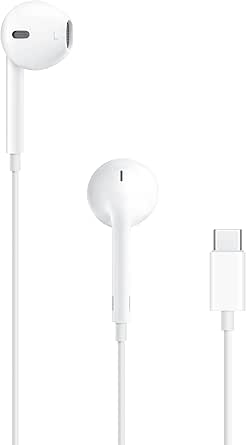
Apple EarPods with USB-C Plug
The Apple EarPods with USB-C Plug are the pick here for listeners who prefer an ear-shaped design rather than silicone tips that sit inside the ear canal. Their built-in remote covers volume, playback, and calls, and the microphone supports FaceTime and Siri. That makes them a simple wired option for calls and everyday use with USB-C devices. Compared with the Google USB-C Wired Earbuds, the EarPods emphasize an open, ear-shaped fit, while Google lists passive noise cancellation for its in-ear design. The Apple fit may feel less isolating in noisy surroundings, and its shape may not suit every ear as securely as tip-based earbuds. There is also no stated water-resistance rating. I’d choose them for a less-sealed fit and Apple voice features, not for blocking outside noise or vigorous exercise.
Pros:- Ear-shaped design offers an alternative to silicone-tip in-ear earbuds
- Remote controls volume, music and video playback, and calls
- Built-in microphone supports calls, FaceTime, and Siri
- Wired USB-C connection requires no battery charging
Cons:- Requires a device with a USB-C port
- Open ear-shaped fit may provide less isolation than the Google in-ear earbuds
- No water-resistance rating is specified
Best for: USB-C device owners who dislike silicone in-ear tips and want wired call, playback, and Siri controls.
Not ideal for: Commuters seeking a more isolating in-ear fit, or athletes who need a stated water-resistance rating and secure sport fit.
- Connectivity:Wired USB-C
- Compatibility:Devices with a USB-C port
- Controls:Volume, music and video playback, answer and end calls
- Microphone:Built-in; supports calls, FaceTime, and Siri
- Dimensions:3.25 × 2.9 × 1 inches
- Weight:0.352 ounces
- Model number:MYQY3AM/A
Our verdict“Choose the Apple EarPods if you want a USB-C wired set with an open fit and Siri support rather than in-ear isolation.”
Google USB-C Wired Earbuds with Inline Controls, White
The Google USB-C Wired Earbuds keep the proposition simple: compact in-ear listening, inline volume and playback controls, and no battery to charge. Google lists passive noise cancellation, which may help reduce some outside sound compared with the more open-fitting Apple EarPods, though the product details don’t specify an active cancellation system. Their dynamic drivers and 24-ohm impedance are listed, but no frequency range or detailed sound tuning is provided, so I’d treat this as a practical everyday set rather than a sound-customization pick. The compact design suits carrying along with a USB-C phone, and the wired connection means they are ready without charging. On the other hand, the cable can limit movement, and compatibility requires a USB-C device. Choose these for uncomplicated in-ear use, not for wireless convenience or a workout-ready water rating.
Pros:- No batteries or charging required
- Inline remote provides volume and playback controls
- Compact in-ear design is suited to listening on the go
- Passive noise cancellation is listed
Cons:- Requires a compatible USB-C device
- Wired cable may restrict movement compared with wireless earbuds
- Supplied details do not specify a water-resistance rating or frequency range
Best for: USB-C phone users who want compact, charge-free in-ear earbuds with basic inline controls for travel and everyday listening.
Not ideal for: Listeners who want wireless freedom, documented water resistance for exercise, or detailed audio-tuning specifications.
- Connector:USB-C
- Fit:In-ear
- Controls:Inline button remote
- Noise control:Passive noise cancellation
- Driver type:Dynamic
- Audio impedance:24 ohm
- Enclosure material:Thermoplastic elastomer (TPE)
- Model number:GA00485-US
Our verdict“Pick the Google USB-C earbuds for compact, charge-free in-ear listening, but choose the Apple EarPods if you prefer an open fit.”

How We Picked
I ranked these headphones by how well their design and features answer common wired USB-C needs: everyday listening, calls, portability, workouts, and longer sessions. I weighed fit style, stated microphone and control features, wearability, build and carrying practicality, and how clearly each model serves a particular buyer. Because USB-C headphones rely on a wired connection, I also treated device compatibility as part of usability rather than assuming every USB-C port supports audio.
The order favors options with a clear, useful balance of features and few avoidable compromises for their intended role. A dedicated sport design or a multipack can rank well for a specific buyer without outranking a more versatile daily pick. I did not treat brand name or extra features as automatic advantages: a feature only helped when it addressed a real use case, and each recommendation carries tradeoffs in fit, form, or flexibility.
| USB-C headphone | Connection | Microphone |
|---|---|---|
| Apple MFi-Certified USB-C Wire | Wired USB-C | Built-in |
| Logitech H391 Wired USB-C Ster | Wired USB-C | Rotating noise-canceling boom mic |
| ADOOPE AD1000 USB-C Wired Over | Wired USB-C | Built-in |
| Audio-Technica ATH-S120C-GY US | — | Inline |
| AFGHOA USB-C Wired Earbuds wit | Wired USB-C | Built-in |
| IIOZO 2-Pack USB-C Wired Earbu | — | Built-in |
| JBL Tune 310C Wired USB-C In-E | — | — |
| JBL Tune 530C Wired On-Ear Hea | USB-C | — |
| JBL Tune 520C USB-C Wired On-E | USB-C | — |
| Sennheiser HD 400U Wired Over- | Wired USB-C | Built-in |
| JBL Endurance Run 3 USB-C Wire | Wired USB-C | Built-in |
| Sony IER-EX15C Wired USB-C In- | Wired USB-C | Built-in |
| Yatloml TC610 USB-C Wired In-E | — | Built-in |
| Apple EarPods with USB-C Plug | — | Built-in; supports calls, FaceTime, and Siri |
| Google USB-C Wired Earbuds wit | — | — |
Factors to Consider When Choosing Best USB-C Headphones
USB-C headphones look straightforward, but the connector alone does not tell you whether a pair will suit your device or routine. I would start with how you wear headphones and where you use them, then check the connection, controls, and call needs. These factors help separate genuinely useful features from extras that may not matter to you.
Match the fit to how long you listen
Earbuds are compact and easy to carry, but the eartip or earbud shape can affect comfort more than any advertised feature. On-ear models sit against the ears and can feel less enclosing than over-ear designs, though pressure may build during long sessions. Over-ear headphones take up more room but may be a better match when you prefer a headband and larger earcups. A common mistake is choosing by sound category alone without thinking about how the fit feels after an hour. If you are unsure, prioritize a shape you already tolerate rather than assuming a different style will suit you. For shared or all-day use, the fit you can comfortably keep on is more useful than a feature you rarely use.
Check USB-C audio compatibility before buying
A USB-C plug does not guarantee that every phone, tablet, laptop, or gaming device will send audio through its port. Some devices may require support for digital USB audio, and some cases can make a connector harder to seat fully. Check your device’s audio output support and any manufacturer notes before choosing wired USB-C headphones. This matters especially if you are buying a pair as a replacement for a 3.5 mm model or for use across several devices. Do not assume that a charging port automatically supports every audio accessory. If you plan to switch between devices, compatibility across that full set should guide your choice.
Choose controls for the tasks you actually do
Inline buttons can make it easier to adjust volume, pause audio, or answer calls without reaching for a screen. Their usefulness depends on which controls are included and whether they work with your device and apps. A microphone is valuable for calls and voice input, but it does not by itself promise clear pickup in a noisy setting. Before paying extra for controls, check whether you need volume adjustment on the cable or only basic playback and call functions. Buyers who mostly listen without touching their phone may get little benefit from a more elaborate remote. A simpler control layout can also reduce accidental button presses while commuting or exercising.
Decide whether a headset or headphones fit your calls
A headset-style model can be a sensible choice for online meetings, classes, and frequent voice calls, while general headphones may place more emphasis on listening comfort. Consider whether you need a microphone on every call or only occasionally, and whether you will use the headphones near a computer or while moving around. For work, check that the cable gives you enough room to sit naturally and that the controls are easy to reach. Buyers sometimes focus on the word microphone without checking how they will position the cable or use the headset day to day. If calls are central to your routine, prioritize a clear, accessible microphone and practical controls over a style that mainly suits music listening.
Treat sport use as a separate fit requirement
Headphones for exercise need to stay comfortable and secure while you move, not just sound suitable during a short trial. A sport-oriented design can be a better starting point than standard earbuds, but fit remains personal and should not be inferred from a product label alone. Think about sweat exposure, cable movement, and whether you need playback controls while running or training. A common mistake is using a general-purpose pair for workouts without checking whether its fit holds during motion. Wired designs also mean the cable can snag or bounce, so consider where it will sit relative to your clothing. If you want one pair for both exercise and desk listening, compare those needs instead of assuming a sport feature solves every comfort issue.
Pay for extras only when they change your routine
Multipacks can be useful if you need a spare pair for a bag, a second device, or another household member, but they do not automatically make each pair a better fit. Carrying cases and magnetic earbuds address storage and cable handling, while more elaborate features matter only if you use them. Wired headphones also avoid battery charging, so paying more for wireless-style convenience is not always relevant to this category. Compare what is included with the practical problem you want to solve: backup, portability, calls, or a particular wearing style. If you only need reliable everyday listening, a straightforward single pair may be easier to choose than a bundle with features you will not use. Spend more when the fit, build, or controls solve a clear need—not simply because a model has a longer feature list.
Frequently Asked Questions
Will any USB-C headphones work with my phone or laptop?
No. A USB-C connector confirms the plug shape, not that every device supports audio output through its port. Check your phone or computer’s specifications for USB audio support, and look for accessory compatibility notes if available. This is especially relevant when buying for more than one device, since support can differ between models. If you are replacing a 3.5 mm pair, verify compatibility before ordering rather than assuming the port works the same way.
Should I choose USB-C earbuds or over-ear headphones for video calls?
Choose based on your call setting and wearing preference, not just the connector. Earbuds are compact and convenient when you move between locations, while over-ear or headset-style designs may suit longer calls at a desk. Check that the model includes a microphone and that its controls work with your device. If you take calls in a noisy place, do not assume a built-in mic will eliminate background sound. For frequent meetings, comfort over a full session and easy access to mute or playback controls can matter more than portability.
Are two-packs a better choice than buying one pair?
A two-pack makes sense when you have a specific use for the spare, such as keeping one pair at work or carrying a backup. It is less useful if you only need one pair and have not confirmed that both fit your needs. Multipacks can also involve compromises in materials or features compared with a single model designed around a particular use. Compare the controls, microphone, and compatibility of the included headphones rather than judging only by the number of pairs. The Apple MFi-certified and IIOZO bundles stand out here for their spare-pair format, not as automatic fits for every listener.
Do inline controls and microphones work with every device?
Not always. Control behavior can vary by device, operating system, and the specific functions built into the remote, even when audio plays normally. A microphone may also behave differently across phones, tablets, and computers. Check compatibility information for the headphones and your device, especially if volume buttons or call controls are a main reason for buying. If you mainly need audio playback, control differences may matter less; for calls or frequent volume changes, verify those functions before choosing.
Can I use regular USB-C headphones for running or workouts?
You can, but a standard everyday design may not stay secure or comfortable during movement. For exercise, think about fit, cable bounce, and whether the connector or wire could snag on clothing or equipment. A sport-oriented option such as the JBL Endurance Run 3 is a more targeted starting point than a general-purpose pair, though individual fit still matters. Also check the product’s care guidance rather than assuming it can handle sweat. If you plan to use one pair at both the gym and a desk, weigh exercise stability against comfort for longer stationary listening.
Conclusion
For the best overall balance of compact design and everyday features, I would start with the JBL Tune 310C. The best value for a spare-pair buyer is the IIOZO two-pack, while the Apple MFi-certified two-pack is another bundle option for those who want its stated certification and controls. The best premium-leaning over-ear pick is the Sennheiser HD 400U; choose the ADOOPE AD1000 instead if a microphone is central to your over-ear use. Beginners who want a familiar, uncomplicated wired pair should look at Apple EarPods with USB-C or Google’s USB-C earbuds, after checking device compatibility. For workouts, the JBL Endurance Run 3 has the clearest specific role. Match the wearing style and use case first, then confirm your device supports USB-C audio before deciding.