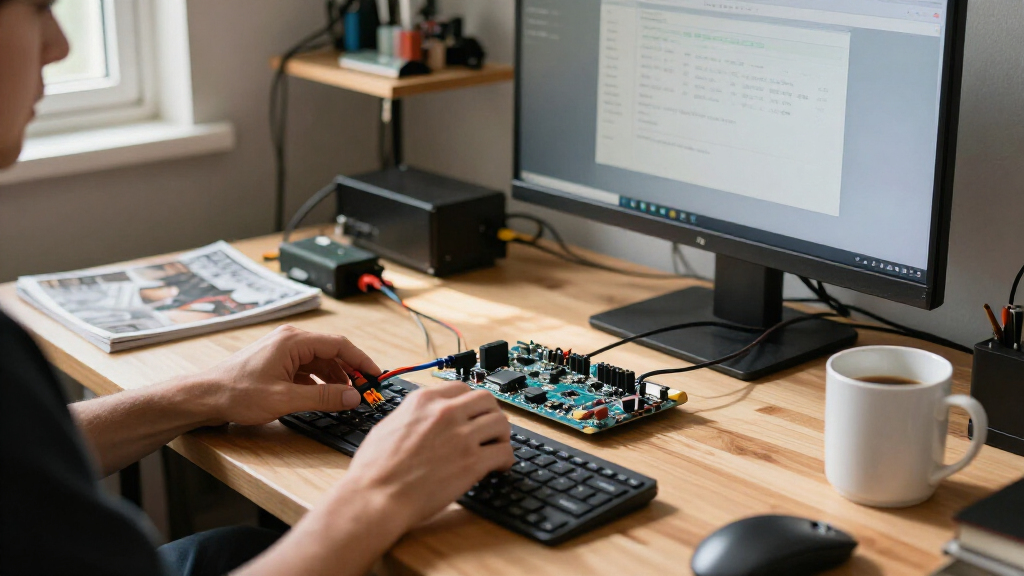

Searching for the best Raspberry Pi alternatives often leads to a landscape dominated by high-performance competitors like the Orange Pi 5 Plus and the budget-friendly Orange Pi Zero 4. While the Raspberry Pi remains a staple, these alternatives frequently offer superior raw processing power, faster memory standards like LPDDR5, or specialized features such as Neural Processing Units (NPUs) for AI tasks. The primary tradeoff involves software ecosystem maturity; while hardware specs often surpass the Pi, community support and driver compatibility can vary more widely. This guide breaks down 14 distinct options to help you match the right board to your specific project needs, ensuring you balance cost, performance, and ease of use effectively.

Get the latest gadgets delivered free with Prime
- Fast, free delivery on millions of items
- Prime Video, Amazon Music and more included
- Member-only deals all year
Complete the kit



Key Takeaways
- The Orange Pi 5 Plus stands out as the performance leader, offering the Rockchip RK3588 chip that rivals desktop-class capabilities, making it ideal for heavy multitasking and emulation.
- For pure value, the Orange Pi Zero 4 provides modern connectivity like Wi-Fi 6 and Bluetooth 5.4 in a compact form factor, undercutting many Pi Zero equivalents on price.
- RISC-V boards like the Orange Pi RV2 represent the frontier of open instruction set architecture, offering future-proof potential but requiring more technical expertise for current software support.
- Software compatibility remains the biggest hurdle; many alternatives lack the seamless plugin ecosystem of Raspberry Pi OS, requiring manual driver installation for peripherals.
- Thermal management is a critical differentiator; high-performance boards like the Orange Pi 4 Pro generate significant heat and often require active cooling solutions not needed by lower-power alternatives.
| Orange Pi Zero 4 Single-Board Computer, 4GB LPDDR5, Allwinner A733, Wi-Fi 6 and Bluetooth 5.4 |  | Best for Performance and Connectivity | Processor: Allwinner A733, 2× Cortex-A76 + 6× Cortex-A55, up to 2.0 GHz | Memory: 4GB LPDDR5 | NPU: Up to 3 TOPS | VIEW LATEST PRICE | See Our Full Breakdown |
| Orange Pi Zero 2W 1GB Single-Board Computer |  | Best for Compact, Low-Complexity Projects | Processor: Allwinner H618 quad-core Cortex-A53, up to 1.5 GHz | Graphics: Mali G31 MP2 | Memory: 1GB LPDDR4 | VIEW LATEST PRICE | See Our Full Breakdown |
| Orange Pi Zero 3 Single-Board Computer, 1GB RAM |  | Best for Built-In Wired Networking | Processor: Allwinner H618 quad-core Cortex-A53, 1.5 GHz | Graphics: Mali G31 MP2 | Memory: 1GB LPDDR4 | VIEW LATEST PRICE | See Our Full Breakdown |
| Libre Computer Le Potato Mini Single Board Computer with USB Wi-Fi and Heatsink, 2 GB |  | Best for Low-Power Linux Builds | Model: Libre Computer AML-S905X-CC | Processor: Amlogic, 1.4 GHz | Memory: 2GB DDR3 | VIEW LATEST PRICE | See Our Full Breakdown |
| Orange Pi Zero 3 Single-Board Computer, Allwinner H618, LPDDR4 RAM |  | Best for Choosing Your Memory Configuration | Processor: 64-bit Allwinner H618 quad-core Arm Cortex-A53, 1.5 GHz | Memory options: LPDDR4, 1GB, 1.5GB, 2GB, or 4GB | Storage: 16MB SPI flash | VIEW LATEST PRICE | See Our Full Breakdown |
| Orange Pi Zero 3W Single-Board Computer, 4GB LPDDR5, Allwinner A733, 3 TOPS NPU |  | Best Compact AI Development Board | Processor: Allwinner A733; 2× Cortex-A76 up to 2.0 GHz and 6× Cortex-A55 | Memory: 4GB LPDDR5 installed; supports up to 16GB | NPU: Up to 3 TOPS (INT8) | VIEW LATEST PRICE | See Our Full Breakdown |
| Orange Pi 3B Single-Board Computer with Rockchip RK3566, Wi-Fi 5, and Bluetooth 5.0 |  | Best for Flexible Storage Builds | Processor: Rockchip RK3566, quad-core 64-bit, up to 1.8 GHz | Memory: 2GB, 4GB, or 8GB LPDDR4/LPDDR4X, depending on configuration | Storage: Supports 16GB to 256GB eMMC modules | VIEW LATEST PRICE | See Our Full Breakdown |
| Orange Pi Zero LTS Single-Board Computer, Allwinner H3 Quad-Core, 512MB DDR3 |  | Best for Lightweight, Low-Demand Projects | Processor: Allwinner H3 quad-core Cortex-A7 | Memory: 512MB DDR3 SDRAM | Graphics: Mali-400 MP2 at 600MHz; OpenGL ES 2.0 | VIEW LATEST PRICE | See Our Full Breakdown |
| Orange Pi 4 Pro Single-Board Computer, 4GB LPDDR5, Allwinner A733, Wi-Fi 6 and Bluetooth 5.4 |  | Best Overall for a Feature-Rich Linux Build | Processor: Allwinner A733, 2× Cortex-A76 and 6× Cortex-A55, up to 2.0 GHz | Memory: 4GB LPDDR5 | NPU: 3 TOPS at INT8; supports INT8, INT16, FP16, and BF16 | VIEW LATEST PRICE | See Our Full Breakdown |
| Orange Pi RV2 RISC-V Single-Board Computer, 8GB RAM, with Power Supply |  | Best for RISC-V Experimentation | Processor: Ky X1, eight-core 64-bit RISC-V | Memory: Title lists 8GB LPDDR4X; product information lists 2GB installed | AI performance: 2 TOPS | VIEW LATEST PRICE | See Our Full Breakdown |
| Orange Pi RV RISC-V Single Board Computer, 2GB LPDDR4 |  | Best for RISC-V Experimentation | Processor: 4-core, 64-bit RISC-V; product information lists JH-7110 and JH7100 | Processor speed: 1.5 GHz | Memory: 2GB LPDDR4 | VIEW LATEST PRICE | See Our Full Breakdown |
| Orange Pi 4 Pro Single-Board Computer, 4GB LPDDR5, Allwinner A733, Wi-Fi 6 and Bluetooth 5.4 | | Best for Balanced AI and Everyday Projects | Processor: Allwinner A733, 2× Cortex-A76 and 6× Cortex-A55 | Maximum processor speed: 2.0 GHz | Memory: 4GB LPDDR5 | VIEW LATEST PRICE | See Our Full Breakdown |
| Orange Pi 5 Plus Single-Board Computer, 6GB LPDDR5, Rockchip RK3588 |  | Best for High-Performance Projects | Processor: Rockchip RK3588, 8-core 64-bit: 4× Cortex-A76 and 4× Cortex-A55 | Processor speed: Up to 2.4 GHz | Memory and graphics: 6GB LPDDR5; Mali-G610 GPU | VIEW LATEST PRICE | See Our Full Breakdown |
| Orange Pi Zero 3W Single-Board Computer, 6GB LPDDR5, Allwinner A733 Octa-Core, 3 TOPS NPU, Wi-Fi 6 and Bluetooth 5.4 | | Best Compact AI Board | Processor: Allwinner A733, 2× Cortex-A76 and 6× Cortex-A55, up to 2.0 GHz | Memory: 6GB LPDDR5 | AI accelerator and GPU: NPU up to 3 TOPS (INT8); Imagination PowerVR BXM-4-64 MC1 | VIEW LATEST PRICE | See Our Full Breakdown |
| Raspberry Pi alternatife | Processor | Memory | Storage | Wireless |
|---|---|---|---|---|
| Orange Pi Zero 4 Single-Board | Allwinner A733, 2× Cortex-A76 + 6× Cortex-A55, up to 2.0 GHz | 4GB LPDDR5 | 32GB; optional eMMC or UFS, plus TF card support up to 128GB | — |
| Orange Pi Zero 2W 1GB Single-B | Allwinner H618 quad-core Cortex-A53, up to 1.5 GHz | 1GB LPDDR4 | 16MB SPI flash support | Dual-band Wi-Fi 5 and Bluetooth 5.0 with BLE |
| Orange Pi Zero 3 Single-Board | Allwinner H618 quad-core Cortex-A53, 1.5 GHz | 1GB LPDDR4 | — | — |
| Libre Computer Le Potato Mini | Amlogic, 1.4 GHz | 2GB DDR3 | — | USB Wi-Fi 4 (802.11n) |
| Orange Pi Zero 3 Single-Board | 64-bit Allwinner H618 quad-core Arm Cortex-A53, 1.5 GHz | — | 16MB SPI flash | — |
| Orange Pi Zero 3W Single-Board | Allwinner A733; 2× Cortex-A76 up to 2.0 GHz and 6× Cortex-A55 | 4GB LPDDR5 installed; supports up to 16GB | TF card up to 128GB; optional onboard eMMC or UFS | Wi-Fi 6; Bluetooth 5.4 BLE |
| Orange Pi 3B Single-Board Comp | Rockchip RK3566, quad-core 64-bit, up to 1.8 GHz | 2GB, 4GB, or 8GB LPDDR4/LPDDR4X, depending on configuration | Supports 16GB to 256GB eMMC modules | Wi-Fi 5; Bluetooth 5.0 |
| Orange Pi Zero LTS Single-Boar | Allwinner H3 quad-core Cortex-A7 | 512MB DDR3 SDRAM | TF card up to 64GB; 2MB SPI flash | — |
| Orange Pi 4 Pro Single-Board C | Allwinner A733, 2× Cortex-A76 and 6× Cortex-A55, up to 2.0 GHz | 4GB LPDDR5 | 128GB listed; M.2 M-Key PCIe 3.0, eMMC module support, microSD up to 128GB | Wi-Fi 6; Bluetooth 5.4 BLE |
| Orange Pi RV2 RISC-V Single-Bo | Ky X1, eight-core 64-bit RISC-V | Title lists 8GB LPDDR4X; product information lists 2GB installed | — | — |
| Orange Pi RV RISC-V Single Boa | 4-core, 64-bit RISC-V; product information lists JH-7110 and JH7100 | 2GB LPDDR4 | — | — |
| Orange Pi 4 Pro Single-Board C | Allwinner A733, 2× Cortex-A76 and 6× Cortex-A55 | 4GB LPDDR5 | M.2 M-Key PCIe/NVMe, microSD up to 128GB, optional eMMC | Wi-Fi 6, Bluetooth 5.4, BLE |
| Orange Pi 5 Plus Single-Board | Rockchip RK3588, 8-core 64-bit: 4× Cortex-A76 and 4× Cortex-A55 | — | — | — |
| Orange Pi Zero 3W Single-Board | Allwinner A733, 2× Cortex-A76 and 6× Cortex-A55, up to 2.0 GHz | 6GB LPDDR5 | — | Wi-Fi 6, Bluetooth 5.4 BLE |
More Details on Our Top Picks
Orange Pi Zero 4 Single-Board Computer, 4GB LPDDR5, Allwinner A733, Wi-Fi 6 and Bluetooth 5.4
The Orange Pi Zero 4 is the strongest fit here for buyers who want more than a basic Raspberry Pi-style controller. Its A733 pairs two Cortex-A76 cores with six Cortex-A55 cores, while 4GB LPDDR5 and a 3 TOPS NPU give it more room for multitasking and supported edge-AI workloads than the 1GB Orange Pi Zero 2W and Zero 3 configurations. Wi-Fi 6, Bluetooth 5.4, and Gigabit Ethernet also make it better equipped for networked projects without relying on an adapter board. The tradeoff is setup complexity: the board needs a separate 5 V/3 A supply, and storage options can vary. Compared with the more modest Orange Pi Zero 3, this is the better choice for demanding projects, but likely excessive for simple GPIO experiments.
Pros:- Eight-core A733 with two Cortex-A76 cores and a 3 TOPS NPU
- 4GB LPDDR5 provides more headroom than the 1GB Zero 2W and Zero 3 models
- Wi-Fi 6, Bluetooth 5.4, and Gigabit Ethernet are built in
- Supports 4K at 60 fps and offers camera and expansion interfaces
Cons:- Requires a separate USB-C 5 V/3 A power supply
- Onboard storage configuration can vary, so buyers should check what is included
- Its extra processing capability may be unnecessary for basic single-purpose projects
Best for: Makers building compact networked projects, media interfaces, or supported edge-AI applications who want modern wireless and wired networking.
Not ideal for: Beginners running simple sensors or basic scripts, since the stronger processor and broad interfaces add capability they may not need and a separate power supply is required.
- Processor:Allwinner A733, 2× Cortex-A76 + 6× Cortex-A55, up to 2.0 GHz
- Memory:4GB LPDDR5
- NPU:Up to 3 TOPS
- Storage:32GB; optional eMMC or UFS, plus TF card support up to 128GB
- Networking:Wi-Fi 6, Bluetooth 5.4, Gigabit Ethernet
- Display:Mini HDMI 2.0 up to 4K at 60 fps; USB-C with eDP/DP support
- Expansion:26-pin GPIO, camera interfaces, and 16-pin PCIe 3.0/USB 3.1 FPC
- Power:USB-C, 5 V/3 A
Our verdict“Choose the Orange Pi Zero 4 when you need a compact board with substantially more processing, memory, and connectivity than the entry-level Zero models.”
Orange Pi Zero 2W 1GB Single-Board Computer
The Orange Pi Zero 2W makes sense when a small board and a familiar set of Linux or Android options matter more than memory headroom. Its quad-core H618 and 1GB LPDDR4 can handle lightweight control, learning, and single-purpose tasks, while dual-band Wi-Fi 5 and Bluetooth 5.0 keep wireless peripherals within reach. Unlike the Orange Pi Zero 3, though, this model does not list built-in Gigabit Ethernet; wired networking and other interfaces may call for an adapter board. Its 1GB of RAM also limits workloads that keep several services or applications active. I’d pick it over the Zero 3 when the compact footprint and wireless-first design fit the project, but choose the Zero 3 when onboard Ethernet matters.
Pros:- Compact board suited to space-constrained builds
- Quad-core H618 supports lightweight Linux and Android tasks
- Dual-band Wi-Fi 5 and Bluetooth 5.0 with BLE are built in
- Supports several Android, Debian, and Ubuntu versions
Cons:- 1GB RAM limits multitasking and heavier applications
- Ethernet and some additional interfaces require an adapter board
- The listed storage is 16MB SPI flash, so a separate boot or storage medium may be needed
Best for: Learners and makers building lightweight wireless controllers, small Linux projects, or Android-based experiments with limited memory demands.
Not ideal for: Home-server builders or users running multiple services who need more than 1GB RAM or built-in Gigabit Ethernet.
- Processor:Allwinner H618 quad-core Cortex-A53, up to 1.5 GHz
- Graphics:Mali G31 MP2
- Memory:1GB LPDDR4
- Storage:16MB SPI flash support
- Wireless:Dual-band Wi-Fi 5 and Bluetooth 5.0 with BLE
- Expansion:24-pin connector and 40-pin expansion port
- USB:4 USB ports
- Operating systems:Android 12, Debian 11/12, Orange Pi OS (Arch), Ubuntu 20.04/22.04
Our verdict“Choose the Zero 2W for compact wireless projects and basic computing, but favor the Zero 3 if built-in Ethernet or more memory is a priority.”
Orange Pi Zero 3 Single-Board Computer, 1GB RAM
For a small Raspberry Pi alternative that needs a wired network connection, the Orange Pi Zero 3 with 1GB RAM has a practical advantage over the Zero 2W: Gigabit Ethernet is built in. The H618 processor, Wi-Fi 5, Bluetooth 5.0, and micro HDMI output make it a flexible base for lightweight Linux projects or a simple media setup, and its GPIO headers support hardware experimentation. The main constraint is memory. At 1GB, it is better suited to a focused task than a busy desktop or several concurrent services. Some USB ports and audio features also depend on a separate expansion board. Compared with the configurable Zero 3 listing in this roundup, this version is a straightforward pick only if the 1GB configuration fits the workload.
Pros:- Built-in Gigabit Ethernet alongside Wi-Fi 5 and Bluetooth 5.0
- Micro HDMI supports output up to 4K at 60 fps
- 26-pin and 13-pin headers support expansion and development
- Supports Android 12 TV, Debian, and Ubuntu
Cons:- 1GB RAM restricts multitasking and memory-heavy software
- Some USB ports and audio features require a separate expansion board
- USB-C power supply is not specified as included
Best for: Makers setting up lightweight wired network appliances, small Linux controllers, or GPIO projects that benefit from onboard Gigabit Ethernet.
Not ideal for: Users who expect to run a desktop with several applications or multiple background services, because the listed configuration has only 1GB RAM.
- Processor:Allwinner H618 quad-core Cortex-A53, 1.5 GHz
- Graphics:Mali G31 MP2
- Memory:1GB LPDDR4
- Onboard storage:16MB SPI flash
- Networking:Gigabit Ethernet, Wi-Fi 5, Bluetooth 5.0
- Video output:Micro HDMI, up to 4K at 60 fps
- Expansion:26-pin and 13-pin GPIO headers
- Power:USB-C, 5 V/3 A
Our verdict“Pick this Zero 3 when built-in Gigabit Ethernet matters more than extra memory or a fully exposed set of ports.”
Libre Computer Le Potato Mini Single Board Computer with USB Wi-Fi and Heatsink, 2 GB
The Libre Computer Le Potato is the low-power, accessory-ready choice in this group. Its 2GB of RAM gives it more breathing room than the 1GB Orange Pi Zero 2W and Zero 3 configurations, while the included USB Wi-Fi dongle and push-pin heatsink reduce the number of add-ons to source. The board is described as drawing under one watt, which suits always-on projects where power use matters more than peak performance. Its limits are just as relevant: the Amlogic processor is listed at 1.4 GHz, Wi-Fi is 802.11n through a USB dongle, and storage plus the MicroUSB power supply are not included. Raspberry Pi software also will not work out of the box, so this is better for Linux users comfortable choosing a compatible image.
Pros:- 2GB RAM exceeds the 1GB configurations of the listed Orange Pi Zero 2W and Zero 3
- Low stated power consumption suits always-on builds
- Includes a push-pin heatsink and USB Wi-Fi dongle
- GPIO supports I2C, SPI, PWM, and UART
Cons:- MicroSD card or eMMC and a 5 V/2 A or higher MicroUSB supply are not included
- USB Wi-Fi 4 is less modern than the built-in Wi-Fi 5 and Wi-Fi 6 options elsewhere in this roundup
- Raspberry Pi software is not compatible out of the box, and some audio peripherals may need rerouting
Best for: Linux hobbyists building low-power, always-on projects who value an included heatsink and Wi-Fi dongle and can supply their own storage and power.
Not ideal for: Beginners seeking Raspberry Pi image compatibility or a ready-to-boot kit, since storage and power are separate and software compatibility requires care.
- Model:Libre Computer AML-S905X-CC
- Processor:Amlogic, 1.4 GHz
- Memory:2GB DDR3
- Wireless:USB Wi-Fi 4 (802.11n)
- USB ports:4
- Included accessories:Push-pin heatsink and USB Wi-Fi dongle
- Power requirement:5 V/2 A or higher MicroUSB supply
- GPIO:Supports I2C, SPI, PWM, and UART
Our verdict“Choose Le Potato for a low-power Linux build with useful accessories included, provided you are comfortable supplying storage and configuring software.”
Orange Pi Zero 3 Single-Board Computer, Allwinner H618, LPDDR4 RAM
This Orange Pi Zero 3 listing stands out because it offers RAM configurations from 1GB to 4GB, letting buyers match memory to the project rather than settling for the fixed 1GB model listed elsewhere in this roundup. The H618, Gigabit Ethernet, Wi-Fi 5, Bluetooth 5.0, and micro HDMI 4K output make it a versatile base for Linux, Android, and networked projects. Choosing 4GB gives it more room for multitasking than the Orange Pi Zero 2W, while the H618 remains a more modest platform than the A733-based Orange Pi Zero 4. Buyers should verify which RAM configuration is supplied, since the listing describes several options. Built-in storage is only 16MB SPI flash, and some ports or features need a separate expansion board.
Pros:- RAM options range from 1GB to 4GB, offering more choice than the fixed 1GB Zero 3 listing
- Built-in Gigabit Ethernet, Wi-Fi 5, and Bluetooth 5.0
- Supports Android 12, Debian, and Ubuntu
- Micro HDMI supports 4K video output
Cons:- The supplied RAM configuration should be confirmed before purchase
- Only 16MB of onboard SPI flash is listed
- Some ports and features require a separate expansion board
Best for: Makers who want to select a Zero 3 memory configuration for a specific Linux, Android, or networked project and need built-in Gigabit Ethernet.
Not ideal for: Buyers who need a clearly specified RAM amount without checking the supplied configuration, or who need modern high-speed interfaces and stronger processing than the H618 offers.
- Processor:64-bit Allwinner H618 quad-core Arm Cortex-A53, 1.5 GHz
- Memory options:LPDDR4, 1GB, 1.5GB, 2GB, or 4GB
- Storage:16MB SPI flash
- Connectivity:Wi-Fi 5, Bluetooth 5.0, Gigabit Ethernet
- Video output:Micro HDMI with 4K support
- USB:3 USB 2.0 ports
- Expansion:13-pin and 26-pin headers
- Operating systems:Android 12, Debian 11/12, Ubuntu 20.04/22.04
Our verdict“Choose this Zero 3 when you want built-in Ethernet and the option of more RAM than the fixed 1GB model, after confirming the included configuration.”
Orange Pi Zero 3W Single-Board Computer, 4GB LPDDR5, Allwinner A733, 3 TOPS NPU
The Orange Pi Zero 3W is the compact pick for projects that need more than basic GPIO control: its eight-core A733 processor, 4GB of LPDDR5, and 3 TOPS NPU give it a stronger starting point for edge-AI experiments than the older Orange Pi Zero LTS. Wi-Fi 6 and Bluetooth 5.4 also suit connected prototypes where adding separate wireless hardware would complicate a small build. Its 65 × 32 mm footprint and camera, display, and PCIe interfaces make it especially flexible for embedded work. Compared with the larger Orange Pi 4 Pro, though, it lacks the listed Gigabit Ethernet and M.2 NVMe slot, and storage may require a TF card or optional module. I’d choose it for space-sensitive development, not as the easiest complete desktop setup.
Pros:- Eight-core A733 processor pairs two Cortex-A76 cores with six Cortex-A55 cores.
- 3 TOPS NPU supports experimentation with AI workloads at the edge.
- Wi-Fi 6 and Bluetooth 5.4 provide modern wireless connectivity without extra adapters.
- Mini HDMI, USB-C DisplayPort, dual camera interfaces, PCIe, and a 40-pin header support varied projects.
Cons:- Onboard eMMC or UFS storage is optional, so a separate TF card or module may be needed.
- No Gigabit Ethernet or M.2 NVMe slot is listed, unlike the Orange Pi 4 Pro.
- Requires a separate 5 V/3 A USB-C power supply.
Best for: Makers building compact Linux or edge-AI prototypes that need modern wireless, camera connections, and GPIO in a small footprint.
Not ideal for: Buyers who need onboard high-capacity storage, wired Gigabit Ethernet, or a straightforward desktop-style board with an M.2 slot.
- Processor:Allwinner A733; 2× Cortex-A76 up to 2.0 GHz and 6× Cortex-A55
- Memory:4GB LPDDR5 installed; supports up to 16GB
- NPU:Up to 3 TOPS (INT8)
- Wireless:Wi-Fi 6; Bluetooth 5.4 BLE
- Display:Mini HDMI 2.0 up to 4K at 60 fps; USB-C DisplayPort Alt Mode up to 4K at 60 fps
- Storage:TF card up to 128GB; optional onboard eMMC or UFS
- Expansion:PCIe 3.0 one-lane FPC; 40-pin GPIO header
- Dimensions and weight:65 × 32 × 1.2 mm; 14g
Our verdict“Choose the Zero 3W for space-limited projects that benefit from its NPU and modern wireless, but pick the Orange Pi 4 Pro if wired networking and NVMe storage matter more.”
Orange Pi 3B Single-Board Computer with Rockchip RK3566, Wi-Fi 5, and Bluetooth 5.0
The Orange Pi 3B makes the most sense when a Raspberry Pi alternative needs room to grow beyond a microSD card. Its M.2 slot supports SATA 3 or PCIe 2.0 NVMe storage, and the board also accepts eMMC modules, giving builders several ways to shape a system around its storage demands. Gigabit Ethernet, HDMI, USB 3.0, and a 40-pin header make it a practical base for a home server or general-purpose Linux project. Its quad-core RK3566 and memory choices up to 8GB are less ambitious than the A733 in the Orange Pi 4 Pro or Zero 3W, but the 3B’s storage options are a clear differentiator. Check the exact memory version before buying, and account for eMMC modules or an M.2 drive if you need them.
Pros:- M.2 M-Key slot supports SATA 3 or PCIe 2.0 NVMe drives.
- eMMC module support offers an alternative to TF-card storage.
- Gigabit Ethernet is useful for networked projects and small servers.
- Memory configurations range from 2GB to 8GB, with a 40-pin expansion header.
Cons:- Memory configuration varies by version, so the exact board variant needs verification.
- eMMC modules and M.2 storage are supported but not specified as included.
- Quad-core RK3566 and Wi-Fi 5 are less advanced than the A733-based Orange Pi 4 Pro.
Best for: Linux builders creating a small server or storage-focused project who want Gigabit Ethernet and a choice of M.2 or eMMC storage.
Not ideal for: Buyers seeking a compact AI-focused board, Wi-Fi 6, or a guaranteed memory configuration without checking the specific version.
- Processor:Rockchip RK3566, quad-core 64-bit, up to 1.8 GHz
- Memory:2GB, 4GB, or 8GB LPDDR4/LPDDR4X, depending on configuration
- Storage:Supports 16GB to 256GB eMMC modules
- M.2 expansion:M.2 M-Key supports SATA 3 or PCIe 2.0 NVMe
- Wireless:Wi-Fi 5; Bluetooth 5.0
- Wired networking:Gigabit Ethernet
- Ports and expansion:HDMI, USB 2.0, USB 3.0, 3.5mm audio, MIPI DSI, eDP, MIPI CSI, 40-pin header
- Operating systems:Android, Ubuntu, Debian, Orange Pi OS (OH)
Our verdict“Pick the Orange Pi 3B when expandable storage and wired networking matter more than newer wireless or AI acceleration.”
Orange Pi Zero LTS Single-Board Computer, Allwinner H3 Quad-Core, 512MB DDR3
The Orange Pi Zero LTS is a deliberately modest alternative: its 512MB of DDR3 and Allwinner H3 are suited to focused jobs such as simple network services, GPIO control, or lightweight Linux experiments, rather than demanding desktop use. Integrated 10/100 Ethernet gives it a useful wired connection without requiring a separate network adapter, while its small 48 × 46 mm board fits compact enclosures. Compared with the newer Orange Pi Zero 3W, it gives up substantial memory, faster wireless, and a more capable processor; in return, its straightforward feature set can suit a basic always-on task. The single USB host port and TF-card storage limit expansion, so I’d skip it for multitasking, media-heavy use, or projects that need several peripherals.
Pros:- Integrated 10/100 Ethernet supports wired network projects without a separate adapter.
- Compact 48 × 46 mm board fits small enclosures.
- 26-pin and 13-pin headers provide GPIO connections for basic hardware projects.
- Lists support for Android, Ubuntu, Debian, and Armbian.
Cons:- 512MB of DDR3 sharply limits multitasking and memory-heavy applications.
- Only one USB 2.0 host port is listed.
- Storage depends on a TF card, unlike boards such as the Orange Pi 3B that support M.2 and eMMC expansion.
Best for: Hobbyists running a simple wired network service, GPIO controller, or lightweight Linux project with limited memory demands.
Not ideal for: Users who need multitasking, multiple USB peripherals, wireless connectivity built in, or performance for modern desktop and AI workloads.
- Processor:Allwinner H3 quad-core Cortex-A7
- Memory:512MB DDR3 SDRAM
- Graphics:Mali-400 MP2 at 600MHz; OpenGL ES 2.0
- Ethernet:10/100 Mbps RJ45
- Storage:TF card up to 64GB; 2MB SPI flash
- USB:One USB 2.0 host port and one USB 2.0 OTG port
- GPIO:26-pin and 13-pin headers
- Dimensions and weight:48 × 46 mm; 26g
Our verdict“Choose the Zero LTS for a small, simple wired or GPIO task, not for a general-purpose Raspberry Pi replacement.”
Orange Pi 4 Pro Single-Board Computer, 4GB LPDDR5, Allwinner A733, Wi-Fi 6 and Bluetooth 5.4
The Orange Pi 4 Pro is my strongest all-round pick here for buyers who want a Raspberry Pi alternative with a broad mix of computing, networking, and storage features. Its A733 combines two Cortex-A76 and six Cortex-A55 cores with 4GB LPDDR5 and a 3 TOPS NPU, while Wi-Fi 6, Bluetooth 5.4, Gigabit Ethernet, and an M.2 PCIe 3.0 slot cover a wider range of builds than the tiny Zero 3W. HDMI 2.0, USB 3.0, and listed PoE support add flexibility for projects that may grow into a more complete system. The tradeoff is setup complexity: storage details are not entirely clear, and a board still needs appropriate power and peripherals. For a smaller build, the Zero 3W saves space; this board is better when connectivity takes priority.
Pros:- Eight-core A733 processor and 3 TOPS NPU suit demanding projects and edge-AI experiments.
- Wi-Fi 6, Bluetooth 5.4, and Gigabit Ethernet cover wired and wireless networking.
- M.2 PCIe 3.0 slot supports NVMe expansion, alongside eMMC and microSD options.
- HDMI 2.0, USB 3.0, and listed PoE support give builders several connection options.
Cons:- Storage configuration can be unclear; eMMC is optional and listed storage details need checking.
- Requires additional setup and peripherals before it can serve as a complete computer.
- Larger than the Orange Pi Zero 3W, making it less suited to highly space-constrained builds.
Best for: Developers and makers who want one board for Linux projects that may use wired networking, NVMe storage, AI acceleration, and multiple peripherals.
Not ideal for: Buyers prioritizing the smallest possible board or a simple ready-to-run setup with storage and peripherals already accounted for.
- Processor:Allwinner A733, 2× Cortex-A76 and 6× Cortex-A55, up to 2.0 GHz
- Memory:4GB LPDDR5
- NPU:3 TOPS at INT8; supports INT8, INT16, FP16, and BF16
- Wireless:Wi-Fi 6; Bluetooth 5.4 BLE
- Ethernet:Gigabit Ethernet; PoE support
- Storage:128GB listed; M.2 M-Key PCIe 3.0, eMMC module support, microSD up to 128GB
- Video and USB:HDMI 2.0 up to 4K at 60Hz; one USB 3.0 and three USB 2.0 ports
- Dimensions and weight:89 × 56 mm; 58g
Our verdict“Choose the Orange Pi 4 Pro for the broadest mix of processing, networking, and storage in this group, unless a smaller board is your main priority.”
Orange Pi RV2 RISC-V Single-Board Computer, 8GB RAM, with Power Supply
The Orange Pi RV2 stands apart from the ARM-based boards here by using an eight-core RISC-V processor, making it the specialist choice for developers exploring that architecture or building Linux systems around it. Its two Gigabit Ethernet ports, three USB 3.0 ports, and two M.2 M-Key slots provide unusually broad connectivity for network appliances and storage-heavy experiments. The listed 2 TOPS AI performance and dual camera interfaces widen its project scope, while the Orange Pi 3B is a more conventional alternative for buyers who prefer an RK3566-based board and familiar storage options. I would pause before ordering, however: the title says 8GB RAM while product information lists 2GB installed. The power supply details also need checking against the board’s 5V/5A requirement.
Pros:- Eight-core 64-bit RISC-V processor offers an alternative architecture to the ARM boards in this roundup.
- Dual Gigabit Ethernet and three USB 3.0 ports suit network and peripheral-heavy builds.
- Two M.2 M-Key slots allow NVMe storage expansion.
- Dual MIPI CSI and display interfaces support camera and multi-display projects.
Cons:- Memory information conflicts: the title lists 8GB, while product information lists 2GB installed.
- Power input calls for USB-C at 5V/5A, so the included supply should be checked for compatibility.
- RISC-V software support may not match the familiarity of ARM options such as the Orange Pi 3B.
Best for: Developers who specifically want to explore RISC-V Linux, build a multi-port network appliance, or experiment with NVMe and camera interfaces.
Not ideal for: Buyers who need a confirmed memory configuration, broad software familiarity, or a clearly matched power supply without additional verification.
- Processor:Ky X1, eight-core 64-bit RISC-V
- Memory:Title lists 8GB LPDDR4X; product information lists 2GB installed
- AI performance:2 TOPS
- Networking:Two Gigabit Ethernet ports; Wi-Fi 5; Bluetooth 5.0 with BLE
- Storage expansion:Two M.2 M-Key slots for NVMe SSDs; optional 32GB, 64GB, or 256GB eMMC
- USB:Three USB 3.0 and two USB 2.0 ports
- Display and camera:HDMI 2.0; four-lane MIPI DSI; two four-lane MIPI CSI interfaces
- Power and dimensions:USB Type-C, 5V/5A; 89 × 56 × 1.6 mm
Our verdict“Pick the RV2 for RISC-V development and extensive networking, but verify its RAM configuration and power supply before committing.”
Orange Pi RV RISC-V Single Board Computer, 2GB LPDDR4
I’d shortlist this board for buyers who want to explore RISC-V development rather than simply replace a Raspberry Pi with a familiar Linux machine. The listed 4-core, 64-bit processor, 2GB LPDDR4, and Debian support give it a starting point for embedded experiments, while the 40-pin header, M.2 slot, and camera/display interfaces offer room to connect peripherals. Video encoding and decoding also suit visual projects. Compared with the Orange Pi 5 Plus, though, this board has far less memory and less clearly specified hardware, so I wouldn’t choose it for demanding multimedia or general-purpose workloads. The major caveat is a serious one: its product information conflicts on processor, memory, and wireless details, even naming different processor families. I’d verify the exact board configuration and software support before buying.
Pros:- Listed 4-core, 64-bit RISC-V processor offers a platform for architecture-specific development.
- 40-pin header and M.2 expansion support a range of peripheral and storage projects.
- Video encoding and decoding can support visual-processing experiments.
- Linux and Debian are listed as supported operating systems.
Cons:- Product details conflict on processor model, memory, and connectivity, making the actual configuration unclear.
- The listed 2GB of LPDDR4 is modest beside the Orange Pi 5 Plus’s 6GB LPDDR5.
- The supplied information does not establish which software images match the board configuration.
Best for: Developers specifically seeking a low-memory RISC-V board for Linux, Debian, and embedded-interface experiments who can confirm the exact hardware revision before purchase.
Not ideal for: Buyers who need predictable specifications, a straightforward first single-board computer, or stronger processing and memory capacity for multimedia projects.
- Processor:4-core, 64-bit RISC-V; product information lists JH-7110 and JH7100
- Processor speed:1.5 GHz
- Memory:2GB LPDDR4
- Video:Decoding up to 4K at 30 fps; encoding up to 1080p at 30 fps
- Connectivity:Wi-Fi 5, Bluetooth 5.0, Gigabit Ethernet, PCIe 2.0, USB 3.0
- Expansion:40-pin header, M.2 M-Key 2280, MIPI-CSI, MIPI-DSI
- Power:USB Type-C, 5 V/4 A
- Operating systems:Linux, Debian
Our verdict“Choose this Orange Pi RV only if RISC-V experimentation is your priority and you can verify the board’s actual specifications before ordering.”
Orange Pi 4 Pro Single-Board Computer, 4GB LPDDR5, Allwinner A733, Wi-Fi 6 and Bluetooth 5.4
The Orange Pi 4 Pro is the more balanced A733 option here: its 4GB LPDDR5, octa-core processor, and 3 TOPS NPU support a mix of Linux or Android projects and lightweight AI inference. Wi-Fi 6, Bluetooth 5.4, Gigabit Ethernet with PoE support, and an M.2 NVMe slot make it better suited to a connected workstation or small embedded system than a barebones board. Compared with the Orange Pi Zero 3W, it gives up the smaller footprint and extra memory of that 6GB model, but offers a more conventional board format and wired Ethernet with PoE support. It still needs a microSD card or separate storage, and buyers should plan for setup rather than expect a ready-to-use computer. The 3 TOPS NPU is useful for supported inference workloads, not a substitute for a powerful desktop GPU.
Pros:- Octa-core A733 combines two Cortex-A76 and six Cortex-A55 cores for varied computing workloads.
- Listed 3 TOPS NPU supports compatible AI inference tasks.
- Gigabit Ethernet with PoE support and Wi-Fi 6 offer flexible networking.
- M.2 NVMe, microSD, and optional eMMC provide several storage paths.
Cons:- MicroSD and optional eMMC storage are not included in the listed configuration.
- At 4GB, it has less memory than the Orange Pi Zero 3W’s listed 6GB.
- The NPU’s usefulness depends on software and workload compatibility.
Best for: Makers building a compact Linux or Android system with wired networking, optional PoE, NVMe storage, and modest on-device AI inference.
Not ideal for: Buyers who need a turnkey computer, more than 4GB of memory, or high-end AI performance beyond the board’s listed 3 TOPS NPU.
- Processor:Allwinner A733, 2× Cortex-A76 and 6× Cortex-A55
- Maximum processor speed:2.0 GHz
- Memory:4GB LPDDR5
- AI accelerator:3 TOPS NPU; RISC-V E902 co-processor at 200 MHz
- Wireless:Wi-Fi 6, Bluetooth 5.4, BLE
- Networking:Gigabit Ethernet with PoE support
- Storage:M.2 M-Key PCIe/NVMe, microSD up to 128GB, optional eMMC
- Video and operating systems:HDMI 2.0 up to 4K at 60 Hz; Android, Debian, Ubuntu, OpenHarmony, Orange Pi OS
Our verdict“Pick the Orange Pi 4 Pro for a versatile A733 board with wired networking and NVMe expansion, provided you’re comfortable sourcing storage and configuring the system.”
Orange Pi 5 Plus Single-Board Computer, 6GB LPDDR5, Rockchip RK3588
For demanding projects, I’d rank the Orange Pi 5 Plus above the smaller A733 boards because its RK3588 processor, 6GB LPDDR5, and NPU rated up to 6 TOPS give it more headroom for multitasking, media, and development work. Its dual 2.5G Ethernet ports and PCIe 3.0 x4 NVMe slot also suit network appliances and storage-focused builds better than the Orange Pi 4 Pro’s Gigabit Ethernet. The dual HDMI 2.1 outputs and HDMI input widen its appeal for display and capture projects. That flexibility comes with extra setup: the listed configuration does not include eMMC storage or Wi-Fi/Bluetooth modules, and a separate power supply is needed. If the project only needs a compact, lower-demand board, the Orange Pi Zero 3W is a smaller alternative; the 5 Plus makes more sense when its additional interfaces and performance will be put to work.
Pros:- RK3588 octa-core processor and 6GB LPDDR5 provide more headroom than the A733-based Orange Pi 4 Pro.
- Dual 2.5G Ethernet ports suit fast networking and appliance projects.
- M.2 2280 NVMe slot supports PCIe 3.0 x4 storage expansion.
- Multiple high-resolution video connections include two HDMI outputs and HDMI input.
Cons:- Wi-Fi and Bluetooth require a separately sourced compatible module.
- The listed configuration requires separate power and storage setup.
- Its broad interface set and higher-performance focus can be unnecessary for simple embedded builds.
Best for: Makers and developers building higher-throughput Linux or Android systems, multi-network appliances, NVMe projects, or advanced video setups.
Not ideal for: Beginners seeking a small, simple board or buyers whose basic IoT and GPIO projects do not need dual 2.5G Ethernet, high-resolution video, or substantial processing headroom.
- Processor:Rockchip RK3588, 8-core 64-bit: 4× Cortex-A76 and 4× Cortex-A55
- Processor speed:Up to 2.4 GHz
- Memory and graphics:6GB LPDDR5; Mali-G610 GPU
- AI accelerator:NPU rated up to 6 TOPS
- Storage expansion:MicroSD up to 128GB, eMMC socket, M.2 2280 NVMe with PCIe 3.0 x4
- Video:2× HDMI 2.1 outputs up to 8K at 60 fps; USB-C DisplayPort up to 8K at 30 fps; HDMI input up to 4K at 60 fps
- Networking and ports:2× 2.5G Ethernet, 2× USB 3.0, 2× USB 2.0; Wi-Fi 6/Bluetooth module support
- Operating systems:Orange Pi OS, Android 12, Debian 11, Ubuntu 22.04
Our verdict“Choose the Orange Pi 5 Plus when processing headroom, fast wired networking, NVMe, and video interfaces matter more than a minimal setup.”
Orange Pi Zero 3W Single-Board Computer, 6GB LPDDR5, Allwinner A733 Octa-Core, 3 TOPS NPU, Wi-Fi 6 and Bluetooth 5.4
At 65 × 32 mm and 14 g, this Zero 3W is the space-saving pick for embedded builds where wireless connectivity and local inference matter. Its Allwinner A733, 6GB LPDDR5, and 3 TOPS NPU give it more memory than the Orange Pi 4 Pro’s 4GB configuration, while Wi-Fi 6 and Bluetooth 5.4 reduce the need for separate networking add-ons. Camera and display options—including two 4-lane MIPI CSI interfaces and USB-C DisplayPort—also suit compact vision or smart-display prototypes. Compared with the larger Orange Pi 5 Plus, it has fewer high-speed networking and storage provisions, so I wouldn’t pick it for a workstation-like build. Storage is another planning task: eMMC or UFS is optional, and the listed power requirement is 5 V/3 A. Its small size rewards careful component and enclosure choices.
Pros:- Small 65 × 32 mm board fits space-constrained embedded projects.
- 6GB LPDDR5 provides more memory than the Orange Pi 4 Pro’s listed 4GB.
- Integrated 3 TOPS NPU supports compatible local inference workloads.
- Wi-Fi 6, Bluetooth 5.4, dual camera interfaces, and multiple display outputs add project flexibility.
Cons:- Onboard eMMC and UFS are optional, so storage must be planned separately.
- The compact format offers fewer networking and storage provisions than the Orange Pi 5 Plus.
- Requires a 5 V/3 A power supply.
Best for: Embedded developers building compact IoT, camera, smart-display, or supported edge-inference projects that benefit from wireless networking and 6GB of memory.
Not ideal for: Buyers who need dual 2.5G Ethernet, the Orange Pi 5 Plus’s PCIe 3.0 x4 NVMe expansion, or a system with onboard storage included.
- Processor:Allwinner A733, 2× Cortex-A76 and 6× Cortex-A55, up to 2.0 GHz
- Memory:6GB LPDDR5
- AI accelerator and GPU:NPU up to 3 TOPS (INT8); Imagination PowerVR BXM-4-64 MC1
- Wireless:Wi-Fi 6, Bluetooth 5.4 BLE
- Display outputs:Mini HDMI 2.0, MIPI-DSI, USB-C DisplayPort Alt Mode
- Camera interfaces:2× 4-lane MIPI CSI
- Expansion and storage:PCIe 3.0 1-lane FPC; 40-pin GPIO header; optional eMMC or UFS; TF card up to 128GB
- Power and dimensions:USB-C, 5 V/3 A; 65 × 32 × 1.2 mm; 14 g
Our verdict“Choose the Zero 3W for compact wireless and camera-focused builds with more memory than the Orange Pi 4 Pro, but not for high-throughput expansion.”
How We Picked
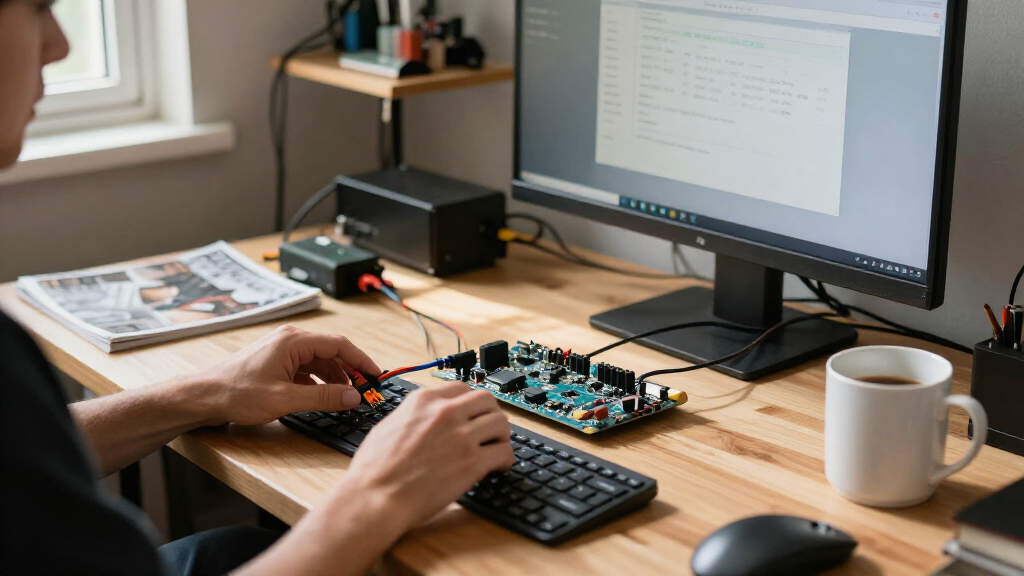
I evaluated these single-board computers based on three core pillars: hardware performance, connectivity standards, and ecosystem viability. Performance was measured by CPU architecture, core count, and memory bandwidth, with a preference for newer generations like LPDDR5 over older DDR3 or LPDDR4 standards where price differences were marginal. Connectivity was assessed on the presence of modern wireless protocols (Wi-Fi 6, Bluetooth 5.3+) and versatile I/O options like USB 3.0 or PCIe slots, which significantly impact peripheral compatibility.
Ecosystem viability was the tiebreaker. I prioritized boards with active community forums, available Linux distributions, and documented driver support for common peripherals. Boards with niche architectures like RISC-V were included for their forward-looking potential but were ranked lower for general-purpose use due to current software limitations. This ranking logic ensures that readers get a mix of immediate usability and future-proofing, rather than just a spec sheet comparison.
| Raspberry Pi alternatife | Wireless |
|---|---|
| Orange Pi Zero 4 Single-Board | — |
| Orange Pi Zero 2W 1GB Single-B | Dual-band Wi-Fi 5 and Bluetooth 5.0 with BLE |
| Orange Pi Zero 3 Single-Board | — |
| Libre Computer Le Potato Mini | USB Wi-Fi 4 (802.11n) |
| Orange Pi Zero 3 Single-Board | — |
| Orange Pi Zero 3W Single-Board | Wi-Fi 6; Bluetooth 5.4 BLE |
| Orange Pi 3B Single-Board Comp | Wi-Fi 5; Bluetooth 5.0 |
| Orange Pi Zero LTS Single-Boar | — |
| Orange Pi 4 Pro Single-Board C | Wi-Fi 6; Bluetooth 5.4 BLE |
| Orange Pi RV2 RISC-V Single-Bo | — |
| Orange Pi RV RISC-V Single Boa | — |
| Orange Pi 4 Pro Single-Board C | Wi-Fi 6, Bluetooth 5.4, BLE |
| Orange Pi 5 Plus Single-Board | — |
| Orange Pi Zero 3W Single-Board | Wi-Fi 6, Bluetooth 5.4 BLE |
Factors to Consider When Choosing Best Raspberry Pi Alternatives
Choosing a Raspberry Pi alternative isn’t just about finding the fastest chip; it’s about finding the right balance between raw power, software support, and physical constraints. The market has fragmented, with different boards excelling in specific niches like AI inference, retro gaming, or low-power IoT applications.
Architectural Choices: ARM vs. RISC-V
Most alternatives listed here use ARM architecture, which ensures broad compatibility with existing Linux distributions and software binaries. However, the inclusion of RISC-V boards like the Orange Pi RV2 signals a shift toward open instruction sets. If you are a developer interested in contributing to open-source hardware or need specific licensing freedoms, RISC-V is compelling. But for general users, ARM remains the safer bet because most commercial software and drivers are compiled for ARM64. Switching to RISC-V means you might encounter missing binaries or have to compile software from source, adding friction to your workflow.
Memory Standards: Why LPDDR5 Matters
Memory speed is often overlooked but critically impacts system responsiveness, especially in multitasking scenarios. Boards equipped with LPDDR5, such as the Orange Pi Zero 4 and Orange Pi 4 Pro, offer higher bandwidth and lower power consumption compared to older LPDDR4 or DDR3 modules. This translates to smoother desktop experiences and faster data access for AI models. If your project involves running heavy applications or multiple containers, prioritizing LPDDR5 is worth the slight premium. For simple scripting or sensor logging, however, cheaper DDR3 boards remain perfectly adequate.
Thermal Management and Form Factor
High-performance chips like the Rockchip RK3588 generate substantial heat. Unlike some Raspberry Pi models that throttle gently under load, several alternatives here require active cooling to maintain peak performance. The Orange Pi 5 Plus and Orange Pi 4 Pro often ship without heatsinks or require you to purchase them separately. When selecting a board, consider your enclosure constraints. A compact Orange Pi Zero might fit a tight space but will throttle under sustained load, while a larger board with a built-in heatsink or fan header offers sustained performance but demands more physical room.
Software Ecosystem and Community Support
The Raspberry Pi’s greatest asset is its vast library of tutorials, pre-built images, and community-driven fixes. Alternatives like Libre Computer boards often mimic Pi OS closely, easing the transition for beginners. In contrast, boards using less common chipsets may require you to hunt for specific device tree blobs or kernel patches. Before buying, check if the manufacturer provides maintained Linux images and if there is an active forum. A board with superior specs but poor driver support for Wi-Fi or Bluetooth can become a frustrating paperweight for beginners, whereas a slightly slower board with robust software support offers a smoother development experience.
Connectivity: Wi-Fi 6 and Bluetooth 5.4
Wireless capabilities have become a key differentiator in this category. Older boards often rely on Wi-Fi 4 or 5, which may struggle in congested environments. Newer models like the Orange Pi Zero 4 and Orange Pi 4 Pro integrate Wi-Fi 6 and Bluetooth 5.4, offering better latency, range, and device connection density. This is particularly important for IoT projects or media streaming applications. If you are using the board as a desktop replacement or a network node, modern wireless standards reduce bottlenecks. For static, wired-only projects, this feature might be irrelevant, allowing you to save money on older wireless modules.
AI Acceleration: The Role of NPUs
Some modern alternatives, such as the Orange Pi Zero 3W, include dedicated Neural Processing Units (NPUs) capable of 3 TOPS or more. This hardware acceleration is a game-changer for computer vision tasks, allowing real-time object detection or face recognition without hogging the CPU. If your project involves machine learning inference, an NPU-equipped board significantly outperforms standard ARM cores. However, for general computing, web browsing, or light coding, an NPU adds cost without benefit. Assess whether your workload truly requires dedicated AI hardware before paying a premium for these specialized chips.
Frequently Asked Questions
Do Orange Pi boards work with existing Raspberry Pi cases?
In most cases, no. While some Orange Pi models mimic the Raspberry Pi’s form factor, the mounting hole positions, port layouts, and board dimensions often differ slightly. Even if the board fits physically, the ports may not align with the case cutouts. I recommend checking the specific dimensions of the Orange Pi model against your case’s specifications. If you already own a Pi case, look for alternatives like the Libre Computer Le Potato, which are designed with closer compatibility in mind, or plan to 3D print a custom mount.
Is the software support for RISC-V boards ready for daily use?
Not yet for general consumers. RISC-V boards like the Orange Pi RV2 are excellent for developers and enthusiasts who want to test the future of open architecture, but they lack the mature software ecosystem of ARM-based boards. You may encounter missing drivers for peripherals, limited software availability, and a steeper learning curve for troubleshooting. Unless you are comfortable compiling kernels or dealing with alpha-stage software, I suggest sticking to ARM-based options for reliable daily use.
Why is LPDDR5 memory better than DDR3 in these single-board computers?
LPDDR5 offers higher data transfer rates and better power efficiency compared to older DDR3 standards. In single-board computers, memory bandwidth is a common bottleneck; faster memory allows the CPU to access data more quickly, resulting in smoother multitasking and faster application loading. For projects involving media playback, desktop usage, or AI inference, the difference is noticeable. However, for simple GPIO tasks or sensor logging, the efficiency gains of LPDDR5 may not justify the higher cost of the board, making DDR3 options still viable for low-power, low-cost applications.
Can I replace a Raspberry Pi 4 with an Orange Pi 5 Plus?
Hardware-wise, the Orange Pi 5 Plus is significantly more powerful than the Raspberry Pi 4, offering better CPU and GPU performance. However, software compatibility is the main hurdle. If you rely on specific Raspberry Pi OS packages, HATs (Hardware Attached on Top), or community scripts, they may not work out of the box. You will likely need to migrate to a different Linux distribution or manually configure drivers. For users who prioritize raw speed and are comfortable with Linux troubleshooting, this is a strong upgrade path. For those who value plug-and-play simplicity, it requires more effort.
Do I need a heatsink for the Orange Pi Zero 4?
Under light to moderate loads, the Orange Pi Zero 4 can operate without active cooling, thanks to its efficient Allwinner A733 chip. However, if you plan to run the board in an enclosed case or under sustained high loads (such as emulation or heavy compilation), passive cooling via a heatsink is recommended to prevent thermal throttling. Active cooling is rarely necessary for this model unless you are overclocking. Always monitor temperatures during your initial setup to determine if additional cooling is needed for your specific environment.
Conclusion
Selecting the right Raspberry Pi alternative depends heavily on your technical comfort level and project requirements. For most users seeking a balance of power and modern features, the Orange Pi 5 Plus is the best overall choice, delivering desktop-class performance that outpaces the Raspberry Pi 4 and 5. If budget is your primary constraint, the Orange Pi Zero 4 offers the best value, providing Wi-Fi 6 and solid performance in a tiny package. Beginners should consider the Libre Computer Le Potato for its closer adherence to Raspberry Pi compatibility, easing the transition. For AI-focused projects, the Orange Pi Zero 3W stands out with its integrated NPU. Ultimately, weigh the hardware advantages against the potential software friction, and choose the board that aligns with your specific development needs.