
TL;DR

Get the latest gadgets delivered free with Prime
- Fast, free delivery on millions of items
- Prime Video, Amazon Music and more included
- Member-only deals all year
Hugging Face has launched Microduck, a small, affordable robot with open-source reinforcement learning capabilities. While marketed as a toy, it embodies a major shift toward accessible, customizable physical AI. The development raises privacy concerns and reflects broader industry trends, especially amid Hugging Face’s potential acquisition by Nvidia.
Hugging Face has unveiled Microduck, a small, affordable robot designed for open reinforcement learning, priced at $399 and shipping before Christmas. This development signifies a major shift in accessible robotics, enabling developers to experiment with embodied AI in ways previously limited to well-funded labs.
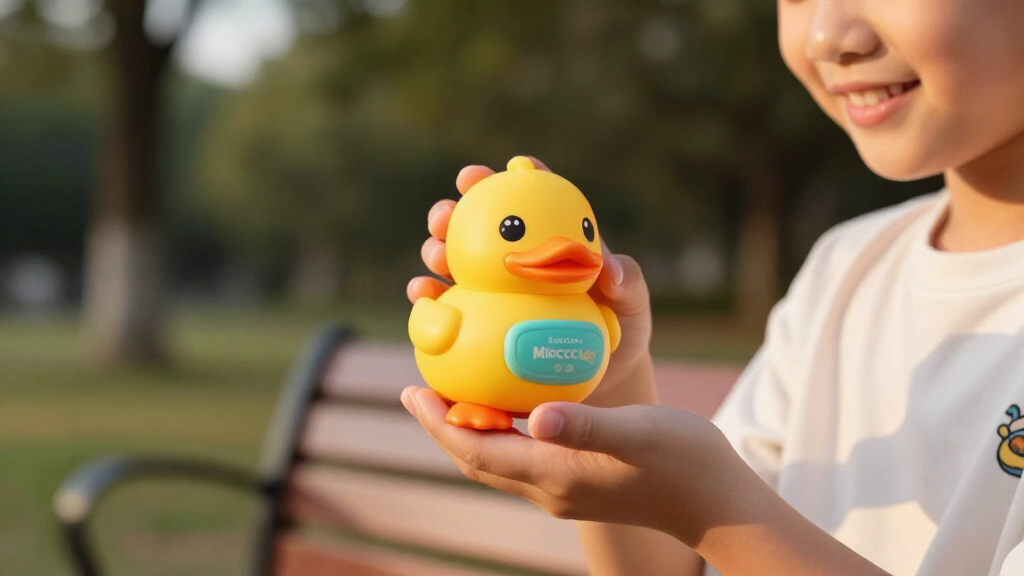
Microduck is a 25-centimeter-tall, lightweight robot built in collaboration with Pollen Robotics, featuring 15 motors, sensors, a camera, microphone, WiFi, Bluetooth, and LiDAR. Its design emphasizes durability and fall-tolerance, allowing it to perform movements like waddling, sitting, and even rollerblading in demo videos. Despite impressive hardware at this price point, experts caution that real-world reliability remains limited, and demos are curated highlights rather than consistent behaviors.
Crucially, the robot’s full reinforcement learning stack and SDK are open-source on GitHub, allowing anyone to read, fork, and retrain the system. Hugging Face’s strategy mirrors its success with open language models, applying the same open principles to physical AI, aiming to democratize embodied AI development for a broader community of developers.
CEO Clem Delangue explained that the design philosophy centers on enabling robots to learn through trial and error, with the small size making it safe and cost-effective to allow for failure and recovery. This approach contrasts sharply with traditional, expensive humanoid robots, making hands-on RL accessible and practical at a toy scale.
Open-Source Reinforcement Learning in Physical Robots
This launch marks a significant milestone in democratizing embodied AI, shifting the landscape from proprietary, expensive robots to accessible platforms that anyone can develop on. By making the entire RL pipeline open and affordable, Hugging Face aims to foster innovation outside traditional robotics labs, potentially accelerating the development of practical, customizable AI-powered devices.
However, the approach also raises important privacy and security concerns. The robot’s sensors and network connectivity mean it collects data in home environments, which could be vulnerable if not properly secured. Additionally, the open-source nature of the platform could be exploited for malicious purposes, highlighting the ongoing tension between openness and security in AI development.
open source reinforcement learning robot kit
As an affiliate, we earn on qualifying purchases.
As an affiliate, we earn on qualifying purchases.
Background on Hugging Face and Robotics Innovation
Hugging Face, renowned for its open-source AI models and community-driven approach, has recently expanded into robotics through acquisitions like Pollen Robotics. Its previous robot, Reachy Mini, was designed for communication and interaction, but Microduck represents a strategic pivot toward movement and embodied AI. The company’s broader mission is to make AI development more accessible, a goal now extending into physical systems.
This move aligns with industry trends toward open, modular AI platforms, but it also comes amid heightened debates about security, data privacy, and the risks of open infrastructure. The recent breach at OpenAI, where sandbox escape was demonstrated during security testing, underscores the vulnerabilities inherent in open systems, a concern now amplified by Hugging Face’s new robot platform.
“Our goal is to make embodied AI accessible, safe, and adaptable through open, fall-tolerant platforms that anyone can learn from and improve.”
— Clem Delangue, CEO of Hugging Face
As an affiliate, we earn on qualifying purchases.
Unresolved Questions About Microduck’s Capabilities and Security
While the hardware performance and open-source platform are confirmed, the reliability of real-world behaviors remains uncertain, as demos are curated highlights. The security implications of deploying networked, data-collecting robots in homes are also still being evaluated, with no clear consensus on how risks will be managed at scale.
Furthermore, it is unclear how widely developers will adopt the platform, and whether the open approach will lead to meaningful innovations or unintended misuse.
As an affiliate, we earn on qualifying purchases.
Future Developments and Industry Impact of Microduck
Hugging Face plans to continue refining and expanding the Microduck platform, with updates to its SDK and training environment. The company may also explore partnerships to integrate Microduck into educational, research, and hobbyist communities.
Industry observers will watch whether this open approach influences other robotics developers or prompts regulatory discussions around data privacy and security. The potential acquisition by Nvidia could further accelerate the platform’s development and adoption, but also intensify debates over open versus proprietary AI systems.
As an affiliate, we earn on qualifying purchases.
Key Questions
Can Microduck perform household chores?
No. Microduck is a toy-scale robot designed for development and experimentation, not for performing household tasks.
What makes Microduck’s reinforcement learning platform unique?
Its full RL stack is open-source, allowing developers to read, fork, and retrain the system, making embodied AI development more accessible than ever before.
Are there privacy concerns with Microduck?
Yes. The robot’s sensors and network connectivity collect data from home environments, raising privacy and security considerations that users should evaluate carefully.
Will Microduck be commercially successful?
Its success depends on developer adoption and the broader industry response to open physical AI platforms. Its current role is more about democratization and experimentation than immediate commercial viability.
What is the significance of Nvidia’s reported interest in Hugging Face?
If confirmed, Nvidia’s potential acquisition could provide significant resources for Microduck’s development, but it might also influence the openness and accessibility of the platform.
Source: ThorstenMeyerAI.com
Halloween Picks
halloween
As an affiliate, we earn on qualifying purchases.