
TL;DR

Get the latest gadgets delivered free with Prime
- Fast, free delivery on millions of items
- Prime Video, Amazon Music and more included
- Member-only deals all year
AI-integrated studio headphones are emerging as a key innovation for 2026, promising enhanced accuracy, adaptive sound profiles, and improved workflow for musicians and producers. This report covers confirmed features, potential impacts, and what remains uncertain.
Multiple companies are preparing to release AI-enhanced studio headphones in 2026, promising to significantly improve sound accuracy, user adaptation, and workflow efficiency for musicians and audio engineers. For a detailed review, see the 10 Best Studio Monitor Headphones for Mixing, Tracking, and Home Studios in 2026. This emerging technology represents a major shift in monitoring tools, with confirmed features and ongoing developments.
Several industry sources and announced products indicate that AI integration will become a core feature of studio monitoring headphones by 2026. These headphones are expected to incorporate adaptive sound profiles, real-time correction, and personalized calibration based on user preferences and room acoustics. Leading brands such as Audio-Technica, Audeze, and startups like SonarSound have announced prototypes or plans for AI-enabled models, with some expected to hit the market within the next year.
Confirmed features include automatic equalization adjustments, noise cancellation tailored to environment, and learning algorithms that adapt to the user’s monitoring style over time. These innovations are discussed in detail in the original analysis. These innovations aim to address longstanding challenges in studio monitoring, such as inconsistent sound perception and fatigue from prolonged sessions.
However, detailed specifications, pricing, and the full scope of AI capabilities remain under wraps. Experts caution that the actual performance and reliability of these features will only be confirmed upon product release and independent testing.
The 10 picks
- 1
 Sennheiser HD 480 PRO Professional Recording & Monitoring Headphones BundleView on Amazon →
- 2
 Audio-Technica ATH-M50X Professional Studio Monitor Headphones, BlackView on Amazon →
- 3
 Sony MDR7506 Professional Large Diaphragm HeadphonesView on Amazon →
- 4
 Audio-Technica ATH-M40x Professional Studio Monitor HeadphonesView on Amazon →
- 5
 Sennheiser HD 280 Pro Headphones, BlackView on Amazon →
- 6
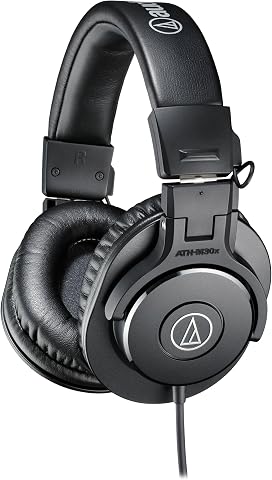 Audio-Technica ATH-M30x Professional Studio Monitor Headphones, BlackView on Amazon →
- 7
 Audeze MM-520 Open-Back Professional Headphones with Carrying CaseView on Amazon →
- 8
 Audio-Technica ATH-M20x Professional Studio Monitor Headphones, BlackView on Amazon →
- 9
 Audio-Technica ATH-M20x Professional Studio Monitor Headphones, WhiteView on Amazon →
- 10
 OneOdio Pro-10 Wired Over Ear Headphones with 50mm Drivers, Studio Monitor &…View on Amazon →
How AI Headphones Will Impact Music Production in 2026
The integration of AI into studio headphones could revolutionize music production, mixing, and mastering. By providing more accurate, personalized, and adaptive monitoring, these devices may reduce the need for extensive acoustic treatment and multiple speakers, streamlining workflows especially for home studios and mobile setups. For professionals, this could mean faster decision-making and higher consistency in sound quality across different environments.
Moreover, AI-driven features could help less experienced producers achieve more accurate mixes, potentially raising overall production standards. Yet, reliance on AI also raises questions about the potential for overdependence and the need for ongoing calibration to prevent complacency in critical listening skills.
Products Worth Considering

Bose QuietComfort Wireless Noise Cancelling Headphones, Black

Bose QuietComfort Headphones (2nd Gen), Wireless Over-Ear Noise-Cancelling Headphones, Black

Bose QuietComfort Ultra Earbuds (2nd Gen) – Wireless Noise‑Cancelling Earbuds with Mic, Immersive Audio, USB‑C Charging, Up to 6 Hours Batte
As an affiliate, we earn on qualifying purchases.
Evolution of Monitoring Technology and AI Integration
Traditional studio monitoring headphones have long balanced tradeoffs between accuracy, isolation, and comfort, with brands like Audio-Technica, Sennheiser, and Audeze setting standards. Over the past decade, innovations such as open-back designs and flat-response tuning have improved mixing precision. Meanwhile, AI technology has increasingly been integrated into consumer audio devices, from smart speakers to headphones, primarily for adaptive noise cancellation and personalized sound.
Recent developments include AI-enabled features in consumer headphones, but their application in professional studio gear remains limited. The push for AI in studio headphones aligns with broader trends toward intelligent audio processing, promising to address persistent challenges like room acoustics variability and user fatigue. Several companies have announced prototypes or patents related to AI-assisted monitoring, signaling a shift toward more intelligent audio tools in 2026.
Unconfirmed Capabilities and Market Readiness in 2026
While several companies have announced prototypes and concepts, detailed specifications, pricing, and performance data for AI studio headphones are not yet available. It is unclear how quickly these products will reach mass market availability and whether their AI features will meet professional standards or require further refinement. Additionally, questions remain about the robustness of AI algorithms in diverse acoustic environments and their long-term reliability.
Upcoming Releases and Industry Testing of AI Studio Headphones
In the coming months, several brands are expected to unveil their AI-enabled studio headphones at industry events or through direct product launches. Independent testing and reviews will be critical to assess their real-world performance, accuracy, and usability. Meanwhile, industry standards bodies may begin developing guidelines for AI features in professional audio equipment, shaping future adoption and regulation.
Key Questions
When will AI studio headphones be available for purchase?
Most announced models are expected to launch throughout 2026, with some prototypes already in testing phases. Exact release dates will depend on product development and certification processes.
How will AI improve monitoring accuracy?
AI can enable real-time calibration, adaptive sound profiles, and personalized adjustments based on acoustics and user preferences, leading to more precise and consistent monitoring experiences.
Are AI headphones suitable for professional studio use now?
Currently, most AI headphones are in development or early testing stages. It remains to be seen whether they will meet the rigorous standards required for professional studio work upon release.
Will AI features replace traditional monitoring tools?
AI integration is expected to complement existing tools, not replace them. It aims to enhance accuracy and workflow, especially in less controlled environments like home studios.
What are potential risks or downsides of AI headphones in studios?
Potential issues include overdependence on AI calibration, algorithm biases, and the need for ongoing updates to ensure reliability and accuracy across diverse acoustic settings.
Source: ThorstenMeyerAI.com