
📊 Full opportunity report: The SSD Squeeze: Why Storage Joined The Party on ThorstenMeyerAI.com — validation score, market gap, and execution plan.
TL;DR
NAND flash memory prices have surged over the past nine months, driven by shortages caused by AI’s increasing storage demands and wafer competition with HBM. Industry leaders are limiting capacity expansion, leading to higher costs for consumers and enterprises.
NAND flash memory prices have surged by approximately 4 to 4.5 times in nine months, driven by supply shortages and increased demand from AI applications, according to industry sources. This shortage has led to record price increases for enterprise SSDs and consumer drives, affecting a broad range of markets. The situation is compounded by manufacturers intentionally limiting wafer production, making storage a scarce resource in the tech industry.
Over the past year, the cost of NAND flash memory, used in SSDs and other storage devices, has risen sharply. Enterprise SSD contract prices increased by over 50% in a single quarter at the start of 2026, with SanDisk doubling the price of its enterprise 3D NAND. The overall NAND market revenue is forecasted to grow by more than 100% in 2026, reflecting intense demand and constrained supply.
Industry leaders such as Samsung, SK Hynix, and Micron have scaled back wafer production targets, citing strategic reasons and profitability concerns. Micron has admitted it can only meet 55-60% of customer demand, and new fabs are years away from alleviating shortages. This deliberate capacity restriction is driven partly by the high margins available during shortages, with Samsung’s memory division posting record profits.
AI’s role in this shortage is significant. High-end AI GPUs and servers require enormous amounts of NAND flash—up to 16TB per GPU and over 1,000TB per server rack—shifting storage from a passive to an active component in AI operations. As AI shifts from training to inference, demand for high-performance, high-IOPS storage solutions has further intensified, creating structural growth in the NAND market.
The SSD squeeze: storage joined the party
Storage was the last cheap thing in computing. Not anymore — a 2TB NVMe that was $120–150 in 2024 now lists at $300–480. And this time flash isn’t only collateral damage: AI eats storage directly.
both ways
Flash got hit twice — once as collateral sharing fabs with HBM, once directly as AI inference turned fast storage into something it consumes by the petabyte. That second force won’t fade; it grows with every model, every RAG pipeline, every cache that must live somewhere fast. Buy what you need now; favor TLC with DRAM cache, don’t overpay for Gen 5, watch for counterfeits. Relief isn’t forecast before late 2027. When the cheapest component in computing has a two-year waitlist, “commodity” no longer fits. Next: The High-End PC & Workstation Tax.
Impacts on Consumers and Industry Supply Chains
This shortage and price surge in NAND flash memory have broad implications. Consumers are experiencing higher costs for SSDs, with some drives doubling or tripling in price, and PC manufacturers are reducing base storage capacities on new models. Enterprises and hyperscalers face increased operational costs, and supply constraints threaten to slow AI deployment and innovation. The deliberate capacity restrictions by major manufacturers suggest that high prices may persist, influencing market dynamics for years.
2TB NVMe SSD
As an affiliate, we earn on qualifying purchases.
As an affiliate, we earn on qualifying purchases.
How AI and Fabric Competition Drive NAND Shortages
For over a decade, NAND storage was relatively inexpensive, with 1TB drives costing around $120–150 in 2024. However, the convergence of AI’s explosive storage needs and wafer competition with high-margin HBM memory has shifted this landscape. Major manufacturers have prioritized high-margin products and have scaled back wafer targets, leading to a significant supply shortage. This pattern echoes the previous RAM shortages but is now amplified by AI’s active role in storage demand.
Industry insiders note that building new fabs takes two to three years, and current capacity increases are limited. The industry’s focus on profitability over expansion during shortages has further constrained supply, with some manufacturers deliberately limiting wafer output to maintain high margins. This strategic restraint is a key factor behind the current price escalation.
“We can only satisfy about 55-60% of our main customers’ demand for NAND, and new fabs are still years away.”
— A senior executive at Micron

Gigastone 【NAS Certified】 1TB High Endurance SSD (2-Pack) Up to 550MB/s TLC Flash with SLC Caching 24/7 Reliable for Gaming/PC/NAS SSD 5-Year Warranty 2.5" SATA Internal Solid State Drives RAID Disk
[High Endurance Grade] : No.1 NAS SSD choice in heavy workloads NAS systems|24/7 superior NAS Cache with reliable…
As an affiliate, we earn on qualifying purchases.
As an affiliate, we earn on qualifying purchases.
Extent and Duration of NAND Supply Constraints
It remains unclear how long the supply shortage will persist, as new fabs are still in planning or construction phases, which take years to complete. Additionally, the precise impact of AI-driven demand on long-term supply availability is still developing, and whether manufacturers will ease capacity restrictions remains uncertain.
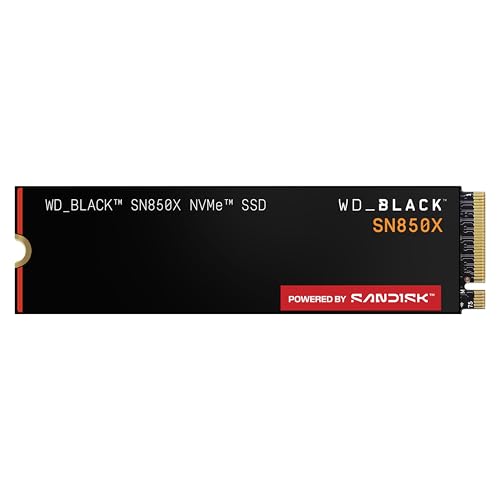
WD_BLACK SN850X 2TB NVMe SSD – M.2 2280, Up to 7,300 MB/s Read speeds, Up to 6,300 MB/s write speeds, Gaming Expansion, High Performance Internal Solid State Drive – WDS200T2X0E
TRANFORM YOUR PC: Insane speeds up to 7,300MB/s (1TB – 4TB models) deliver top-tier performance with ridiculously short…
As an affiliate, we earn on qualifying purchases.
As an affiliate, we earn on qualifying purchases.
Industry Responses and Market Adjustments Expected
Manufacturers are likely to continue prioritizing high-margin products and delaying capacity expansion. Buyers should prepare for ongoing high prices and potential shortages into 2027. Market watchers anticipate that new fab projects will eventually alleviate some pressure, but the timeline remains uncertain. Consumers and enterprises should consider strategic purchasing and inventory management to mitigate risks.
NVMe SSD for gaming
As an affiliate, we earn on qualifying purchases.
As an affiliate, we earn on qualifying purchases.
Key Questions
Why are NAND prices rising so rapidly in 2026?
NAND prices are rising due to a combination of supply shortages caused by deliberate capacity restrictions by manufacturers and increased demand from AI applications, which require massive storage capacities.
How is AI driving demand for storage?
AI applications, especially large language models and inference servers, require enormous amounts of NAND flash for training, data retrieval, and caching, making storage a critical component of AI infrastructure.
Will new manufacturing plants solve the NAND shortage?
While new fabs are expected to eventually increase supply, they take two to three years to become operational. Current shortages are driven partly by strategic capacity limits, which may persist until new capacity comes online.
How can consumers and businesses protect themselves from rising storage costs?
Buy only the storage capacity needed now, favor TLC NAND with DRAM caches, avoid overpaying for high-end PCIe Gen 5 drives, and purchase from reputable sources to avoid counterfeits.
What is the long-term outlook for NAND prices?
Prices may remain elevated until new capacity is added, but as supply gradually increases, prices should stabilize. The current market suggests that high margins and deliberate capacity limits may keep prices high for some time.
Source: ThorstenMeyerAI.com