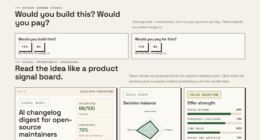

📊 Full opportunity report: The $60 Billion Bargain: Why Cursor Could Be a Steal for SpaceX on ThorstenMeyerAI.com — validation score, market gap, and execution plan.
TL;DR
SpaceX acquired Cursor, an AI coding company, for $60 billion in stock, a deal valued as a bargain due to Cursor’s rapid revenue growth and strategic assets. The acquisition aims to integrate AI capabilities and secure a dominant position in enterprise AI workflows.
SpaceX has announced the acquisition of AI coding startup Cursor for $60 billion in all-stock, a move that highlights the company’s strategic push into artificial intelligence and aerospace and defense industries. The deal, announced just days after SpaceX’s historic IPO valuation exceeding $2 trillion, underscores Musk’s focus on integrating AI into aerospace and other high-tech sectors.
The acquisition was executed at a trailing-15x revenue multiple, based on Cursor’s approximately $4 billion annualized revenue.Samsung starts winding down chip production. However, Cursor’s revenue has been growing rapidly, doubling from $2 billion in February to $4 billion in early June, with projections reaching $6 billion by the end of 2026. When forward-looking revenue is considered, the multiple drops to about 10x or lower, making the deal more attractive within AI industry standards.
Notably, the entire $60 billion was paid in SpaceX’s own stock, which was trading at a high valuation at the time of the deal. Following the announcement, SpaceX’s stock surged approximately 16%, boosting its market cap to nearly $2.94 trillion. This move effectively allowed SpaceX to acquire a valuable AI asset with minimal dilution, representing just 3.4% of its IPO valuation, and the deal was perceived as nearly costless in terms of immediate market impact.
The $60B bargain: why Cursor could be a steal
$60 billion for a code editor sounds like a bubble. Look past the headline and the price isn’t the scandal — it’s the discount. Here’s the case that SpaceX got Cursor cheap.
A melting multiple, paid in appreciating paper that cost almost nothing, for the profitable leader of the only AI category reliably making money — plus the missing app layer and an escape from the margin trap. If the growth holds and integration doesn’t break the product, $60B will read like a down payment. The risk isn’t overpaying for what Cursor is — it’s breaking what made it worth buying.
Strategic Value of Cursor in AI and Aerospace
This acquisition provides SpaceX with a profitable foothold in AI software, a sector that is rapidly expanding and generating real revenue. Cursor’s leadership in developer tools and its enterprise customer base, including over half of the Fortune 500, position SpaceX to dominate enterprise AI workflows. Additionally, owning Cursor’s proprietary models and infrastructure allows SpaceX to reduce costs associated with third-party APIs and frontier model licensing, potentially transforming Cursor into a high-margin asset.
Furthermore, the deal denies competitors like OpenAI and Microsoft access to Cursor’s distribution channels and technological assets, consolidating SpaceX’s position in the AI ecosystem. The move aligns with Musk’s broader strategy of vertical integration, building core technologies in-house to improve margins and control over critical components.
AI coding software for enterprise
As an affiliate, we earn on qualifying purchases.
As an affiliate, we earn on qualifying purchases.
Cursor’s Rapid Growth and Industry Position
Cursor, developed by Anysphere, has experienced unprecedented growth, reaching $4 billion in revenue within just a few months. Its user base includes over a million paying developers and 50,000 enterprise clients, including many Fortune 500 companies. The company’s success stems from its leading developer platform, which integrates its own AI coding models, such as Composer, built on open weights, and its ability to generate revenue from enterprise subscriptions with positive gross margins.
Prior to the acquisition, Cursor faced challenges from its suppliers, paying retail API prices for frontier models while competitors like Anthropic secured wholesale pricing, squeezing Cursor’s margins. SpaceX’s ownership of its own compute infrastructure and models positions it to eliminate these costs, turning Cursor into a potentially highly profitable asset in the future.
“This acquisition accelerates our AI capabilities and enhances our technological ecosystem across aerospace and software domains.”
— SpaceX spokesperson
code editor for developers
As an affiliate, we earn on qualifying purchases.
As an affiliate, we earn on qualifying purchases.
Remaining Questions About the Acquisition’s Impact
It is still unclear how quickly SpaceX will integrate Cursor’s technology and whether the anticipated cost savings and margin improvements will materialize as projected. Additionally, the long-term strategic effects on competitors and the AI industry landscape remain to be seen, especially regarding Cursor’s ability to maintain its growth trajectory and market share.
AI development tools for startups
As an affiliate, we earn on qualifying purchases.
As an affiliate, we earn on qualifying purchases.
Next Steps for SpaceX and Cursor Integration
Expect SpaceX to begin integrating Cursor’s AI models and infrastructure into its existing projects, including satellite and rocket systems, over the coming months. Further updates on Cursor’s revenue growth, profitability, and product roadmap are anticipated as the company transitions into its new ownership structure. Regulatory and market reactions will also shape the deal’s success in the near term.
enterprise AI workflow software
As an affiliate, we earn on qualifying purchases.
As an affiliate, we earn on qualifying purchases.
Key Questions
Why did SpaceX pay so much for Cursor?
SpaceX valued Cursor not just for its current revenue, but for its rapid growth, strategic assets like proprietary AI models, and its potential to reduce costs through vertical integration in AI infrastructure.
How does this deal affect SpaceX’s financials?
The acquisition was financed with stock, causing minimal immediate dilution. It is expected to enhance SpaceX’s AI capabilities and could lead to higher margins in the future.
What does this mean for competitors like OpenAI and Microsoft?
By acquiring Cursor and denying rivals access, SpaceX consolidates its position in AI distribution channels and limits competitors’ growth opportunities in developer tools and enterprise AI.
Will Cursor remain independent after the acquisition?
It is likely that Cursor will be integrated into SpaceX’s broader AI and software ecosystem, with potential changes to its product offerings and strategic focus.
What are the risks of this acquisition?
The main uncertainties involve the speed of integration and whether Cursor’s growth can be sustained under new ownership. Market reactions and technological challenges could also impact the deal’s success.
Source: ThorstenMeyerAI.com