
TL;DR
China’s supercomputer LineShine has become the fastest in the world, overtaking US systems on the TOP500 ranking. It marks a significant technological achievement amid ongoing trade restrictions.
China has reclaimed the title of the world’s fastest supercomputer with the launch of LineShine, which has surpassed the US-based supercomputer El Capitan on the TOP500 ranking. This marks the first time since 2018 that China holds the top spot, despite ongoing trade restrictions and limits on high-end computing components.

Get the latest gadgets delivered free with Prime
- Fast, free delivery on millions of items
- Prime Video, Amazon Music and more included
- Member-only deals all year
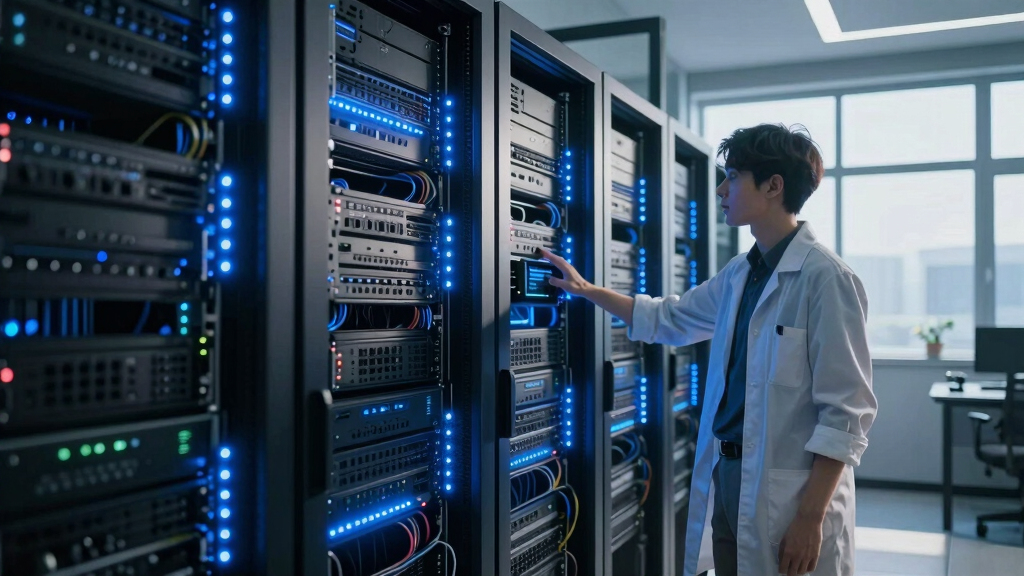
LineShine is a supercomputer built primarily with roughly 45,000 LX2 processors, each featuring 304 cores running at 1.55GHz. It is connected via a high-speed, low-latency network called LingQi. Notably, it does not use GPUs, which are typically central to modern supercomputers.
According to the TOP500 ranking, LineShine exceeds 2,000 exaflops in peak performance, making it the first supercomputer to cross this threshold. It is approximately 20% faster than El Capitan, which is ranked second. However, it consumes significantly more power, at 42.2 megawatts, compared to El Capitan’s 29.7 megawatts, indicating lower energy efficiency.
This development is seen as a strategic message from the Chinese government, demonstrating technological resilience despite US-imposed restrictions on high-performance chips from firms like NVIDIA.
Why China’s Supercomputer Victory Matters
The reclaiming of the top supercomputing spot signifies China’s technological progress and ability to develop advanced computing infrastructure despite trade barriers. It also serves as a political signal to the US, emphasizing China’s self-reliance and innovation in high-performance computing.
Additionally, the achievement highlights ongoing shifts in global technological power and raises questions about future competition in areas like artificial intelligence, scientific research, and military applications that rely heavily on supercomputing capabilities.
Products Worth Considering

Logitech MX Mechanical Wireless Illuminated Performance Keyboard, Clicky

Sony WH-1000XM4C (M4 2nd Gen) Wireless Noise-Cancelling Headphones, Black

LG UltraGear 32-inch 4K UHD OLED Gaming Monitor, 165Hz
As an affiliate, we earn on qualifying purchases.
Background on China’s Supercomputing Capabilities
China has historically been a leader in supercomputing, with systems like Sunway TaihuLight holding the top spot in 2016 and 2017. However, US trade restrictions and export controls have limited China’s access to certain high-end components, especially GPUs from firms like NVIDIA, which are standard in many top systems.
In response, China has focused on developing CPU-based supercomputers, such as LineShine, which use general-purpose processors instead of specialized accelerators. The US maintains three of the top five supercomputers globally, but China’s latest system marks a significant shift in the competitive landscape.
“LineShine’s performance demonstrates China’s capacity to innovate around restrictions and develop world-leading supercomputing technology.”
— an anonymous researcher
Uncertainties About Future Supercomputing Developments
It remains unclear how sustainable China’s lead will be amid potential new US export controls or technological sanctions. Additionally, the long-term energy efficiency and operational costs of systems like LineShine are still to be evaluated, especially as the system consumes more power than comparable US supercomputers.
Further details about the specific applications and future upgrades of LineShine are still emerging, and it is not yet confirmed how this development will influence global research and military capabilities.
Next Steps in Global Supercomputing Race
Expect continued development of high-performance systems in China, possibly focusing on improving energy efficiency and integrating new technologies. The US and other nations may respond with their own advancements, potentially leading to new benchmarks in supercomputing performance and power consumption.
Monitoring the evolution of international trade policies and export controls will be crucial, as they could influence access to key components and shape future supercomputing capabilities worldwide.
Key Questions
What makes LineShine the fastest supercomputer?
LineShine’s peak performance exceeds 2,000 exaflops, achieved with a large number of CPU-based LX2 processors and a high-speed network, surpassing previous US-based systems on the TOP500 list.
Why doesn’t LineShine use GPUs?
Due to trade restrictions and limited access to high-performance GPU components from US firms, China developed a CPU-centric supercomputer that relies on general-purpose processors instead.
What are the implications of China’s supercomputer achievement?
This signals China’s technological resilience and could influence future global competition in scientific research, artificial intelligence, and military applications.
How does the energy consumption of LineShine compare to US systems?
LineShine consumes 42.2 megawatts, significantly more than El Capitan’s 29.7 megawatts, indicating lower energy efficiency despite higher performance.
Source: The Verge