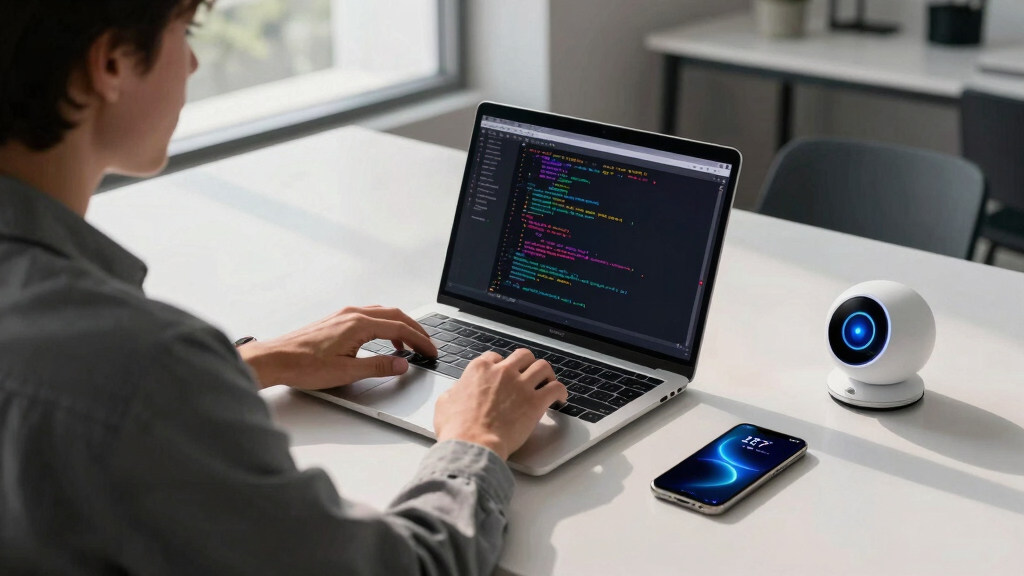

📊 Full opportunity report: Your Coding Agent Is an Attack Surface: The Claude Code Security Reckoning on ThorstenMeyerAI.com — validation score, market gap, and execution plan.
TL;DR
Recent security disclosures show that Claude Code’s configuration and integrations can be exploited for token theft and code execution. Anthropic patched some flaws, but a live attack chain remains unpatched by design, raising broader concerns about agentic developer tools.
Recent disclosures reveal that vulnerabilities in Claude Code, an AI-powered developer agent, can be exploited to steal tokens and execute malicious code, posing significant security risks for organizations using the tool extensively.
Security researchers and industry commentators have identified three main vulnerabilities in Claude Code: a silent token theft via malicious npm packages, remote code execution through configuration file hooks, and a source code leak exploited for social engineering. These flaws exploit the tool’s local configuration files, MCP integrations, and repository hooks, which are normally considered passive but in practice serve as active attack vectors.
Mitiga Labs demonstrated how a malicious npm package could silently modify the OAuth token storage file (~/.claude.json), allowing attackers to reroute authenticated requests and exfiltrate credentials without alerting the user or the organization. Anthropic responded by patching some issues quickly, but the attack chain involving the rewritten configuration file remains unpatched by design, according to the company.
Earlier, in February 2026, Check Point Research disclosed two related flaws that allowed remote code execution and API key theft via malicious repository hooks and environment variable overwriting. These vulnerabilities were promptly fixed by Anthropic after disclosure. Meanwhile, a separate leak of unencrypted TypeScript source code from Claude Code online is being exploited in social-engineering campaigns to distribute trojans, further complicating security concerns.
Your Coding Agent Is an Attack Surface
● SecurityThree disclosed flaws turned Claude Code’s local config and MCP integrations into silent paths for token theft and code execution. Some fixes are yours to make — and the lesson applies to every agentic dev tool, not one.
The config files most teams treat as passive metadata are, in practice, active execution paths.
~/.claude.json, reroutes MCP traffic, and intercepts long-lived OAuth tokens for GitHub, Jira, Confluence.How the unpatched Mitiga path works — at the level its researchers published. (Defensive overview, no exploit detail.)
~/.claude.json.For teams running Claude Code — or any coding agent — in production.
~/.claude.json/permissions; disconnect what you don’t use.Anthropic patched the Check Point CVEs fast — responsible disclosure worked. The npm post-install hook is an industry-wide supply-chain risk class, not Anthropic’s invention.
Anthropic calls the Mitiga chain “out of scope.” But consenting to install a package isn’t consenting to having your SaaS credentials intercepted — and plaintext tokens in the router file turn a generic risk into a specific one.
Independent commentary, produced with AI assistance under human editorial oversight; the views are the author’s own and may change. This is security analysis and opinion, not professional security, legal, or financial advice; verify specifics against vendor advisories and the primary research before acting. It describes publicly disclosed vulnerabilities at the level reported by their researchers and is for defensive purposes only — no exploit code or attack instructions. Sources: Computerwoche (Anjali Gopinadhan Nair), Mitiga Labs, Check Point Research, SecurityWeek, all-about-security, and Anthropic’s documentation, read as of June 2026. References to companies, researchers, and CVEs are factual and analytical and imply no affiliation or endorsement.
Implications for Developer Security and Tool Trust
The vulnerabilities in Claude Code highlight a broader risk in the use of agentic developer tools, which integrate deeply into development workflows and infrastructure. Exploiting configuration files, repository hooks, or local tokens can allow attackers to exfiltrate credentials or execute malicious code, potentially compromising entire development environments and production systems. The fact that some attack chains remain unpatched by design raises questions about the security assumptions underlying these tools and the responsibility of vendors to address such risks comprehensively.
This situation underscores the need for organizations to re-evaluate how they manage and secure their developer tools, especially those that operate with extensive permissions and integrations. It also raises concerns about the security of supply chain processes and the trust placed in third-party packages and configurations.

The Complete SQLMap Toolkit: Automated SQL Injection, Burp Suite Workflows, and Advanced Exploitation Made Simple
As an affiliate, we earn on qualifying purchases.
As an affiliate, we earn on qualifying purchases.
Broader Patterns in Agent Security Flaws
The issues with Claude Code are part of a larger pattern where configuration files, repository hooks, and local integrations—normally considered passive—become active attack vectors. Previous disclosures in early 2026 demonstrated that malicious hooks or environment variable manipulations could lead to remote code execution or credential theft, with patches implemented after public disclosure. The recent findings extend this pattern, emphasizing that agentic developer tools are inherently more vulnerable due to their close integration with internal systems and workflows.
Security experts have long warned that supply chain risks and local configuration exploits pose significant threats, but the adoption of AI-powered developer agents amplifies these concerns because of their extensive permissions and operational proximity to sensitive data and infrastructure.
“The vulnerabilities found in Claude Code show that what teams treat as passive configuration files are actually active execution paths, creating a silent attack surface.”
— Thorsten Meyer, security researcher

Eyoyo EYH2 Handheld USB 2D Barcode Scanner, Wired Automatic QR Code Scanner PDF417 Data Matrix Bar Code Reader with Long USB Cable for POS Mobile Payment, Convenience Store, Supermarket, Warehouse
Continuous Usage All Day: The EY-H2 USB barcode scanner is designed to always be ready for the next…
As an affiliate, we earn on qualifying purchases.
As an affiliate, we earn on qualifying purchases.
Remaining Security Gaps and Unpatched Attack Chains
It is not yet clear how many organizations are actively vulnerable to the unpatched attack chain involving the configuration file rewrite. The full extent of the threat posed by the ongoing, unpatched vulnerabilities remains unknown, as does the potential for future exploits targeting other agentic tools with similar architectures.

Security for Web Developers: Using JavaScript, HTML, and CSS
As an affiliate, we earn on qualifying purchases.
As an affiliate, we earn on qualifying purchases.
Security Improvements and Industry-Wide Vigilance
Organizations using Claude Code and similar developer agents should review their configurations and monitor for suspicious activity. Vendors like Anthropic are expected to release further patches addressing remaining vulnerabilities. Industry experts advocate for increased scrutiny of supply chain security practices and the development of standards to mitigate risks associated with local configuration exploits in agentic tools.
Neovim with Lua: Transform Neovim into a Lightning-Fast, Fully Customizable IDE with Treesitter, LSP, and Lazy.nvim
As an affiliate, we earn on qualifying purchases.
As an affiliate, we earn on qualifying purchases.
Key Questions
What are the main security risks associated with Claude Code?
The primary risks include silent token theft, remote code execution via configuration hooks, and exposure of source code that can be exploited for social engineering or malware distribution.
Has Anthropic fixed all the vulnerabilities?
Anthropic has patched some of the disclosed issues, but a critical attack chain involving unpatched configuration rewrites remains unaddressed by design, raising ongoing security concerns.
What should organizations do to protect themselves?
Organizations should review their agent configurations, monitor for suspicious activity, and stay updated on vendor patches. Implementing strict supply chain security practices is also recommended.
Are these vulnerabilities unique to Claude Code?
No, similar vulnerabilities are likely present in other agentic developer tools that rely on local configuration files, repository hooks, and integrations, making this a broader industry issue.
Source: ThorstenMeyerAI.com