TL;DR
Developers have released a near-complete reconstruction of the DOS game F-15 Strike Eagle II, calling for community test pilots to help identify remaining bugs. The project aims to preserve and emulate the original game faithfully.
The reconstruction project for the DOS game F-15 Strike Eagle II has reached a milestone, with the latest version 0.9.1 now available for community testing. Developers are calling for volunteers to act as test pilots, helping to identify bugs and glitches in the near-complete recreation of the game. This development is significant for preservation efforts and for enthusiasts interested in classic flight simulators.
The project involves reverse engineering the original 1989 game by translating assembly code into C, resulting in a functional recreation that faithfully mimics the original gameplay. The latest release, version 0.9.1, is compatible with the original game’s 451.03 version and the Desert Storm expansion pack. Users are instructed to replace the original executable files in the game folder, with specific steps to avoid launching conflicts. The reconstructed game currently supports the mission briefing, flight, and debriefing phases but does not include sound or joystick support, and it assumes a VGA display. Developers emphasize that the current build is a bug-for-bug reconstruction, meaning behaviors present in the original game, including graphical glitches and bugs, are preserved. They are seeking bug reports, including crashes, graphical issues, and control problems, with instructions to include screenshots and detailed reproduction steps to aid debugging.
Community involvement has been vital to the project’s progress, and the developers express gratitude for prior contributions that enabled reaching this testing milestone. The project aims to maintain the original game’s behavior while improving stability, with ongoing efforts to refine the recreation based on user feedback.
Implications for Game Preservation and Community Involvement
This development demonstrates a successful effort to preserve and emulate a classic flight simulator through community-driven reverse engineering. Engaging volunteers as test pilots helps ensure the recreation remains faithful to the original, while also potentially enabling future ports or adaptations. The project underscores the importance of collaborative preservation of vintage software, which can serve educational, historical, and enthusiast communities. It also highlights the technical challenges involved in accurately reproducing old DOS games, including maintaining original behaviors and bugs, which are crucial for authenticity and authenticity-focused preservation.

POWERNEWS 512GB RetroBat Game System for Handheld Consoles, Windows OS, Batocera System Emulator for PC Laptop, Retro Game Card for MSI Claw, Legion Go, ROG Ally
This product includes only the game card. It does not come with the console. Note:Support for MSI CLAW;…
As an affiliate, we earn on qualifying purchases.
As an affiliate, we earn on qualifying purchases.
Background of the F-15 Strike Eagle II Reconstruction Project
F-15 Strike Eagle II, released in 1989, is a classic DOS flight simulator known for its detailed gameplay and technical limitations typical of its era. Over recent years, enthusiasts and preservationists have sought to recreate and emulate such titles to prevent loss due to hardware obsolescence. The current project began as a reverse engineering effort to translate the original assembly code into C, aiming to produce a faithful, playable version while maintaining the original game’s quirks and bugs. This process involved extensive analysis of the original binaries, data structures, and routines, culminating in a near-complete reconstruction. The project has gained momentum through community support, with the latest milestone being the release of a test version for community bug hunting. The current phase focuses on stability and accuracy, with ongoing refinements based on user feedback.
“The reconstruction is now at a stage where community testing can help us identify remaining issues, especially those related to data layout and behavior fidelity.”
— an anonymous researcher
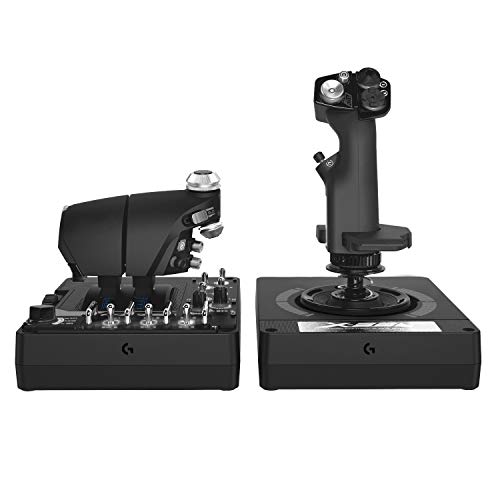
Logitech G X56 H.O.T.A.S Throttle and Joystick Flight Simulator Game Controller, 4 Spring Options, +189 Programmable Controls, RGB Lighting, 2x USB, PC – Black
Military-grade Space and Flight Sim Precision. Customizable options including all the control surface options required to achieve the…
As an affiliate, we earn on qualifying purchases.
As an affiliate, we earn on qualifying purchases.
Remaining Technical Challenges and Unconfirmed Behaviors
It is not yet clear how many of the original game’s bugs and graphical glitches will be fully addressed in future versions. Some behaviors, such as graphical glitches and physics quirks, are intentionally preserved to maintain authenticity. The extent to which sound and joystick support will be restored remains uncertain, as current builds focus primarily on core gameplay functionality. Additionally, the stability of the reconstructed code under different DOS emulators or hardware setups is still being evaluated.

Thrustmaster T-Flight Hotas X – Flight Throttle and Joystick with 12 Programmable Buttons, Detachable Throttle, Adjustable Resistance for Flight Simulator – Compatible with PC
COMFORTABLE ERGONOMIC HOTAS DESIGN – Fly for hours without fatigue thanks to the wide hand rest and real…
As an affiliate, we earn on qualifying purchases.
As an affiliate, we earn on qualifying purchases.
Next Steps in Testing and Potential Feature Enhancements
Developers plan to release subsequent versions based on community bug reports, aiming to improve stability and possibly add optional features like sound and joystick support. They will continue collecting user feedback to refine the recreation, with the goal of reaching a more polished, fully functional version suitable for preservation and educational purposes. Further testing campaigns are expected to be organized to ensure broad compatibility and fidelity.
retro DOS game preservation software
As an affiliate, we earn on qualifying purchases.
As an affiliate, we earn on qualifying purchases.
Key Questions
How can I participate in testing the reconstructed game?
Download the latest version 0.9.1 from the project’s repository, replace the original executables in your DOS game folder, and follow the provided instructions to run the game. Report any bugs, glitches, or control issues with detailed descriptions and screenshots if possible.
Will the reconstructed game include sound and joystick support?
Currently, the focus is on core gameplay functionality, which does not include sound or joystick support. These features may be added in future versions based on community feedback and development progress.
Are the bugs and glitches in the current version intentional or bugs to be fixed?
The current build is a bug-for-bug reconstruction, meaning all behaviors, including glitches and bugs present in the original game, are preserved to maintain authenticity. Fixes for these issues are planned for future updates.
What is the significance of this project for game preservation?
This project exemplifies efforts to preserve vintage software through reverse engineering, enabling playable versions of classic titles that might otherwise be lost due to hardware or software obsolescence.
When will a more complete, feature-rich version be available?
Future releases depend on community feedback and bug reports. Developers aim to improve stability and add features incrementally, but no specific date has been announced for a fully finished version.
Source: Hacker News