
TL;DR

Get the latest gadgets delivered free — and shop member deals
- Fast, free delivery on millions of items
- Access to Prime Big Deal Days deals on October 6–7
- Prime Video, Amazon Music and more included
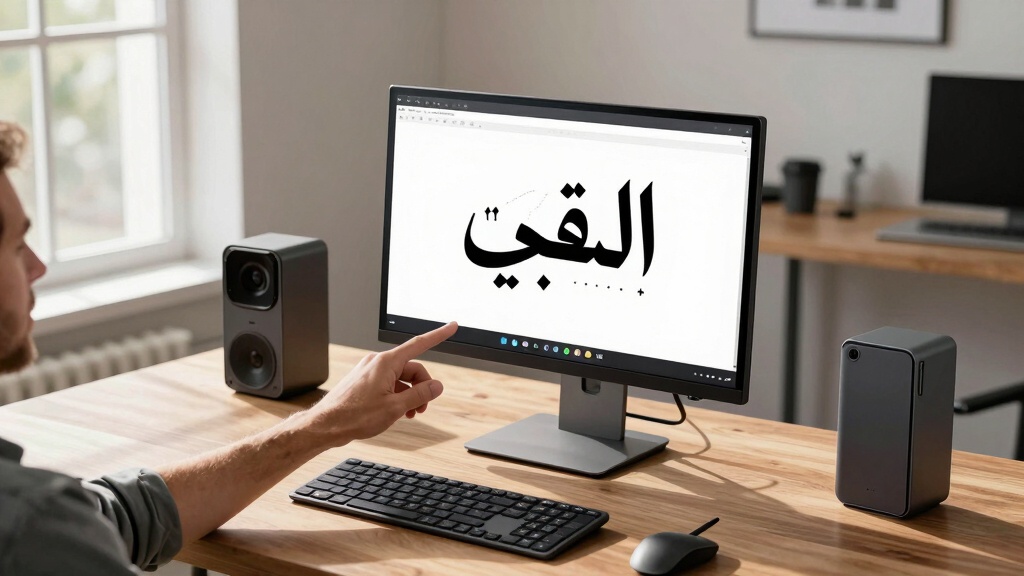
Rendering Arabic typography on the web faces significant technical debt rooted in historical calligraphy practices. This impacts font engineering and digital presentation, with ongoing challenges in achieving proper justification and visual consistency.
A web developer uncovered longstanding issues with rendering Arabic typography correctly on the web, highlighting the complex technical debt inherited from centuries-old calligraphic practices and their modern digital implementations.
The challenge arose when a developer noticed that Arabic text on a customer-facing dashboard rendered with a ragged left edge, despite design specifications for justified text. This issue, seemingly minor, is rooted in the historical and technical complexities of Arabic typography, which differ significantly from Latin script conventions. Unlike Latin, where spacing between words is stretched for justification, traditional Arabic typography relies on extending individual letterforms, known as taṭwīl or kashida, to achieve justified lines without increasing word gaps.
This practice has been preserved through centuries of calligraphic tradition, formalized in the writings of Ibn Muqla in the 10th century, who systematized proportional script rules. Modern digital fonts and rendering engines often struggle to replicate this system faithfully, leading to visual inconsistencies and technical debt. In the recent case, the developer explained that achieving proper justification required manual adjustments, such as inserting elongations by hand, because current browser support and font technologies do not fully support traditional Arabic justification methods. This situation exemplifies a broader issue: the legacy of historical calligraphy practices complicates modern web typography, resulting in ongoing technical debt that affects user experience and design fidelity.
Impact of Historical Practices on Modern Web Typography
This issue matters because it exposes the gap between traditional Arabic calligraphic standards and current digital font rendering capabilities. As Arabic is spoken by over 400 million people worldwide, improving digital typography impacts accessibility, readability, and cultural preservation. The technical debt inherited from centuries of calligraphic tradition hampers efforts to create visually consistent and properly justified Arabic text online, affecting industries from publishing to user interface design. Addressing these challenges requires a deeper understanding of historical practices and advancements in font engineering, making this a significant area for ongoing development.
As an affiliate, we earn on qualifying purchases.
Historical Roots of Arabic Typography and Digital Challenges
Arabic typography has a rich history rooted in manuscript traditions that emphasized uniform line justification without stretching spaces between words. Instead, calligraphers used taṭwīl or kashida to extend letterforms, creating dense, flush margins characteristic of classical Qurʾān manuscripts. This system was formalized by Ibn Muqla in the 10th century, whose proportional script rules have persisted for over a millennium.
In the digital age, font rendering engines and browsers primarily support Latin-based spacing conventions, which rely on stretching spaces for justification. These tools often lack native support for Arabic’s kashida-based justification, forcing developers to implement manual workarounds. Over the past decade, efforts to improve Arabic web typography have been hampered by inconsistent support for these traditional techniques, leading to visual artifacts, uneven spacing, and increased technical debt.
“The problem is not a bug in our stylesheet but the state of Arabic typography on the web.”
— Hacker News user
As an affiliate, we earn on qualifying purchases.
Extent of Browser Support for Traditional Arabic Justification
It is not yet clear how widely current browsers and font engines will adopt native support for kashida-based justification or if new standards will emerge to better handle Arabic typography. The technical solutions remain inconsistent across platforms, and ongoing development efforts are still in progress.
As an affiliate, we earn on qualifying purchases.
Future Directions for Improving Arabic Web Typography
Next steps include developing standardized font features that support kashida insertion natively, improving browser rendering engines, and creating better tools for manual and automatic elongation adjustments. Industry collaboration and research into traditional calligraphic techniques could bridge the gap between historical practices and modern digital needs. Monitoring these developments will be crucial for designers and developers working with Arabic content.
As an affiliate, we earn on qualifying purchases.
Key Questions
Why is Arabic typography more complex than Latin script for digital rendering?
Arabic typography relies on extending individual letterforms (kashida) for justification, unlike Latin scripts that stretch spaces between words. This difference makes digital rendering more technically challenging.
What causes the visual inconsistencies in Arabic text on the web?
Most web browsers and fonts do not fully support traditional kashida-based justification, leading to uneven spacing, ragged edges, and manual workarounds.
Are there ongoing efforts to improve Arabic typography support in browsers?
Yes, developers and standards organizations are exploring native support for Arabic justification features, but widespread adoption and implementation are still in progress.
How does understanding historical calligraphy help modern font engineering?
It provides insights into how Arabic text was traditionally justified and styled, guiding the development of digital fonts and rendering engines that better replicate these practices.
What impact does this technical debt have on Arabic digital content?
It affects readability, aesthetic quality, and cultural authenticity of Arabic digital content, potentially limiting user engagement and accessibility.
Source: Hacker News
Fall Picks
fall essentials
As an affiliate, we earn on qualifying purchases.