TL;DR
Kimi K2.7-Code is an open-source AI model designed for coding, featuring enhanced token efficiency and improved performance in real-world programming tasks. It builds on Kimi K2.6 with significant upgrades.
Developers have released Kimi K2.7-Code, an open-source coding-focused AI model that demonstrates approximately 30% better token efficiency than its predecessor, Kimi K2.6. This release aims to enhance end-to-end software engineering workflows and real-world coding tasks, making it a significant development for AI-assisted programming.
Kimi K2.7-Code is built upon the architecture of Kimi K2.6, utilizing a mixture-of-experts (MoE) design with 1 trillion parameters and 384 experts. It features a 61-layer structure, 64 attention heads, and a vocabulary size of 160,000 tokens. The model has been optimized specifically for real-world, long-horizon coding tasks, achieving notable improvements across multiple benchmarks, including a 12-point increase on the Kimi Code Bench v2 and a nearly 20-point rise on Program Bench.
According to its developers, Kimi K2.7-Code reduces thinking-token usage by around 30% compared to Kimi K2.6, which can translate into faster processing and lower computational costs. The model is accessible via an API, compatible with OpenAI and Anthropic APIs, and supports deployment on inference engines like vLLM, SGLang, and KTransformers. Evaluation results show that Kimi K2.7-Code outperforms previous models and competitors such as GPT-5.5 and Claude Opus 4.8 on various coding benchmarks, especially in complex, multi-step programming tasks.
Impact of Kimi K2.7-Code on AI Coding Capabilities
The release of Kimi K2.7-Code as an open-source project signifies a major step forward in AI-assisted coding. Its improved token efficiency and superior performance on diverse programming benchmarks can accelerate software development, reduce costs, and enable more complex AI-driven workflows. For developers and organizations, this means access to a powerful, customizable tool that can handle long-horizon coding tasks more effectively, potentially transforming how AI is integrated into software engineering processes.

Designing Large Language Model Applications: A Holistic Approach to LLMs
As an affiliate, we earn on qualifying purchases.
As an affiliate, we earn on qualifying purchases.
Background and Development of Kimi K2.7-Code
Kimi K2.7-Code follows the earlier Kimi K2.6 model, which was notable for its focus on coding tasks and real-world applications. The development team emphasized increasing token efficiency and improving the model’s ability to handle complex, multi-step programming workflows. The architecture retains the mixture-of-experts design, which allows for scalability and specialization across different coding domains. Prior benchmarks demonstrated the model’s strengths, but Kimi K2.7 aims to push these boundaries further with targeted optimizations and an open-source release, encouraging community engagement and further development.
“Kimi K2.7-Code sets a new standard for token efficiency and real-world coding performance in open-source AI models.”
— Moonshot AI Developer Team
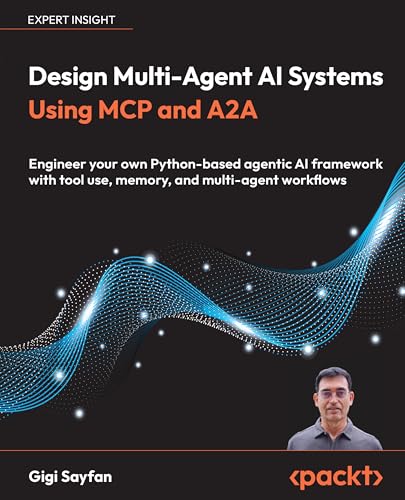
Design Multi-Agent AI Systems Using MCP and A2A: Engineer your own Python-based agentic AI framework with tool use, memory, and multi-agent workflows
As an affiliate, we earn on qualifying purchases.
As an affiliate, we earn on qualifying purchases.
Remaining Questions About Kimi K2.7-Code
While the model has demonstrated strong performance in benchmarks, details about its real-world deployment, long-term stability, and community adoption are still emerging. The extent of its performance in diverse, large-scale projects remains to be seen, and further independent evaluations are awaited.

AI VoiceWriter – Smart Dictation & AI Writing Assistant for Windows & Mac | USB Dongle & Mobile App for Voice Input, Proofreading, Rewriting & Multilingual Support
🎙️ Hands-Free Voice Typing for Windows & Mac – Powered by iOS & Android dictation technology, AI VoiceWriter…
As an affiliate, we earn on qualifying purchases.
As an affiliate, we earn on qualifying purchases.
Next Steps for Kimi K2.7-Code Adoption and Development
Developers plan to release detailed documentation and encourage community contributions to enhance Kimi K2.7-Code further. Future updates may include expanded multilingual support, integration with popular development tools, and additional benchmarks to validate its capabilities in varied programming environments. Monitoring community feedback and real-world testing will determine its broader impact.
long-horizon coding AI tools
As an affiliate, we earn on qualifying purchases.
As an affiliate, we earn on qualifying purchases.
Key Questions
What makes Kimi K2.7-Code different from previous models?
Kimi K2.7-Code features approximately 30% better token efficiency and improved performance on coding benchmarks, thanks to architectural optimizations and a focus on real-world programming tasks.
Is Kimi K2.7-Code available for public use?
Yes, it has been released as an open-source project and is accessible via API, supporting deployment on multiple inference engines.
How does Kimi K2.7-Code perform compared to GPT-5.5 and Claude Opus 4.8?
In benchmarks, Kimi K2.7-Code outperforms these models on various coding tasks, especially in complex, multi-step programming scenarios.
What are the potential benefits for developers using Kimi K2.7-Code?
Developers can expect faster, more efficient coding assistance, lower computational costs, and the ability to customize and extend the model for specific workflows.
What remains to be seen about Kimi K2.7-Code?
Its performance in large-scale, real-world projects and its adoption by the broader developer community are still developing and will be clearer over time.
Source: Hacker News