
TL;DR

Get the latest gadgets delivered free with Prime
- Fast, free delivery on millions of items
- Prime Video, Amazon Music and more included
- Member-only deals all year
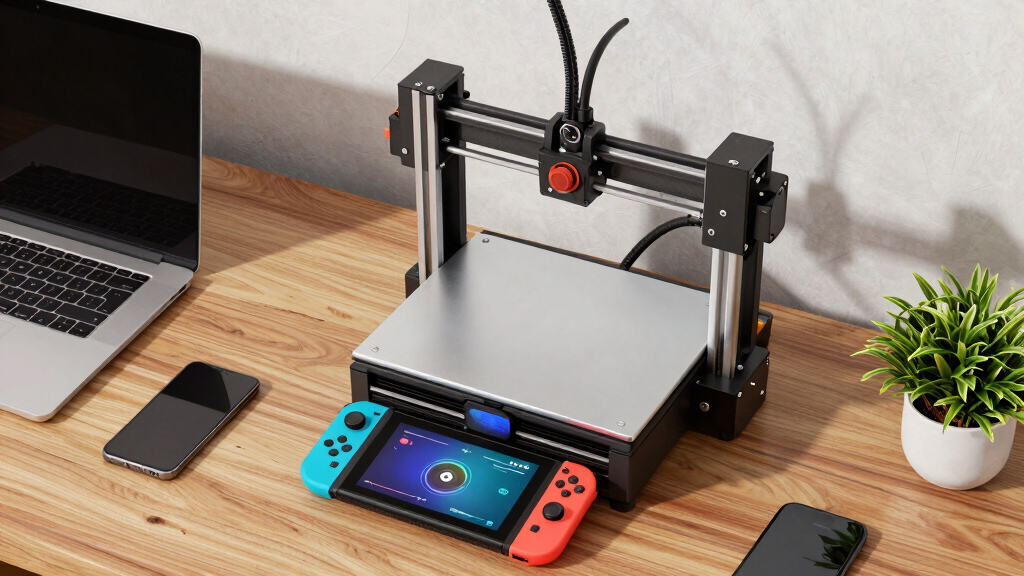
A modder has repurposed a Nintendo Switch to run Klipper firmware on an aging Prusa MK3S 3D printer, increasing its speed by 90%. The modification significantly reduces print time while improving print quality. This showcases innovative ways to extend the capabilities of older 3D printers.
A hobbyist has successfully used a jailbroken Nintendo Switch to dramatically increase the speed of an aging Prusa MK3S 3D printer, reducing print times by approximately 90%. This development highlights a novel approach to enhancing older 3D printers with consumer gaming hardware, potentially extending their useful lifespan and performance.
The modder, known as Cocoanix, demonstrated in a recent video how installing Klipper firmware on a Nintendo Switch—running Ubuntu Linux—enabled the Prusa MK3S to print a 3DBenchy model in under nine minutes, down from the usual 90 minutes.
The use of Klipper firmware, which offloads computation from the printer’s microcontroller to an external device, allowed for higher speeds and improved print quality, including reduced ringing and ghosting effects. The setup involved installing Linux on the Switch and configuring Klipper to communicate with the printer via a web dashboard, Mainsail/Fluidd.
This approach leverages the Switch’s quad-core Nvidia system-on-chip, providing sufficient processing power to handle complex motion planning and input shaping, pushing the printer to its speed limit of 400mm/s at 17,000mm/s² acceleration. Cocoanix noted that the hotend and extruder remained the bottlenecks, limiting further speed increases.
Why It Matters
This development is significant because it demonstrates a cost-effective way to upgrade older 3D printers, potentially saving hobbyists and small-scale manufacturers money and extending device lifespan. It also showcases the versatility of consumer gaming hardware for technical projects, blending gaming and maker communities.
However, the modifications require technical skill, including installing Linux and configuring firmware, which may not be accessible to all users. The quality of the printed objects, while faster, may vary depending on hardware limitations and cooling capabilities.
Klipper firmware for 3D printers
As an affiliate, we earn on qualifying purchases.
As an affiliate, we earn on qualifying purchases.
Background
3D printing enthusiasts often seek ways to improve print speed and quality, typically using Raspberry Pi or similar single-board computers to run advanced firmware like Klipper. The Prusa MK3S, a popular but older model, has been widely modded for performance enhancements. This recent development involves replacing traditional motion control firmware with Klipper on a Nintendo Switch, a device not originally intended for such use.
Previous efforts to accelerate 3D printing involved external PCs or Raspberry Pi units; using a Switch is a novel approach that combines portability with processing power. Cocoanix’s demonstration builds on existing community knowledge about Klipper’s capabilities and adds a creative hardware twist.
“Using Klipper on a Switch has allowed us to push the Prusa MK3S to its absolute speed limit: 400mm/s at 17,000mm/s².”
— Cocoanix
“This showcases innovative ways to extend the capabilities of older 3D printers using consumer gaming hardware.”
— Tom’s Hardware
Raspberry Pi 3D printer controller
As an affiliate, we earn on qualifying purchases.
As an affiliate, we earn on qualifying purchases.
What Remains Unclear
It is not yet clear how sustainable or reliable this setup is over long-term use. The quality of prints at such high speeds may vary, and cooling or mechanical limits could pose challenges. The full extent of hardware modifications needed and whether this can be easily replicated remains uncertain.
As an affiliate, we earn on qualifying purchases.
What’s Next
Further testing will determine the durability and consistency of this setup. The community may explore similar modifications with other gaming consoles or hardware. Manufacturers might also investigate official support for such enhancements or develop dedicated solutions for high-speed printing.
As an affiliate, we earn on qualifying purchases.
Key Questions
Can I replicate this modification on my 3D printer?
It requires technical expertise, including installing Linux on a Nintendo Switch and configuring Klipper firmware. It is not recommended for beginners.
Does this affect the print quality?
While print times are significantly reduced, the quality may be affected by the increased speed, especially if cooling or mechanical limits are reached. The print shown was somewhat rough, indicating potential trade-offs.
Is using a Nintendo Switch safe for this purpose?
Modding a Switch involves jailbreaking and installing Linux, which can void warranties and carries risks. Proceed only if experienced with such modifications.
Will this work with modern 3D printers?
This method is primarily demonstrated on an older Prusa MK3S. Modern printers with more advanced firmware and hardware may not see the same benefits or may require different configurations.
Columbus Day / Indigenous Peoples' Day Picks
long weekend sales
As an affiliate, we earn on qualifying purchases.