
TL;DR

Get the latest gadgets delivered free — and shop member deals
- Fast, free delivery on millions of items
- Access to Prime Big Deal Days deals on October 6–7
- Prime Video, Amazon Music and more included
SpaceX’s Colossus 1 supercomputer, with over 220,000 GPUs, has been leased to Anthropic to address compute shortages. Its mixed GPU architecture causes significant efficiency issues, leading to low utilization. The situation highlights challenges in AI infrastructure scaling.
SpaceX has leased its Colossus 1 AI supercomputer, with over 220,000 GPUs, to AI firm Anthropic to help meet its growing compute demands, amid concerns over the system’s inefficiency caused by a mixed GPU architecture.
Anthropic announced last week that it is now utilizing SpaceX’s Colossus 1 data center, which features a heterogeneous mix of Nvidia GPUs, including H100s, H200s, and GB200s. The deal aims to alleviate bottlenecks in Anthropic’s Claude ecosystem, which has faced capacity constraints due to increasing user demand and limited inference resources.
The supercomputer was assembled rapidly by Musk’s xAI team, with over 220,000 GPUs brought online in record time. However, a detailed report by Mirae Asset Securities indicates that the cluster’s mixed architecture results in severe efficiency losses. The system’s GPUs operate at different speeds, causing the faster chips to wait for slower ones, a phenomenon known as the straggler effect, which significantly reduces overall utilization.
According to sources, xAI’s GPU utilization has been estimated at just 11%, meaning the majority of its computational capacity remains underused. This inefficiency is attributed directly to the heterogeneous GPU mix, which was a byproduct of rapid deployment rather than deliberate design, and has led to substantial waste of energy and resources.
Why It Matters
This development underscores the critical challenge of scaling AI infrastructure efficiently. The low utilization of Colossus 1 illustrates how architectural choices can impact the performance and cost-effectiveness of large AI data centers. For AI companies and investors, it highlights the importance of optimized hardware configurations amid rising demand for compute resources.
Furthermore, the transfer of such a large and expensive supercomputer from Musk’s xAI to a rival firm like Anthropic raises questions about strategic priorities, resource allocation, and the future of AI infrastructure investments in the industry.
As an affiliate, we earn on qualifying purchases.
Background
Colossus 1 was initially presented as a flagship project for Musk’s xAI, intended to rival other large AI clusters from Google, Meta, and Microsoft. Assembling the cluster involved rapidly deploying over 220,000 Nvidia GPUs, reflecting Musk’s ambition to build a system of a million GPUs in the future. However, the heterogeneous architecture—comprising different generations of Nvidia GPUs—was not planned but resulted from supply constraints during rapid deployment.
Anthropic has been experiencing increasing demand for its Claude AI services, leading to frequent restrictions on usage, such as message caps and rate limits, especially during peak times. Building new data centers has been slow and costly, prompting the company to seek immediate solutions like leasing existing supercomputers. The deal with SpaceX provides a quick fix but exposes underlying efficiency issues.
“The heterogeneous GPU mix in Colossus 1 causes significant inefficiencies, with utilization estimated at only 11%.”
— Mirae Asset Securities analyst
“The transfer of Colossus 1 to Anthropic is part of our strategy to support AI innovation and meet industry demand.”
— SpaceX/xAI representative
As an affiliate, we earn on qualifying purchases.
What Remains Unclear
Details remain unclear about the full extent of the supercomputer’s current operational status and how long Anthropic will utilize Colossus 1. It is also uncertain whether Musk’s team plans to redesign or upgrade the system to address the efficiency issues or if the current arrangement is temporary.
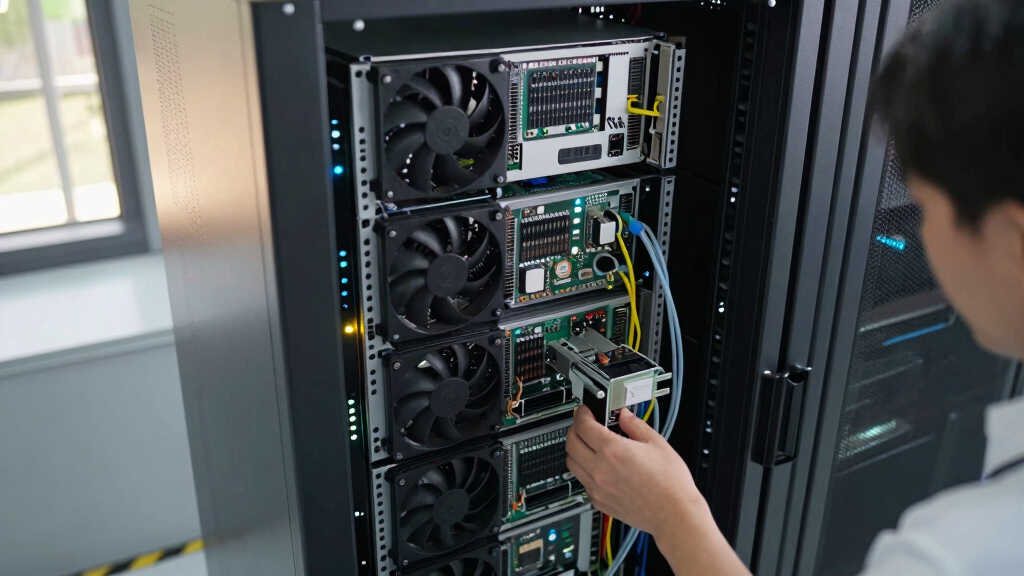
high performance GPU server rack
As an affiliate, we earn on qualifying purchases.
As an affiliate, we earn on qualifying purchases.
What’s Next
Next steps include monitoring how Anthropic manages the supercomputer’s utilization and whether SpaceX/xAI will undertake hardware upgrades or reconfiguration. Additionally, industry watchers will likely scrutinize the long-term impact of this leasing arrangement on AI infrastructure investments and competitive strategies.
As an affiliate, we earn on qualifying purchases.
Key Questions
Why does the mixed GPU architecture cause inefficiency?
Mixed GPUs operate at different speeds, causing faster units to wait for slower ones, which reduces overall system utilization and efficiency.
What are the implications for SpaceX and xAI?
The lease provides immediate compute capacity for Anthropic but highlights technical challenges in deploying heterogeneous supercomputers at scale. It may influence future hardware strategies.
Could the system be upgraded to improve efficiency?
Potentially, yes. Upgrades or reconfigurations could address the bottlenecks, but it is not yet clear if SpaceX/xAI plans to undertake such measures.
What does this mean for AI infrastructure development?
This case exemplifies the importance of hardware homogeneity and optimization in large-scale AI data centers, especially as demand continues to grow rapidly.
Halloween Picks
halloween
As an affiliate, we earn on qualifying purchases.