
TL;DR

Get the latest gadgets delivered free with Prime
- Fast, free delivery on millions of items
- Prime Video, Amazon Music and more included
- Member-only deals all year
In Q1 2026, AMD achieved a record 46.2% of x86 server CPU revenue, up from previous quarters, while Intel still dominates in units sold with 66.8%. This indicates AMD’s increasing profitability and market influence in servers.
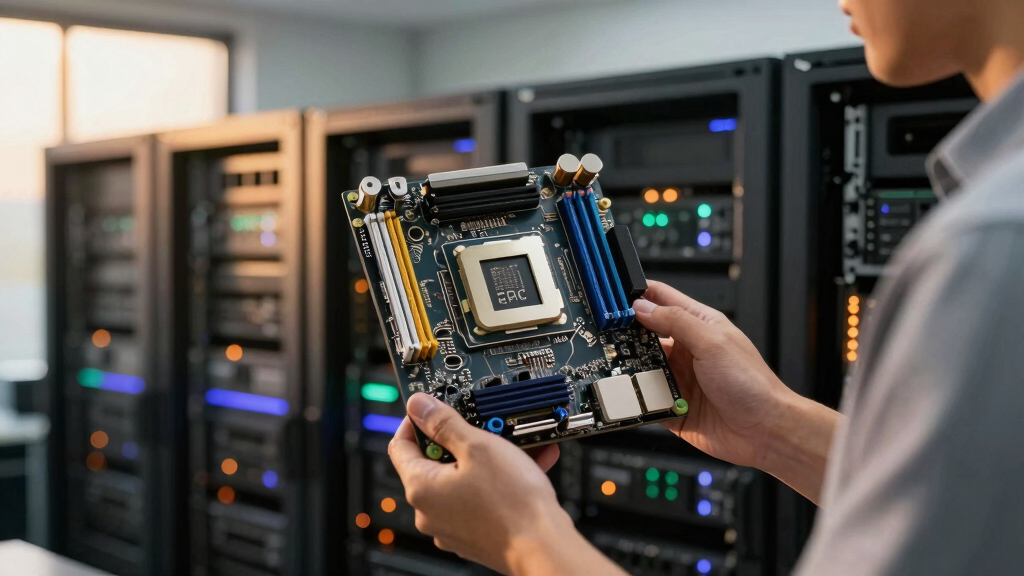
AMD has reached a new milestone in the server CPU market, capturing 46.2% of all x86 server CPU revenue in Q1 2026, according to Mercury Research. Despite still shipping fewer units than Intel, AMD’s high-margin processors are significantly boosting its revenue share, marking a notable shift in market dynamics.
In the first quarter of 2026, AMD’s x86 server CPU revenue share increased to 46.2%, a record high, up from 41.7% in the previous quarter. The company’s unit share in servers also grew to 33.2%, from 28.8% in Q4 2025. Meanwhile, Intel shipped approximately 66.8% of server units, though its revenue share declined slightly due to lower average selling prices (ASPs) of its Xeon processors.
AMD’s growth in revenue is driven by higher-value, high-core-count EPYC processors, which are increasingly adopted across hyperscale cloud providers, enterprise data centers, and AI/HPC applications. The company’s server revenue share outpaces its unit share, reflecting the premium pricing of its processors. Intel remains the dominant vendor in units but faces challenges in maintaining revenue dominance.
Why It Matters
This shift indicates AMD’s rising profitability and influence in the server market, which is critical for cloud providers and enterprise infrastructure. The increasing revenue share suggests AMD’s processors are becoming more attractive for high-margin, high-performance applications, potentially reshaping competitive dynamics and pricing strategies in the sector.
Products Worth Considering

LG UltraGear 32GS60QC-B 32-inch Curved QHD Gaming Monitor (180Hz, 1ms, 1000R, AMD FreeSync, HDR10)

Samsung Galaxy Tab A11 (2026) – 8.7 90Hz Android Tablet, 64GB/4GB Wi‑Fi, Octa-core MediaTek Helio G99, Dual Dolby Speakers, 20W Fast Charger

DJI Osmo Mobile 8 Standard Combo Phone Gimbal Stabilizer
As an affiliate, we earn on qualifying purchases.
Background
Mercury Research’s Q1 2026 data shows AMD’s rapid growth in server CPU market share following a strong 2025. AMD’s revenue share in servers has surged from 41.7% in Q4 2025 to 46.2%, while unit share increased from 28.8% to 33.2%. Intel, while still leading in units, faces a declining revenue share due to ASP differences. The market trend reflects AMD’s focus on premium, high-core-count processors amid ongoing competition and technological advancements.
“AMD’s server CPU revenue share reached 46.2% in Q1 2026, marking a significant milestone.”
— Mercury Research
“The revenue share increase highlights AMD’s success in capturing higher-value segments, despite still shipping fewer units than Intel.”
— Industry analyst
What Remains Unclear
It remains unclear how Intel’s upcoming Nova Lake processors will impact this market share dynamic in the second half of 2026. Market adoption rates and future pricing strategies are also still developing.
What’s Next
Next steps include monitoring Intel’s product launches, especially Nova Lake, and AMD’s continued expansion in high-margin segments. Market share shifts will be closely watched in both unit and revenue metrics throughout 2026.
Key Questions
It indicates AMD’s increasing profitability and influence in high-margin server applications, potentially challenging Intel’s dominance in revenue despite still leading in units.
It is not yet clear. Intel’s Nova Lake processors are expected to compete strongly, but their actual market impact will depend on performance, pricing, and adoption rates.
AMD’s processors tend to have higher ASPs due to their high-core-count and premium features, which boosts revenue share relative to unit share.